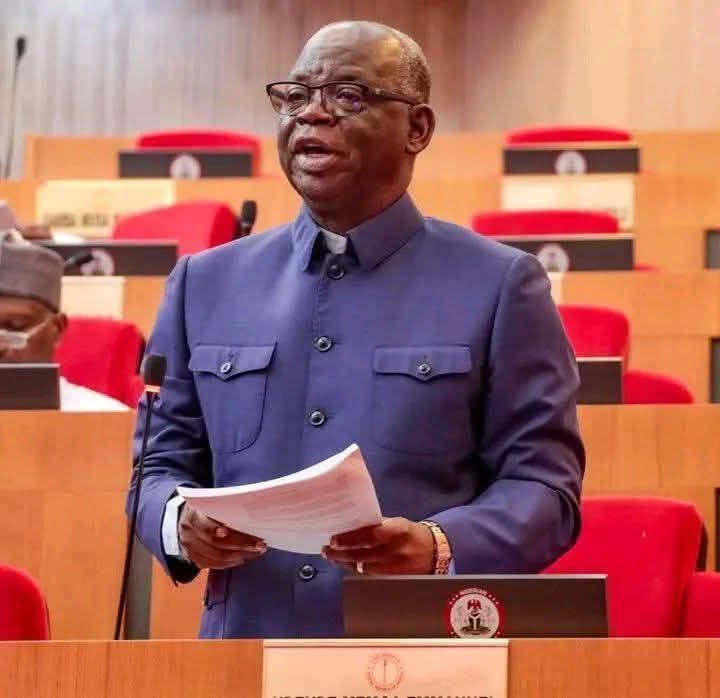
In a pivotal move aimed at bolstering the growth of Nigeria’s small and medium-sized enterprises (MSMEs), Senator Asuquo Ekpenyong Jnr. (Cross River South) today introduced the Factoring Regulation Bill, 2024 (SB. 474) before the Senate, calling for enhanced support for MSMEs to address the chronic liquidity challenges that have stifled their potential.
The bill, which was read for the first time in June 2024, aims to establish a legal and regulatory framework for factoring a financial arrangement where businesses sell their receivables (unpaid invoices) to licensed financial institutions at a discount in exchange for immediate cash. By enabling MSMEs to access liquidity without relying on traditional forms of credit, such as collateral-based loans, the bill is designed to support businesses in overcoming cash flow bottlenecks and spur growth in the sector.
Senator Ekpenyong, leading the debate, stressed that delayed payments from buyers have long been a significant hurdle for MSMEs in Nigeria. With many businesses waiting as long as 90 days or more for payment, their ability to maintain operations, pay employees, and reinvest in their businesses is severely hindered.
“Small businesses are the backbone of our economy, yet they are often trapped in a cycle of delayed payments and weak cash flow. This impedes their ability to grow, expand, and contribute to job creation,” Senator Ekpenyong stated. “The Factoring Regulation Bill offers a solution transforming unpaid invoices into immediate working capital and helping businesses regain control over their financial health.”
Under the provisions of the bill, MSMEs will be able to sell their invoices to licensed factoring companies, which will provide them with up to 90% of the invoice value upfront. The factoring company will then collect payment from the buyer when due. This arrangement, unlike traditional loans, does not rely on the business’s collateral but on the creditworthiness of the buyer, making it more accessible for smaller businesses that often lack assets or formal credit histories.
With over 40 million MSMEs in Nigeria, contributing more than 50% of the nation’s employment, Senator Ekpenyong emphasized the transformative potential of the bill in unlocking capital for growth and innovation. MSMEs are often excluded from traditional credit markets, where collateral requirements are a significant barrier. Factoring, however, allows businesses to leverage their receivables as a source of working capital, creating a more inclusive financial ecosystem.
“By providing businesses with timely access to cash, the bill empowers them to pay employees, restock inventories, and fulfill larger orders, thereby enhancing their competitiveness and sustainability,” Ekpenyong added.
Drawing from international examples, Senator Ekpenyong pointed to successful implementations of factoring in countries such as Mexico, India, Chile, Brazil, and South Africa. These nations have used factoring as a key tool to help small businesses access working capital and integrate more effectively into formal supply chains, ultimately contributing to economic resilience and growth.
The bill also introduced important regulatory measures to ensure the factoring industry operates in a transparent, accountable, and sustainable manner. It proposed the establishment of clear rules for licensing and monitoring factoring companies, mandating the disclosure of all fees and terms in plain language to prevent exploitation and ensure MSMEs fully understand their obligations. The bill further seek to legalize invoice transfers, making them enforceable in court and reducing the potential for disputes.
In line with Nigeria’s broader digital reforms, the bill encouraged the adoption of e-invoicing and the creation of receivables registries, which would streamline the process of verifying invoices and reduce instances of fraud.
“Transparent, well-regulated factoring markets help build investor confidence, which in turn promotes economic growth,” said Senator Ekpenyong. “By introducing these safeguards, we ensure that MSMEs can access financing without the risk of exploitation or fraud.”
The senator concluded his remarks by highlighting the potential economic impact of the bill, which is expected to unlock over $1 billion in working capital annually for Nigerian businesses. This, he argued, would lead to a reduction in informal business practices, a strengthening of the formal economy, and a more competitive environment for MSMEs to thrive.
“This is not just about finance; it’s about creating an ecosystem where our businesses can scale, create jobs, and contribute more effectively to our national economy,” Ekpenyong said. “The Factoring Regulation Bill is a critical step toward ensuring that Nigeria’s small businesses have the tools and resources to succeed.”
The bill will now proceed to the second reading, where it is expected to undergo further scrutiny and deliberation. Early reactions from industry stakeholders and lawmakers have been largely positive, with many recognizing the bill as a key component of the broader effort to reform Nigeria’s financial systems and support MSMEs.