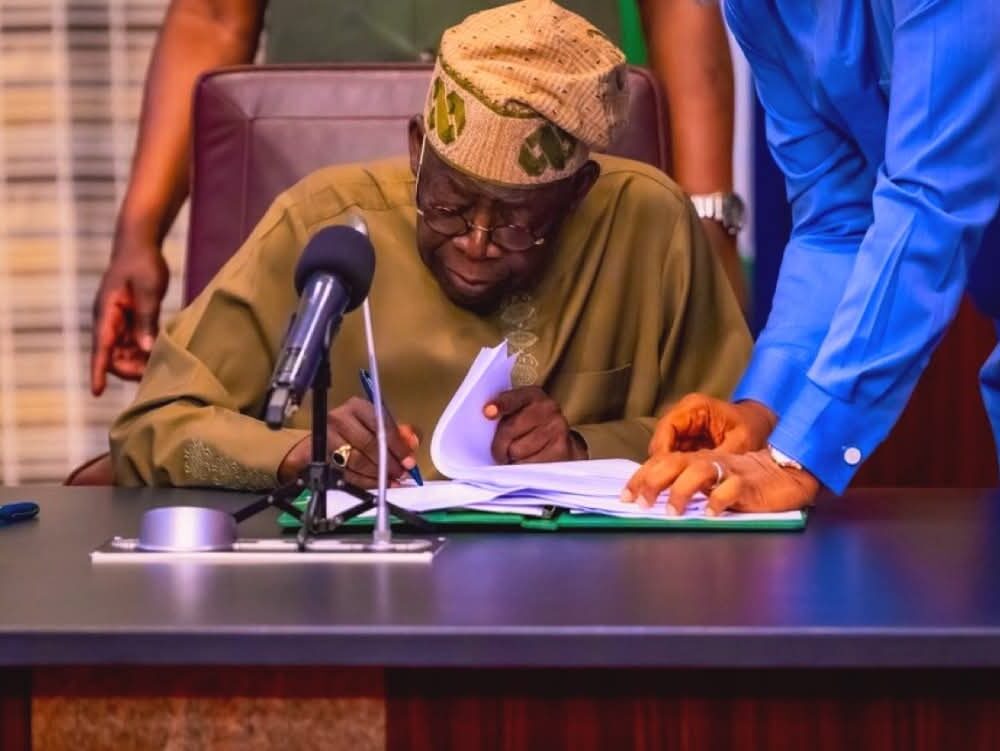

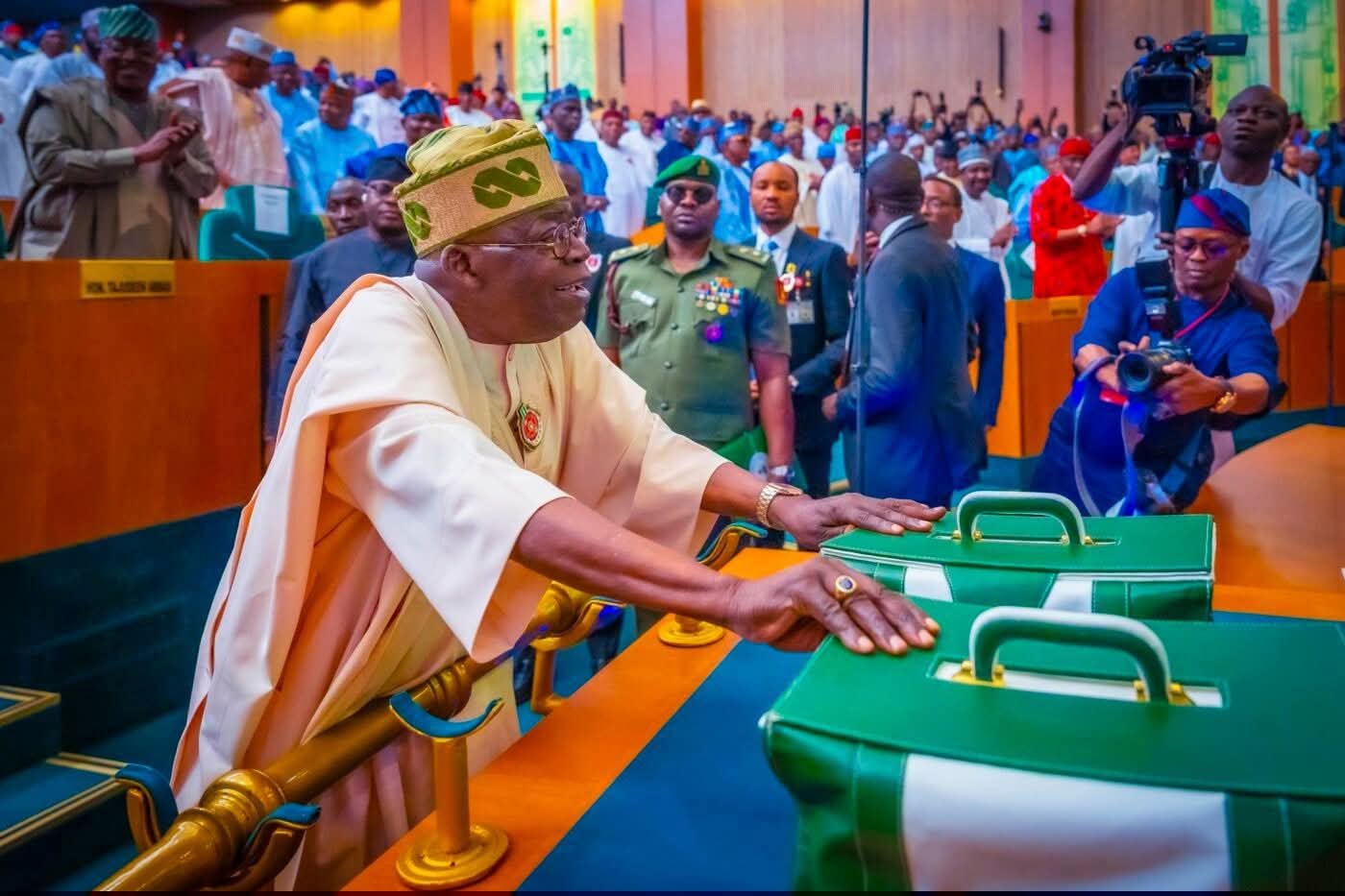
President Bola Ahmed Tinubu on Friday presented the 2026 Appropriation Bill to a joint session of the National Assembly, proposing a ₦58.18 trillion budget aimed at consolidating economic reforms, strengthening resilience, and delivering shared prosperity for Nigerians.
The budget, themed “Budget of Consolidation, Renewed Resilience and Shared Prosperity,” reflected the administration’s commitment to stabilising the economy, improving living standards, and translating recent reforms into tangible benefits for households and businesses.
In his address, President Tinubu said Nigeria’s economy is showing signs of recovery, citing a 3.98 per cent growth in the third quarter of 2025, a steady decline in inflation to 14.45 per cent in November 2025, improved oil production, rising non-oil revenues, and external reserves of about $47 billion—its highest level in seven years.
According to the president, the 2026 budget projects total revenue of ₦34.33 trillion and a deficit of ₦23.85 trillion, representing 4.28 per cent of GDP. Capital expenditure is pegged at ₦26.08 trillion, while ₦15.52 trillion is allocated for debt servicing.
Tinubu said the budget prioritised security, infrastructure, education, and health, with ₦5.41 trillion earmarked for defence and security, ₦3.56 trillion for infrastructure, ₦3.52 trillion for education, and ₦2.48 trillion for health.
He stressed that security remained the foundation of development, announcing continued investment in the modernisation of the armed forces, intelligence-led policing, border surveillance, and community-based peacebuilding. The president also outlined plans for a new national counterterrorism doctrine to tackle terrorism, banditry, kidnapping, and other violent crimes.
On human capital development, Tinubu highlighted expanded access to education through the Nigerian Education Loan Fund, which has supported over 418,000 students, as well as increased healthcare funding and new international partnerships, including over $500 million in anticipated health grants from the United States.
The president acknowledged challenges in the implementation of the 2025 budget but assured lawmakers and Nigerians that 2026 would see stronger discipline in budget execution, improved revenue mobilisation, and stricter accountability, particularly among government-owned enterprises.
Tinubu urged cooperation between the Executive and Legislature, stating that the success of the budget would be measured not by announcements but by delivery, transparency, and visible impact on citizens’ lives.