

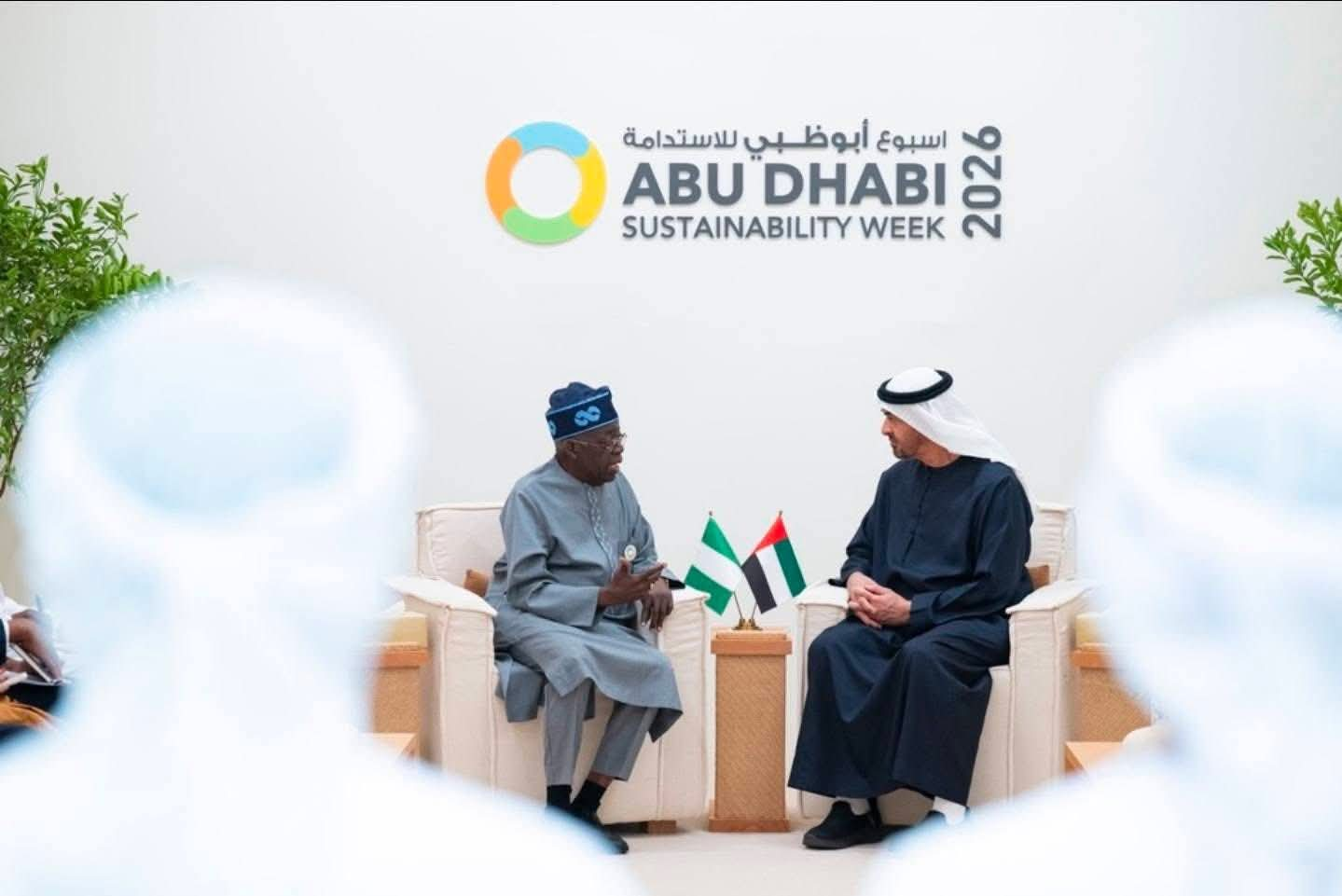
The Tinubu Stakeholders Forum (TSF) has welcomed the signing of the Nigeria–United Arab Emirates Comprehensive Economic Partnership Agreement (CEPA), described it as a decisive policy step that will accelerate non-oil growth and deepen strategic economic ties between both countries.
In a statement jointly signed by its Chairman, Ahmad Sajoh, and Secretary, Danjuma Sada, the group said the agreement aligned with President Bola Tinubu’s Renewed Hope Agenda by prioritising export diversification, private-sector expansion and sustainable job creation.
According to the forum, the CEPA granted preferential, duty-free access to 7,315 Nigerian products in the UAE market. Of this number, 2,805 products will enjoy immediate tariff elimination, while tariffs on 1,468 products will be removed within three years and a further 3,042 products within five years.
TSF described the scale of access as one of the most expansive trade openings secured by Nigeria in recent years, noting that it provides a clear pathway for accelerating non-oil exports.
The group highlighted the growing importance of the non-oil economy, which now accounts for about 96 per cent of Nigeria’s Gross Domestic Product (GDP). It noted that recent growth has been driven by agriculture, manufacturing, services and the digital economy, with the non-oil sector recording average growth of about 3.9 per cent in recent quarters.
It said agricultural producers stand to benefit from expanded access for products such as fish and seafood, cocoa, grains, spices, cotton, fruits and nuts, while manufacturers in pharmaceuticals, chemicals, paper products, footwear, furniture, ceramics and other light industrial goods will gain from reduced or eliminated tariffs.
TSF added that the apparel and textile sector, a major source of employment, is also positioned to scale exports as tariffs on garments and fabrics are progressively removed.
Beyond goods, the forum noted that the agreement opens significant opportunities in services, including the creative industries, ICT, media, tourism, finance, architecture, engineering, consulting and healthcare, giving Nigerian professionals clearer access to the UAE market.
Citing trade figures, the group said Nigeria’s non-oil export earnings rose to about $5.46 billion in 2024, representing a 20.8 per cent year-on-year increase, and continued to grow in 2025, with over $3.2 billion recorded in the first half of the year alone.
On the diplomatic front, TSF said the CEPA signals a renewed phase of engagement between Nigeria and the UAE, reinforces investor confidence, and strengthens Nigeria’s position as a gateway to ECOWAS and the African Continental Free Trade Area (AfCFTA).
The forum urged Nigerian businesses, exporters and professionals to position themselves to take advantage of the opportunities created by the agreement, expressing confidence that effective implementation would make the CEPA a catalyst for industrial expansion, export growth and inclusive economic transformation.