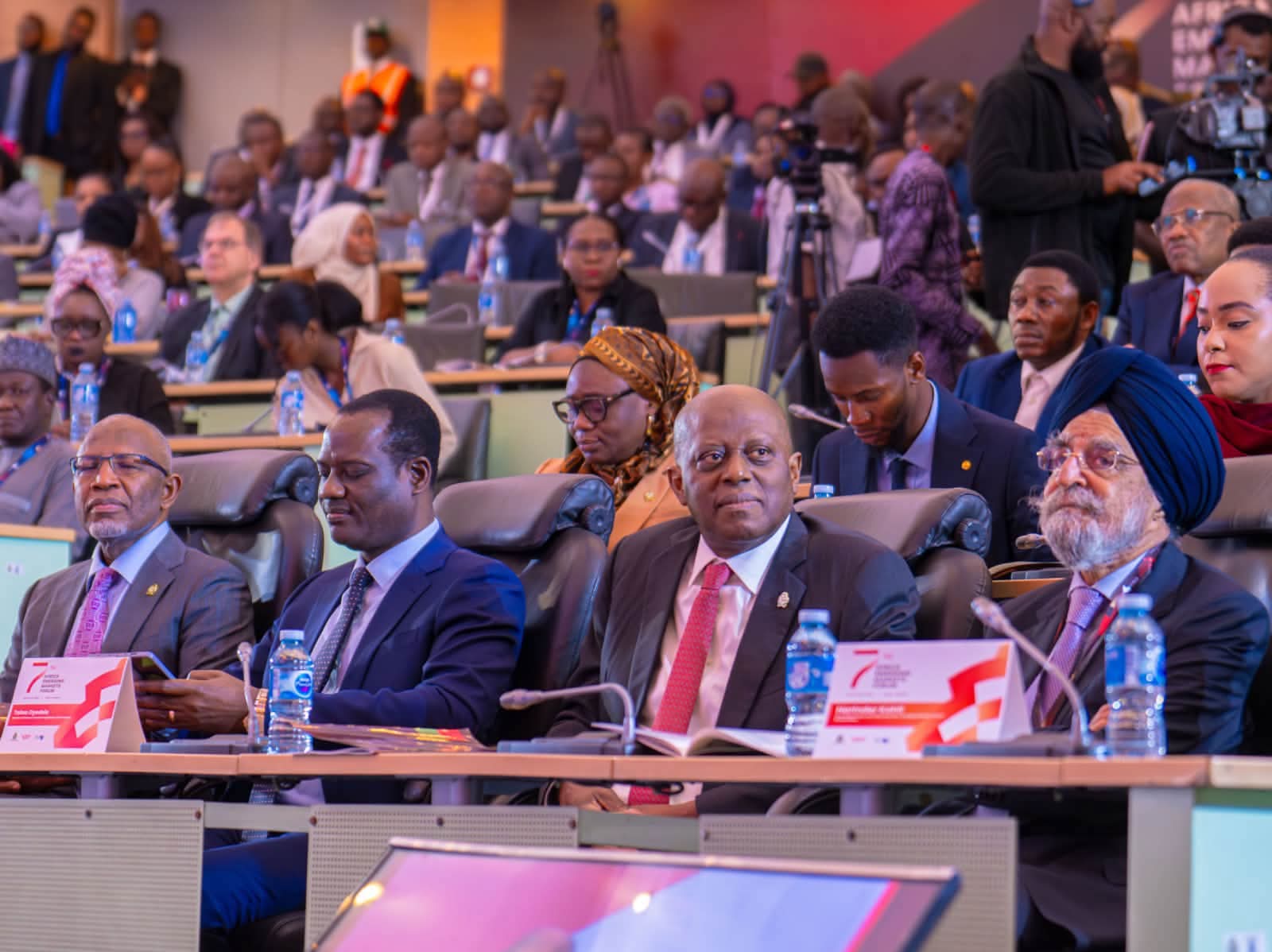
The 7th Africa Emerging Markets Forum (AEMF 2026), hosted by the Central Bank of Nigeria (CBN) in Abuja, has brought together leading policymakers, economists, investors and global development experts to examine strategies for strengthening Africa’s economic resilience and accelerating sustainable growth.
The two-day forum featured high-level discussions on monetary policy, regional economic integration, investment, artificial intelligence (AI), technology, urbanisation and the reforms needed to position African economies for long-term growth.
A major highlight of the opening day was a fireside dialogue between CBN Governor, Mr. Olayemi Cardoso, and Director-General of the World Trade Organization (WTO), Dr. Ngozi Okonjo-Iweala, who examined the forces reshaping the global economy and the strategic choices that would determine Africa’s next phase of development.
The opening session also featured remarks by Deputy Governor, Corporate Services, CBN, Dr. Muhammad Sani Abdullahi; Founding Director and Chief Executive Officer of the Emerging Markets Forum, Harinder Kohli; and Dr. Chukwuka Onyekwena, who welcomed delegates from across Africa and beyond.
Discussions during the first day focused strongly on the challenges confronting African central banks amid persistent global uncertainties. At a panel on “Navigating Global Shocks: Monetary Policy Challenges for African Central Banks,” policymakers and economists examined approaches to strengthening macroeconomic stability, containing inflation and improving policy coordination.
The forum also heard a keynote address from Indermit Gill, Chief Economist and Senior Vice President for Development Economics at the World Bank Group, who highlighted the transformative potential of artificial intelligence and called on developing economies to adopt bold, forward-looking strategies to harness the technology.
Attention also turned to regional economic integration, with experts exploring how cross-border payments, fintech, infrastructure and stronger policy coordination could accelerate intra-African trade and economic cooperation.
The second day deepened the conversation, with the Minister of Finance and Coordinating Minister of the Economy, Mr. Taiwo Oyedele, urging African leaders and investors to take advantage of the continent’s reform momentum through bold policies, stronger institutions and strategic investments.
Oyedele stressed that Africa could not afford to wait for perfect conditions before acting, urging investors to respond to ongoing reforms with the confidence, capital and partnerships required to unlock growth at scale.
He also reaffirmed Nigeria’s ambition to build a $1 trillion economy by 2030, describing the target as measurable and achievable through sound policies, fiscal discipline, accountability and effective coordination between fiscal and monetary authorities.
The Minister of Science, Technology and Innovation, Dr. Kingsley Udeh, in his keynote, focused on knowledge-based competition, the commercialisation of research and technology deployment in critical sectors including agriculture, healthcare and education.
Udeh challenged African countries to move beyond dependence on imported technologies and develop the capacity to become technology producers.
Other Day Two sessions examined foreign direct investment, technology transfer and inclusive growth, with participants considering ways to attract quality investments while ensuring that such investments generate broader economic opportunities and facilitate knowledge transfer.
Experts also examined the relationship between fragility, inflation and monetary policy transmission in selected fragile and post-crisis economies in Sub-Saharan Africa, focusing on food inflation, macroeconomic stability and appropriate policy responses.
The growing influence of AI on workplaces, governance and democratic policy transmission also featured prominently, as participants explored both the opportunities presented by emerging technologies and the regulatory and institutional considerations they raise for African countries.
Another session on “Sub-Saharan Africa’s Urban Awakening: Catalysing Economic Growth and Job Creation” examined sustainable urbanisation as a major driver of productivity, investment and employment, particularly as African cities continue to expand.
The forum ended with participants emphasising the need for greater economic resilience, regional integration, innovation, investment and stronger policy collaboration to position Africa for sustainable and inclusive growth.
The AEMF 2026, through its two days of high-level engagements, provided a platform for policymakers and global economic stakeholders to examine practical solutions to Africa’s economic challenges while identifying opportunities capable of shaping the continent’s economic future.