
The Deputy Speaker of the House of Representatives, Benjamin Kalu, has called for increased technology transfer and local manufacturing partnerships between Nigeria and European countries as a strategic approach to job creation and tackling irregular migration.
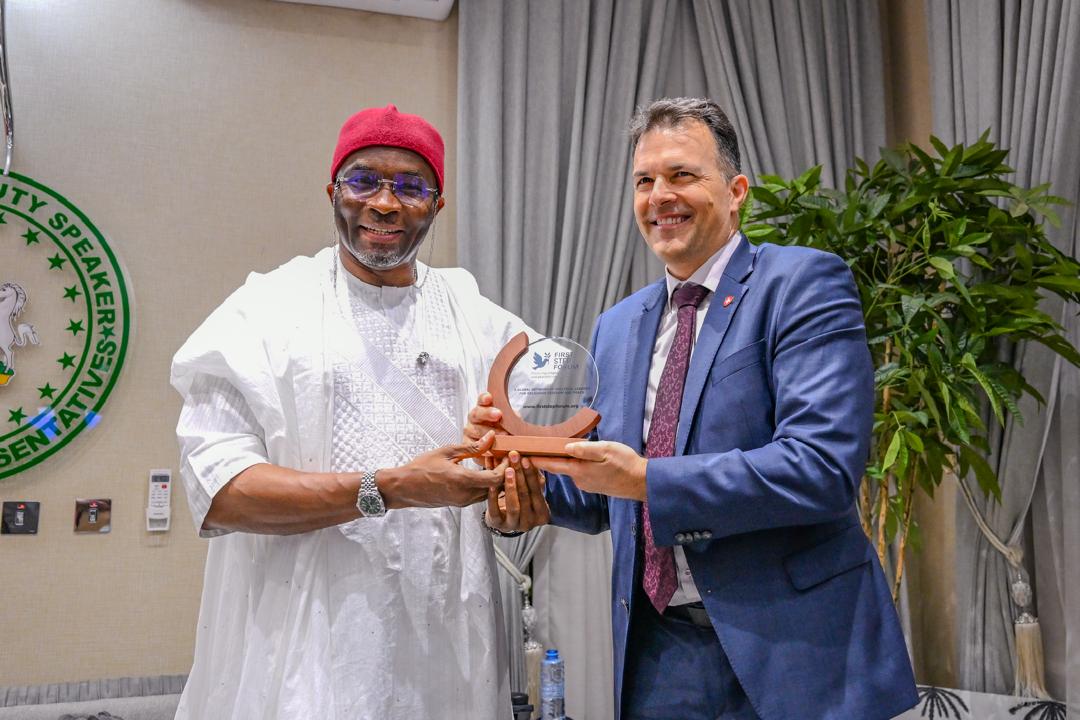
Kalu made the appeal on Tuesday while receiving a delegation of European parliamentarians under the First Step Forum, led by Marc Jost, during a courtesy visit focused on strengthening bilateral ties and addressing shared global challenges.
Highlighting the concept of near-shoring, the Deputy Speaker stressed the need to relocate industrial capacity, finance, and technology closer to regions where raw materials are sourced, particularly in Africa. He noted that such a model would enable Nigeria to maximise its abundant natural resources while creating employment opportunities for its growing youth population.
According to him, Nigeria must shift from exporting raw commodities to processing them locally into finished products. He cited examples such as cocoa and lithium, urging foreign investors to establish production facilities within the country rather than relying on imports of raw materials.
“Let our cocoa farms become chocolate factories. That is value addition and job creation,” Kalu said, adding that Nigeria’s lithium deposits present significant opportunities for local battery production amid the global transition to clean energy.
The Deputy Speaker also called for a reset in Africa-Europe relations, urging both regions to move beyond historical grievances and embrace partnerships built on mutual respect and shared prosperity.
On national cohesion, Kalu described Nigeria’s religious diversity as a strength that enhances inclusive governance and balanced decision-making. He further commended President Bola Ahmed Tinubu for promoting religious harmony through inclusive policies and symbolic gestures.
The meeting form part of ongoing efforts to deepen international cooperation while positioning Nigeria as a hub for industrial growth and sustainable development.