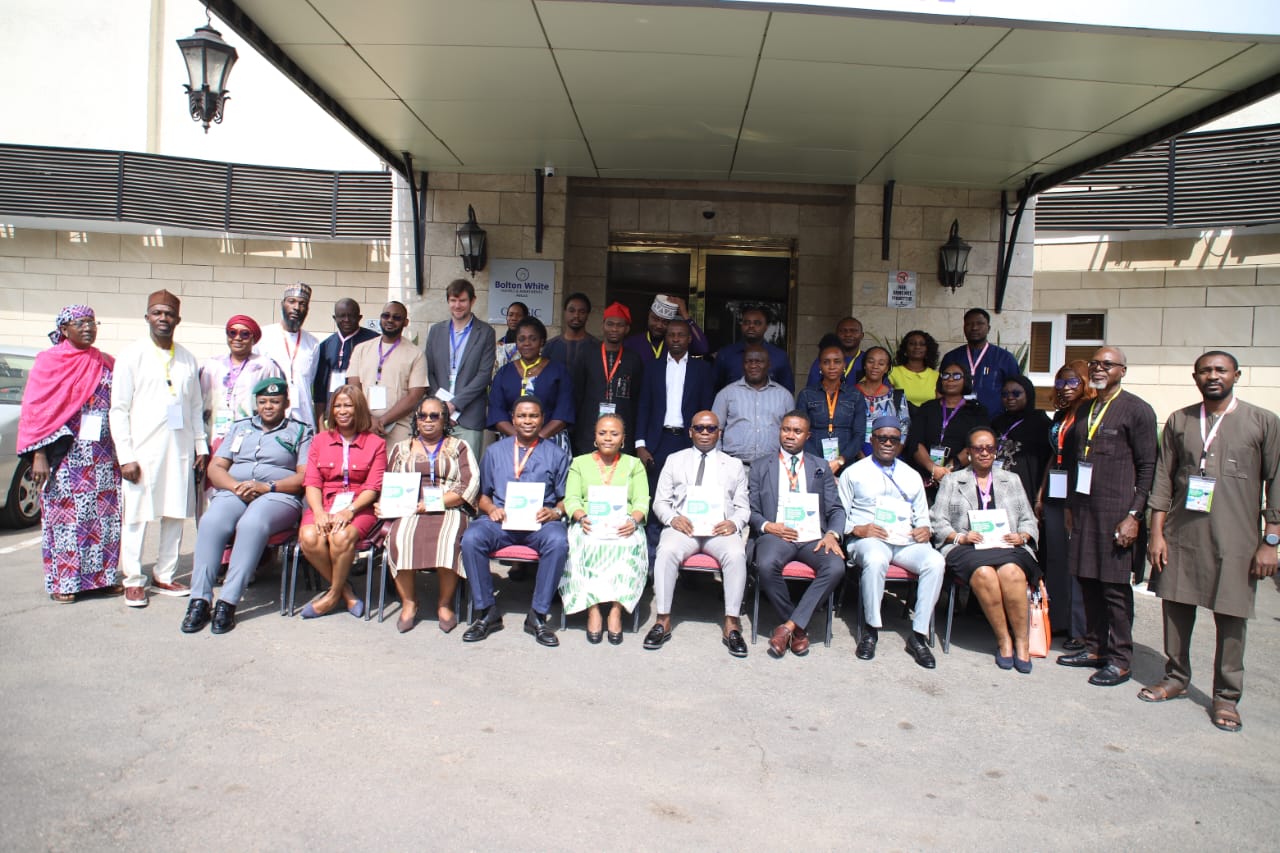
The Federal Government has inaugurated the National Cosmetics Safety Management Technical Working Group (NCSM-TWG) to address the rising health risks associated with unsafe cosmetic products in Nigeria.
The inauguration, held in Abuja on Tuesday, marks a significant move from policy formulation to concrete implementation in regulating cosmetic safety nationwide.
Speaking on behalf of the Permanent Secretary of the Federal Ministry of Health and Social Welfare, Dr. Dogara Okara said the initiative reflects the government’s commitment to protecting Nigerians from cosmetic-related health hazards that have long been underestimated.
He warned that unsafe cosmetics pose serious public health threats, causing conditions ranging from skin disorders and hormonal imbalance to kidney failure and cancer.
“Products containing toxic substances such as formaldehyde and heavy metals can damage vital organs, including the kidneys, eyes and heart,” he said, adding that this informed the government’s decision to establish a strong regulatory framework.
Dr. Okara noted that the National Policy on Cosmetics Safety and Health, approved at the 66th National Council on Health meeting in Calabar in November 2025, provided the legal backing for the Technical Working Group.
According to him, the NCSM-TWG will provide technical guidance for policy implementation, coordinate safety initiatives, translate ministerial directives into action, and support the enforcement of standards. He added that the committee will serve a five-year term.
Also speaking, the Director and Head of the Food and Drug Services Department, Mrs. Olufowobi-Yusuf Adeola, described the meeting as the beginning of coordinated technical engagement under the new policy.
She said it would help align expertise, expectations and priority actions for effective implementation.
Chairman of the Technical Working Group, Dr. Paul Okhakhu, attributed the past proliferation of unsafe cosmetics to the absence of a coordinated regulatory framework.
“Improperly formulated cosmetics can disrupt the endocrine system, damage the kidneys and affect unborn children. This policy aligns Nigeria with global best practices,” he stated.
He assured Nigerians that between 2026 and 2030, stronger regulation, improved labelling, increased public awareness and safer products would be achieved.
In a goodwill message, the World Health Organization (WHO), represented by Dr. Edwin Isotu Edeh, described the policy as “pro-health, pro-industry and pro-Africa,” cautioning against unregulated cosmetic production.
The National Agency for Food and Drug Administration and Control (NAFDAC) confirmed that implementation has already commenced.
Prince Ikenna Usofor, Director in charge of Imported and Locally Manufactured Cosmetics, said no cosmetic product—imported or locally produced—would be allowed into the Nigerian market without regulatory approval.
“This policy must not be left on the shelf. Every product must meet safety standards,” he said.
Similarly, the Country Representative of Resolve to Save Lives, Nanlop Ogbureke, described the policy as a major step in strengthening consumer protection and public health.
The Technical Working Group comprises representatives from relevant ministries, regulatory agencies, law enforcement bodies, academia, and development partners, including WHO and Resolve to Save Lives.
With the inauguration of the NCSM-TWG, the Federal Government says Nigeria is now better positioned to eliminate harmful cosmetic products and protect public health through coordinated, evidence-based regulation.