
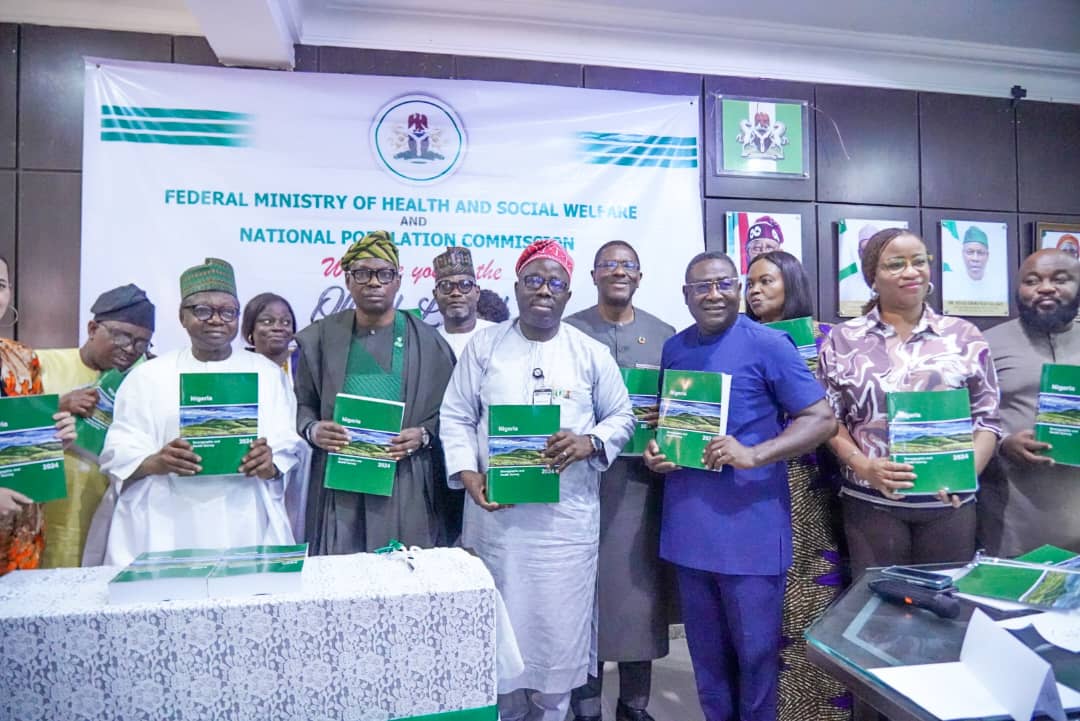
The Federal Government has unveiled the 2024 Nigeria Demographic and Health Survey (NDHS), highlighting significant improvements in key health indicators, including fertility and child mortality rates, while calling for stronger collaboration to address lingering gaps in maternal and neonatal care.
Speaking at the official launch of the report in Abuja, the Minister of State for Health and Social Welfare, Dr. Iziaq Adekunle Salako, described the NDHS as “an indispensable tool for policy decisions, health equity, and efficient resource allocation.”
The 2024 NDHS, conducted by the National Population Commission (NPC) in collaboration with the Federal Ministry of Health and Social Welfare and development partners, provided up-to-date data on reproductive, maternal, newborn, child, and adolescent health.
According to the findings, Nigeria’s total fertility rate declined from 5.3 children per woman in 2018 to 4.8 in 2024, while modern contraceptive use among married women rose from 12 percent to 15 percent. The proportion of women whose family planning needs are met also increased to 37 percent.
The report further shown that under-five mortality dropped to 110 deaths per 1,000 live births from 132 in 2018, though neonatal mortality remains high at 41 deaths per 1,000 live births, compared to 39 five years ago.
Dr. Salako said the findings underscored the need to intensify efforts to reduce preventable maternal and child deaths, especially in the neonatal period. He noted that the government has launched the Maternal and Neonatal Mortality Reduction Initiative (MAMII) and the Nigeria Child Survival Action Plan (2025–2029) to address these challenges.
The NDHS also revealed disparities in immunisation coverage, with 39 percent of children aged 12–23 months fully vaccinated and 31 percent unvaccinated. Ownership of insecticide-treated nets stands at 60 percent of households, while about half of pregnant women reported usage.
On non-communicable diseases, the Minister lamented that fewer than 10 percent of adults aged 15–49 have ever been screened for blood pressure or blood sugar despite high national prevalence.
Dr. Salako reaffirmed President Bola Tinubu’s commitment to using the NDHS data to drive health sector reforms and strengthen evidence-based policymaking.
“President Tinubu has identified health as a critical pillar of national development,” he said. “Through improved funding, policy reforms, and executive orders, the administration is steadily improving Nigeria’s health indices.”
In his remarks, NPC Chairman, Hon. Nasir Isa Kwarra, commended development partners including USAID, UNICEF, UNFPA, WHO, The World Bank, The Global Fund, and the Bill & Melinda Gates Foundation for their support.
Kwarra said the survey covered over 40,000 households across all states and the FCT, providing reliable data to guide national and subnational planning.
Dr. Salako described the NDHS as “both a mirror and a map showing us where we stand and how to move forward,” adding that Nigeria remains committed to building a modern, equitable, and people-centred health system.