
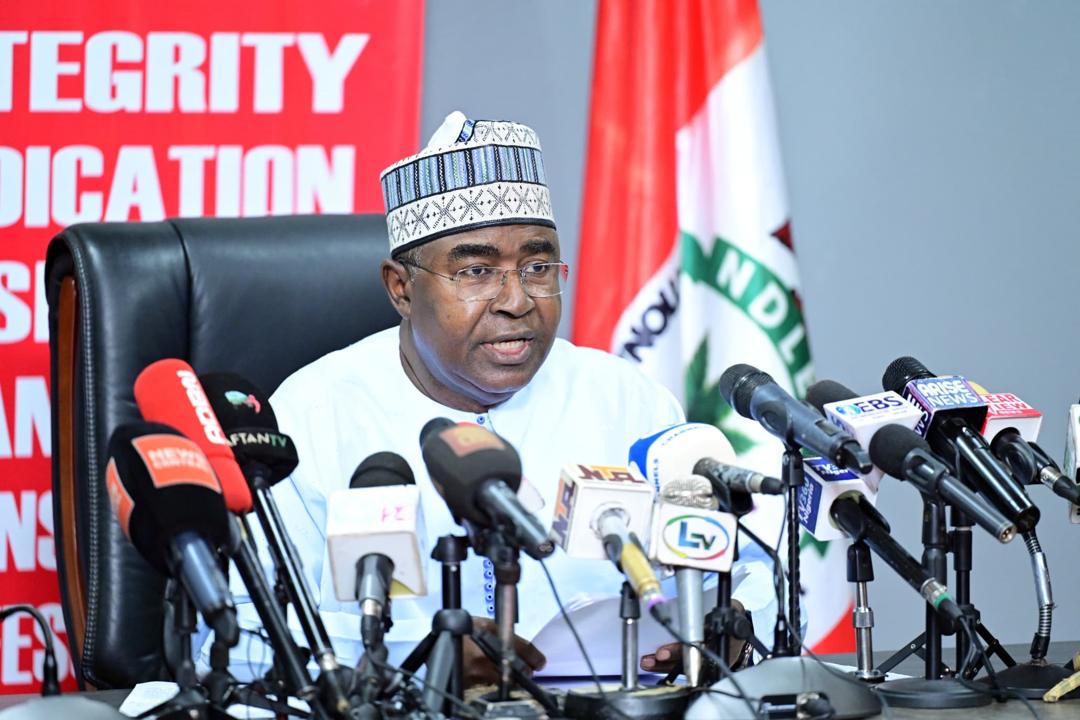
Chairman and Chief Executive Officer of the National Drug Law Enforcement Agency (NDLEA), Brig. Gen. Mohamed Buba Marwa (Rtd), has called on all stakeholders to give strong nationwide support to Nigeria’s alternative development programme, aimed at curbing illicit cannabis cultivation and strengthening national security.
Marwa made the appeal on Tuesday during a press conference in Abuja, highlighted Africa’s first large-scale alternative development drug control initiative, recently piloted in three cannabis-producing communities in Ondo State.
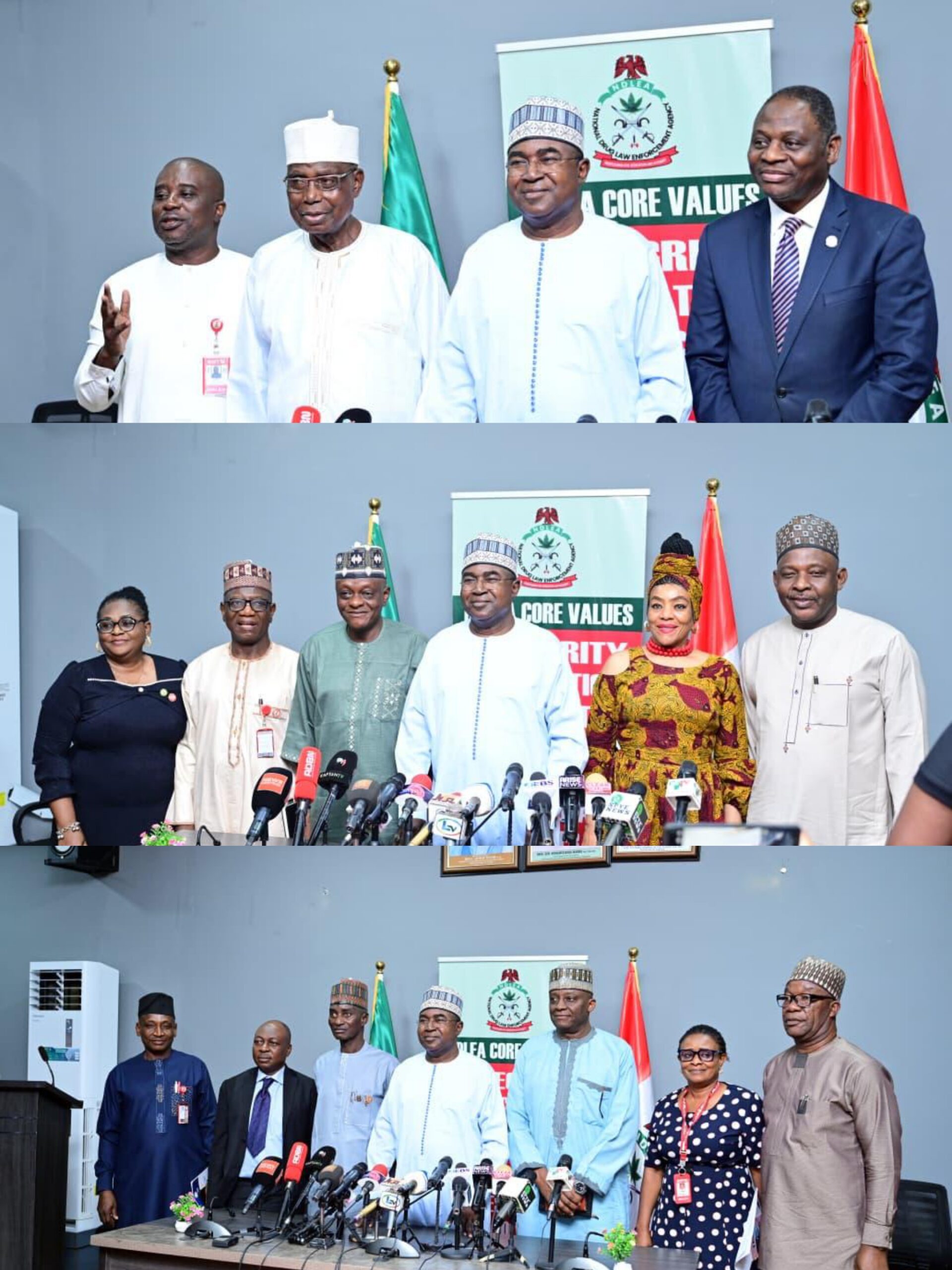
The pilot scheme, launched in Ilu Abo, Ifon and Eleyewo, is designed to replace illegal cannabis farming with sustainable agricultural and economic activities that can uplift rural communities and reduce crime.
According to Marwa, the programme goes far beyond simple crop substitution and focuses on long-term community development.
“Its wider benefits include strengthening rural economies through value-chain development, reducing pressure on law enforcement, promoting peace and social cohesion, supporting food production, and improving Nigeria’s global standing in drug control,” he said.
He described the initiative as a “win-win solution” for communities, government, and national security, noting that early results from Ondo State show that alternative development works when local people are actively involved.
Marwa called on all stakeholders including federal, state, and local governments, traditional rulers, development partners, private sector actors, civil society groups, and the media to support and sustain the programme.
“We call on all stakeholders to give a strong national response and sustained support,” he said.
The NDLEA boss also appealed to communities affected by illicit drug cultivation to embrace the initiative and work with the agency to build lawful and productive livelihoods.
“This is not just a drug control programme. It is a people-centred development intervention designed to uplift communities, strengthen national security, and secure Nigeria’s future,” he added.
Marwa reaffirmed the agency’s commitment to expanding the programme nationwide in line with President Bola Ahmed Tinubu’s Renewed Hope Agenda.
Speaking on the impact of the pilot project, he said traditional and community leaders in Ondo State had expressed strong support, described the programme as a source of renewed hope and confidence in government.
He noted that the scheme offered farmers legal income, reduced poverty, improved food security, and enhanced community stability by weakening criminal networks linked to drug cultivation.
Highlighting the scale of Nigeria’s drug challenge, Marwa cited the 2018 National Drug Use Survey, which showed that about 14.3 million Nigerians aged between 15 and 64 used psychoactive substances within one year.
He disclosed that cannabis remained the most widely used and cultivated illicit drug in the country, with about 10.6 million users and nearly 8,900 hectares under illegal cultivation in the South-West alone.
“Cannabis is not a marginal issue in Nigeria. It is the most frequently used and widely available illicit drug,” he said.
Marwa also revealed that over 75 per cent of the 15 million kilograms of illicit drugs seized by the NDLEA in the past five years were cannabis, warning that such volumes posed serious threats to youth development, public health, and national security.
Despite the challenges, he expressed optimism that the alternative development initiative would reverse the trend if properly supported.
He commended local and international partners for backing the pilot project, including the United Nations Office on Drugs and Crime (UNODC), the International Institute of Tropical Agriculture (IITA), the Global Partnership on Drug Policies and Development, and the Mae Fah Luang Foundation.
Marwa also acknowledged the support of Ondo State Governor, Dr. Lucky Ayedatiwa, and the Minister of Agriculture and Food Security, Senator Abubakar Kyari.
He said with sustained collaboration, the programme would help build safer communities, strengthen rural economies, and secure Nigeria’s future.