
Protests against the Chief Executive Officer of the Nigerian Midstream and Downstream Petroleum Regulatory Authority (NMDPRA), Engr. Farouk Ahmed, intensified in Abuja on Friday, as lawyers and rights activists joined calls for his probe over alleged financial misconduct.

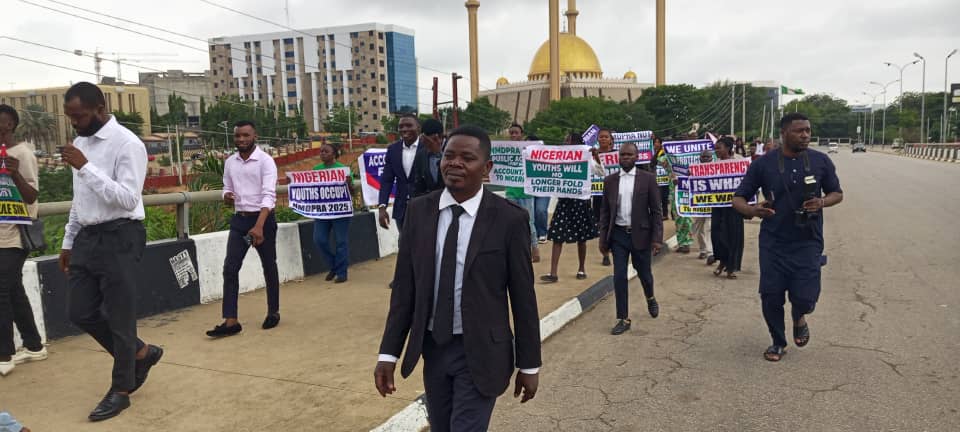
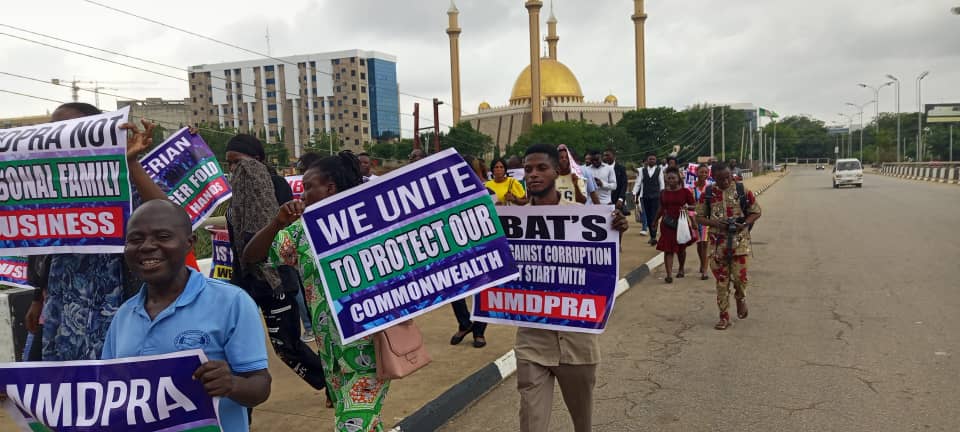
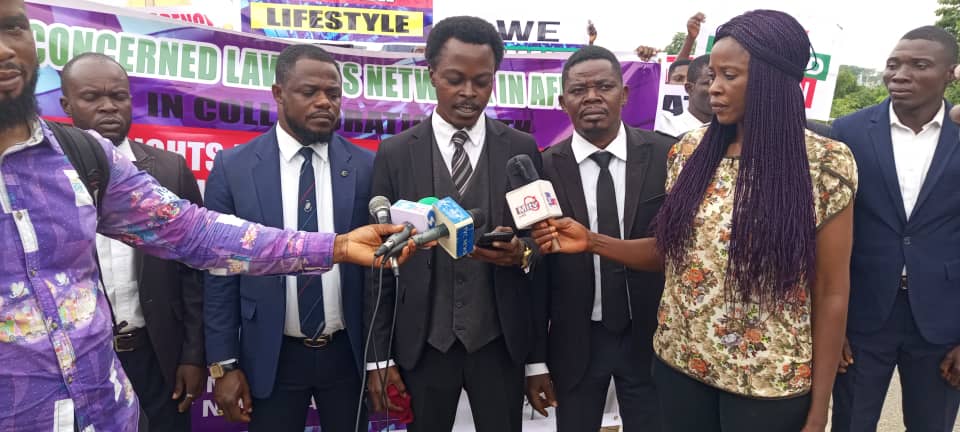
Under the aegis of the Concerned Lawyers Network in Africa, the legal professionals staged a peaceful procession and linked up with another civil society group, Civil Rights and Anti-Corruption Crusade Network, at the NMDPRA head office in the Central Business District.
Addressing journalists during the protest, spokesperson of the groups, Barrister Aquila Kendo, called on President Bola Ahmed Tinubu and anti-corruption agencies to initiate an urgent investigation into the allegations of corruption, abuse of office, and regulatory compromise leveled against Engr. Ahmed.
“We are here today to demand accountability. The allegation that over $5 million was diverted to sponsor the foreign education of Engr. Ahmed’s children must not be ignored. It is our civic responsibility to speak out and ensure this matter is not swept under the carpet,” Barr. Kendo said.
He stated that the protests will persist until the government takes concrete steps to investigate and take appropriate action against the NMDPRA boss.
The protesters alleged that Engr. Ahmed used public funds to enroll his four children—Faisal, Farouk Jr., Ashraf, and Farhana—in ultra-expensive institutions in Switzerland and India, including Aiglon College, Institut Le Rosey, European University Montreux, and La Garenne International School, with annual tuition fees reportedly ranging from $80,000 to $140,000.
The groups further claimed that the tuition and living expenses totaling over $5 million were funneled through proxy accounts and unreported assets, none of which appeared in the NMDPRA CEO’s official asset declarations.
Since the beginning of the week, various civil society organizations have continued to mount pressure on the federal government to remove or suspend Engr. Ahmed pending the conclusion of an independent investigation.
They insisted that the fight against corruption must be holistic and that top public officials found wanting must be held accountable, regardless of their status.