
The Nigerian Air Force (NAF) has reaffirmed its commitment to leveraging advanced technology and strategic partnerships to strengthen national security, as it moves to deepen collaboration with the Nigerian Communications Satellite (NIGCOMSAT) Limited.
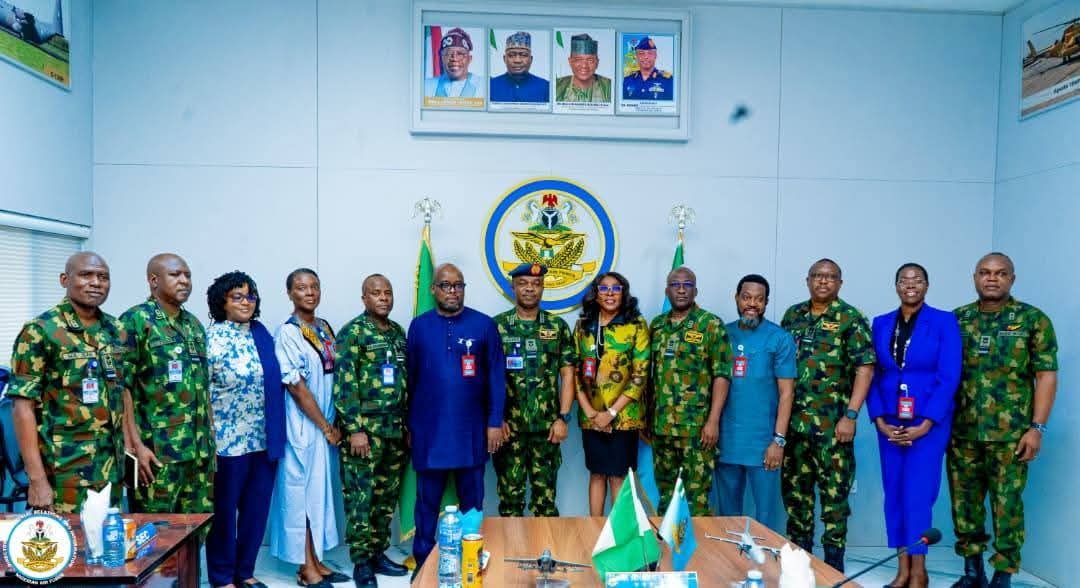
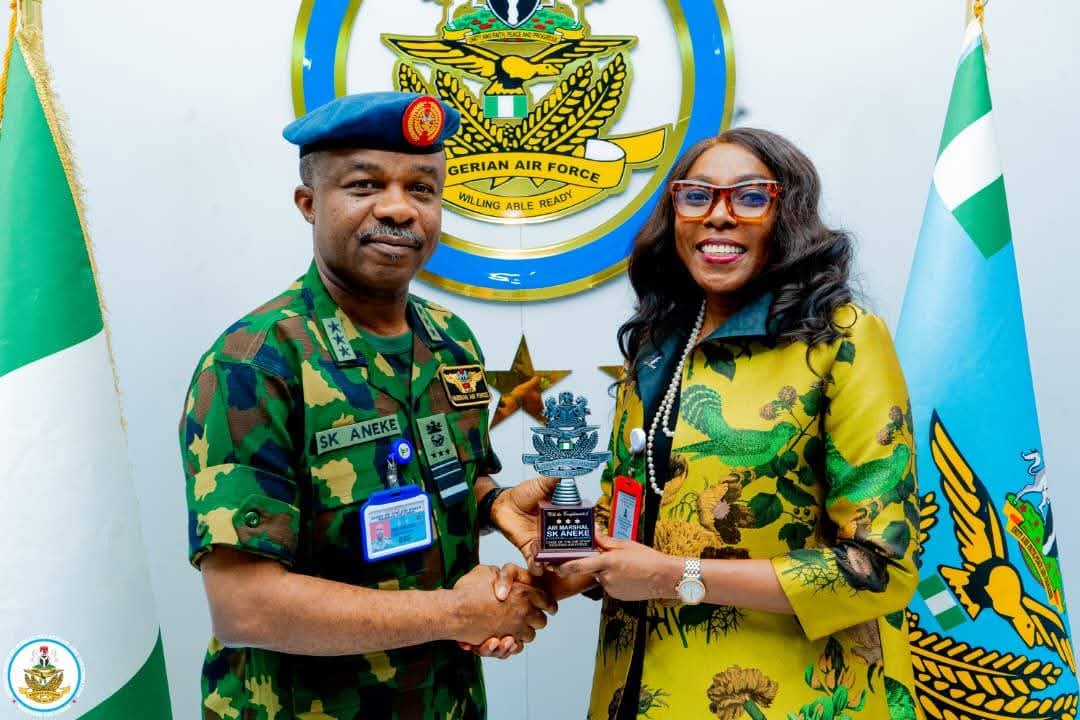
The Chief of the Air Staff, Sunday Kelvin Aneke, gave the assurance while receiving the Managing Director/Chief Executive Officer of Nigerian Communications Satellite Limited, Jane Nkechi Egerton-Idehen, during a courtesy visit to the Headquarters of the Nigerian Air Force in Abuja on Wednesday.
Air Marshal Aneke said the visit highlights the growing importance of space-enabled capabilities in modern military operations, while commending NIGCOMSAT for its pioneering role in satellite communications and its contributions to national development and security.
He reiterated that the NAF remained guided by his command philosophy of building and sustaining a highly motivated, professional and mission-ready force capable of delivering decisive airpower effects in synergy with surface forces.
According to him, expanding collaboration with NIGCOMSAT in key areas such as secure satellite communications for operations and training, real-time situational awareness through satellite imagery and data, and capacity building in communications technologies will significantly enhance operational efficiency.
The CAS also emphasised the importance of adopting innovative solutions that will strengthen mission readiness and deepen inter-agency operational integration.
“Practical, forward-looking and results-driven partnerships are essential to improving operational effectiveness and precision across Nigeria’s air and space domains,” he said.
In her remarks, Egerton-Idehen appreciated the warm reception and reaffirmed NIGCOMSAT’s readiness to support the NAF with secure, reliable and innovative satellite-enabled solutions tailored to defence and national security needs.
She noted that strengthening collaboration with the NAF aligns with NIGCOMSAT’s mandate to provide resilient communication infrastructure for critical national institutions.
Both leaders expressed optimism that sustained engagement between the two organisations would enhance operational coordination, promote technological advancement and strengthen national security outcomes.