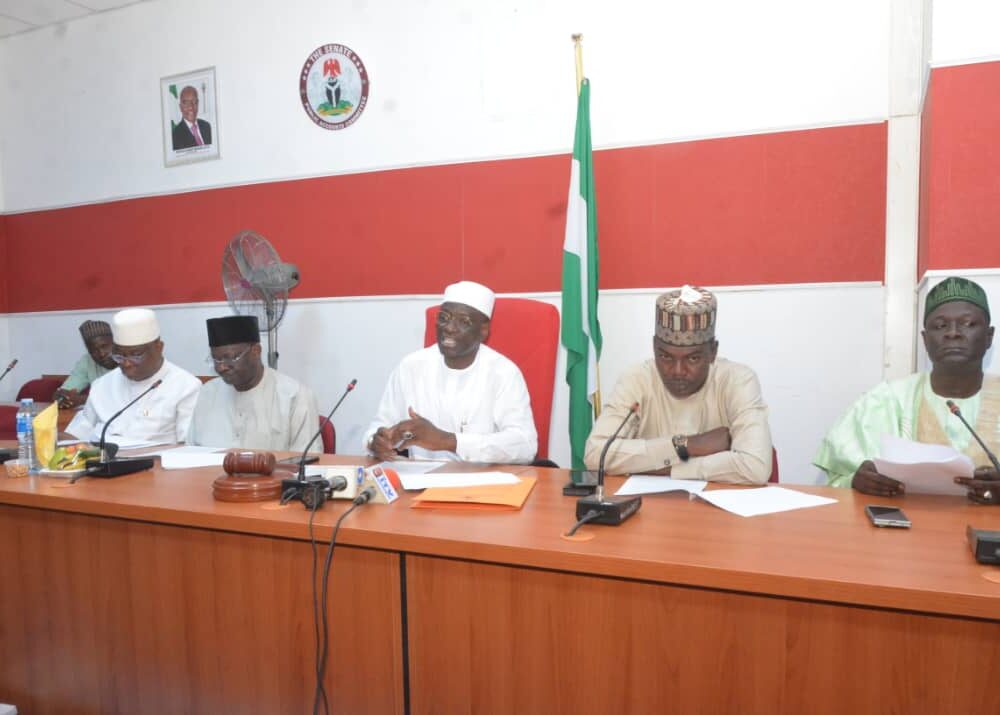

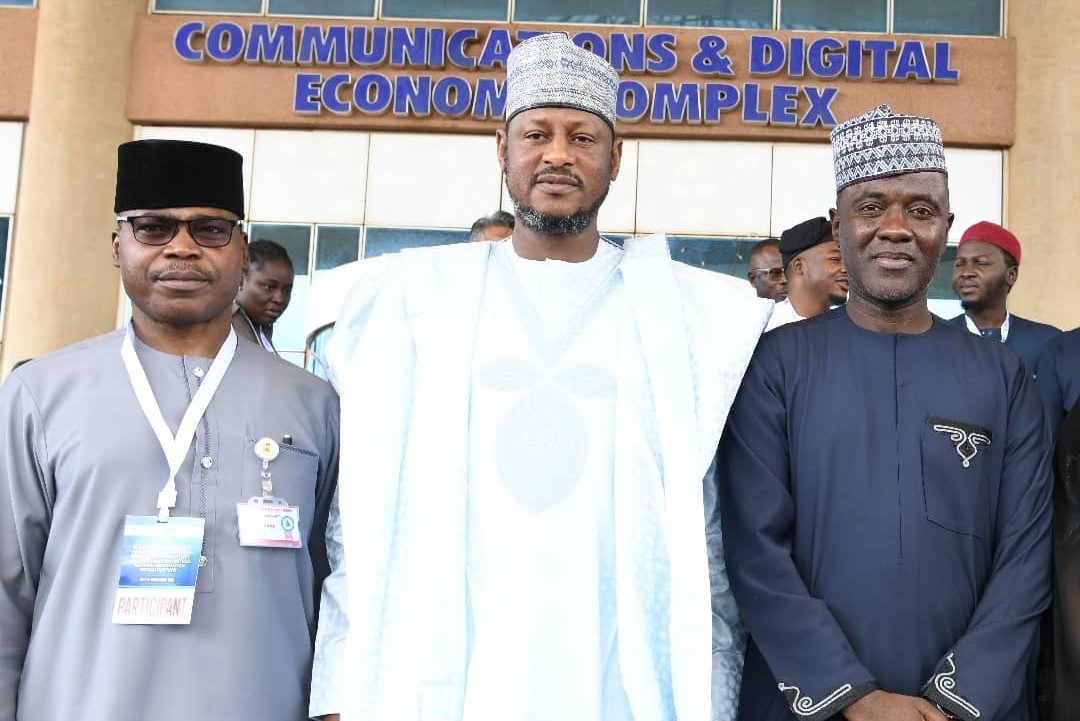
The Executive Vice Chairman of the Nigerian Communications Commission (NCC), Dr. Aminu Maida, has made a passionate appeal for national alignment on broadband infrastructure policies, describing digital connectivity as the foundation of Nigeria’s economic transformation. Speaking at a high-level Business Roundtable held at the NCC Digital Economy Complex in Mbora, Abuja, Dr. Maida warned that states must act fast or risk being left behind in the digital revolution.
The event, themed “Right of Way and Protection of Broadband Infrastructure The Road to Success in Broadband Investment and Connectivity,” brought together state officials, industry stakeholders, and development partners to strategise on accelerating broadband deployment across the country.
Opening his remarks with a thought-provoking question “How much is an hour of connectivity worth?” Dr. Maida explained the far-reaching impact of digital access on businesses, livelihoods, and national security.
“Consider the industrialist in Enugu closing an overseas shipment, the miner in Zamfara consulting geologists remotely, the entrepreneur in Lagos running an online store,” he said. “In each case, connectivity is the quiet enabler. When it fails, opportunities evaporate, productivity stalls—and in critical situations, lives can be put at risk.”
Dr. Maida said Nigeria has made significant strides in expanding access, with broadband penetration reaching 48.81% as of August 2025, and over 140 million Nigerians connected to the internet. He added that achieving the 70% target by the end of 2025, as outlined in the National Broadband Plan, would result in massive economic and social dividends.
“Research shows that a 10% increase in broadband penetration can drive approximately 1.38% GDP growth in developing economies,” he said. “Imagine what 20, 30, or even 40% could do. We are talking about billions in economic output, new jobs, and innovation hubs across our states.”
He highlighted the global examples of Rwanda and India as models for Nigeria to follow countries that have successfully used strategic investments in digital infrastructure to leapfrog into global relevance.
“With over 200 million people and a median age of 18, Nigeria cannot only follow those trajectories but surpass them if we equip our youth with reliable, affordable, high-speed connectivity,” he said.
Maida acknowledged the support of President Bola Ahmed Tinubu and the Honourable Minister of Communications, Innovation and Digital Economy, Dr. Bosun Tijani, for providing strong political will to drive broadband development. He pointed to the CNII Presidential Order, signed in June 2024, as a landmark decision that officially recognizes telecom infrastructure as critical national infrastructure, enabling law enforcement to crack down on vandalism and network disruptions.
“The CNII Order gives us the executive support to ensure continued service provision while dealing with vandalism, theft, and denial of access,” he said. “Between January and August this year alone, we recorded 19,384 fibre cut incidents, 3,241 equipment thefts, and over 19,000 cases of telecom site access denials. These figures are alarming and underscore the urgency of this conversation.”
Dr. Maida said the NCC is collaborating closely with the Office of the National Security Adviser (ONSA) to operationalise the Order, establish industry-wide security standards, and launch public awareness campaigns. He revealed that ONSA had successfully dismantled major cartels involved in telecom equipment theft in the past two years.
He also addressed the longstanding issue of Right of Way (RoW) charges, which he described as one of the “most significant barriers to broadband deployment.” Despite the NGF’s agreed cap of ₦145 per linear metre, many states still impose high and inconsistent fees.
“We’ve intensified advocacy with state governments. I’m pleased to report that in the past two years, five additional states—Adamawa, Bauchi, Enugu, Benue, and Zamfara have waived RoW fees entirely, bringing the total to 11. Another 17 have adopted the ₦145 benchmark,” he said.
He called on all remaining states to align with the national standard and go further by institutionalising faster permit approvals, coordinating with public works to avoid fibre cuts, and adopting “dig-once” protocols.
In a boost to industry confidence, Dr. Maida confirmed that telecom operators have committed over $1 billion in new broadband investments, following regulatory reforms and the approval of cost-reflective tariffs earlier this year.
“This shows that when the policy environment is stable and predictable, investors respond. But we must continue to ensure that consumers benefit through better quality of service,” he noted.
Looking ahead, the NCC EVC announced the launch of two strategic tools on October 9. The Ease of Doing Business Portal will serve as a one-stop-shop for broadband deployment information across the states. The Nigeria Digital Connectivity Index (NDCI) will rank all 36 states and the FCT on digital readiness and infrastructure competitiveness.
“What gets measured gets managed; what is published gets improved,” he said, stressing that transparency would drive accountability and healthy competition among states.
Closing his remarks, Dr. Maida issued a strong call to action to governors and state representatives:
“Every governor and state in this room holds a strategic lever. Waiving RoW charges, protecting telecom infrastructure, and proactively supporting fibre deployment are decisions that can determine the prosperity or stagnation of your states,” he warned.
“In earlier eras, a community without a railway or electricity could still subsist. In today’s world, a community without digital connectivity is invisible. It is cut off from education, healthcare, markets, and opportunity. We must act decisively state by state, community by community to ensure no one is left behind.”
He concluded with a powerful reminder of the stakes ahead:
“The digital revolution does not wait. Let us align, invest, and protect for the prosperity of our people and the future of our nation. I leave you with this question: Will we align or be left behind?”