The Nigeria Customs Service (NCS), in partnership with the Presidential Enabling Business Environment Council (PEBEC), has launched a comprehensive reform agenda aimed at enhancing port efficiency and strengthening Nigeria’s trade competitiveness.
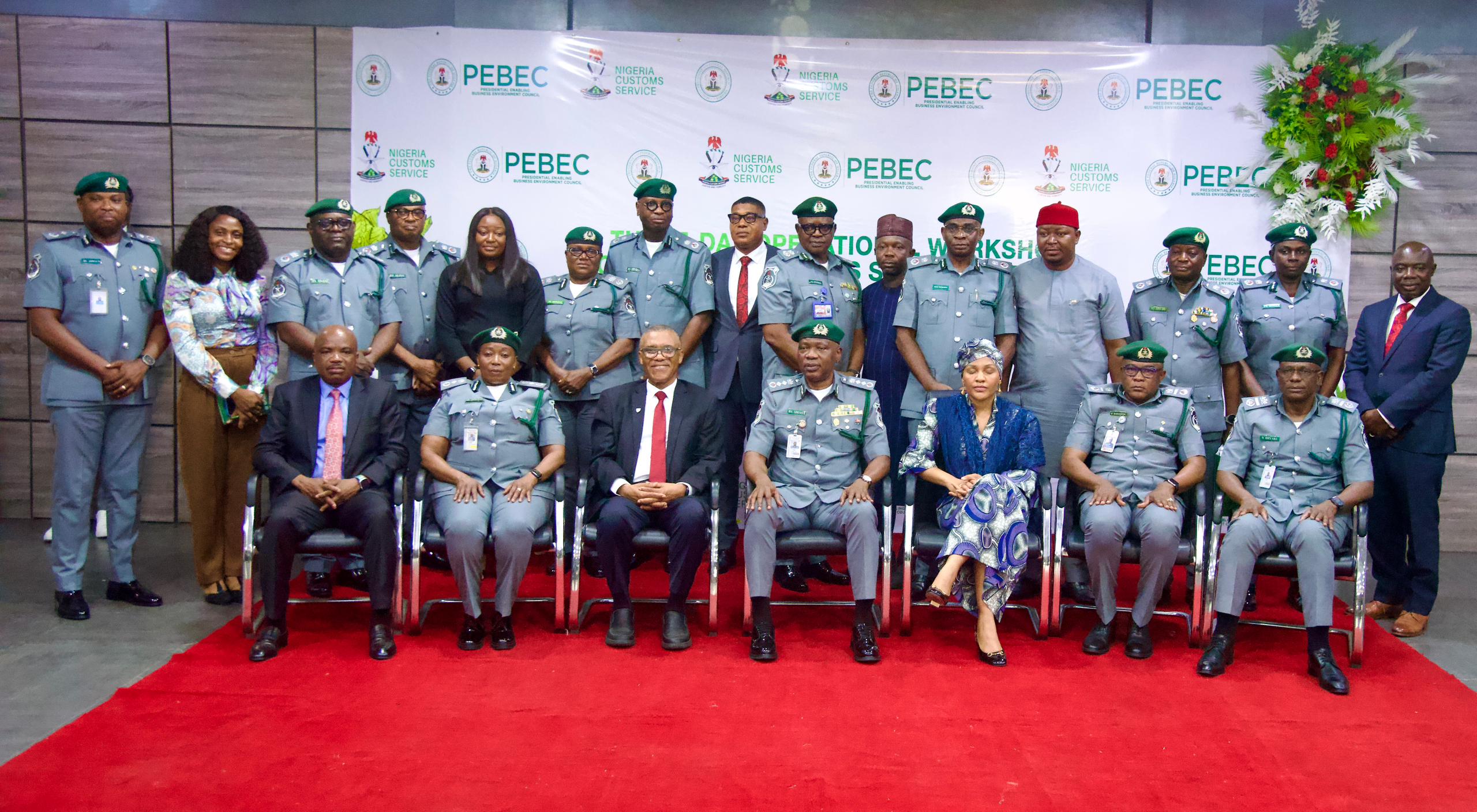
The initiative was unveiled during a three-day operational workshop which commenced on Tuesday, April 7, 2026, in Apapa, Lagos. The workshop, themed “Customs Leadership in Port Efficiency, Inspection Reform and Clearance Timeline,” brings together key stakeholders to align strategies for improved port operations.
Speaking at the event, Comptroller-General of Customs, Adewale Adeniyi, outlined a five-pillar reform strategy focused on joint inspections, risk-based cargo clearance, optimisation of scanning infrastructure, enforcement of service timelines, and enhanced inter-agency collaboration. He emphasised that the Service is shifting from policy formulation to effective implementation.
“This workshop is about closing the distance between knowing and doing. The Service must now focus on translating established best practices into consistent operational outcomes,” Adeniyi stated.
He further highlighted the transition to intelligence-led cargo processing, stressing that investments in digital platforms and scanning systems must translate into faster, more transparent clearance procedures for traders.
To ensure accountability, Adeniyi disclosed that the workshop would produce a reform execution matrix to be rigorously monitored, adding that he would personally track progress. He urged officers to uphold professionalism, integrity, and commitment in carrying out the reforms.
“The reform implementation matrix will not end up in a filing cabinet. It will be actively monitored,” he said.
In her remarks, the Director-General of PEBEC, Zahrah Mustapha-Audu, underscored the importance of adopting data-driven and risk-based inspection systems to improve efficiency and reduce the cost of doing business.
“We must move from inspecting everything to inspecting the right thing,” she noted, adding that efficient and transparent border processes are key to boosting Nigeria’s trade position.
Earlier, Deputy Comptroller-General in charge of Tariff and Trade, Caroline Niagwan, said the Service’s evolving mandate places it at the centre of trade facilitation and economic growth, stressing that operational efficiency must be reflected across all commands.
Meanwhile, the NCS and PEBEC delegation also visited the National Single Window facility, where they met with the Chairman of the Nigeria Revenue Service, Zacch Adedeji, alongside other stakeholders to assess progress and address existing operational gaps.