Nigeria has reiterated its commitment to strengthening its conflict prevention architecture with a focus on early warning and early response mechanisms, as stakeholders gathered in Abuja for a capacity-building engagement on peace and security.
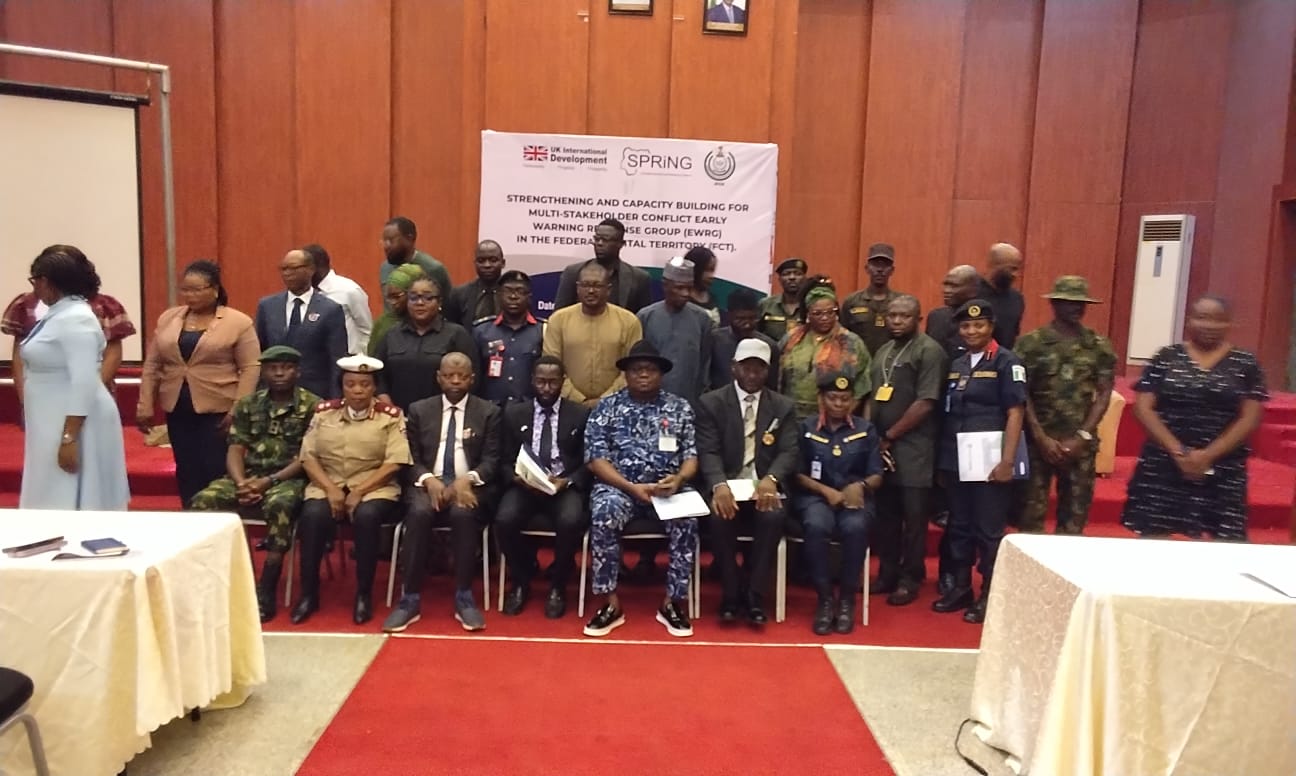
The commitment was underscored by the Minister of Foreign Affairs, Ambassador Yusuf Maitama Tuggar, who was represented by the Ministry’s Spokesperson, Mr. Kimiebi Imomotimi Ebienfa, at the Engagement Session on “Strengthening and Capacity Building of the National Early Warning Response Group (EWRG)”, held on Wednesday at the Institute of Peace and Conflict Resolution (IPCR) Conference Hall, Abuja.
The engagement, organised by the IPCR in collaboration with the Strengthening Peace and Resilience in Nigeria (SPRiNG) project of the British Foreign, Commonwealth and Development Office (FCDO), was aimed at deepening collaboration among members of the National Early Warning Response Group to build a more effective Early Warning and Early Response (EWER) system in Nigeria.
Speaking on behalf of the minister, Ebienfa said the initiative reflected the Federal Government’s resolve to prevent violent conflict, enhance national resilience, promote regional cooperation and support socio-economic development across Nigeria and Africa. He described the partnership with the FCDO as a demonstration of strong bilateral relations and shared commitment to peace and security.
He noted that the global community continues to face complex peace and security challenges, including political instability, terrorism, banditry, violent extremism and transnational organised crime, many of which are exacerbated by climate change and the proliferation of small arms and light weapons, particularly in the Sahel and across Africa.
According to him, Nigeria has continued to evolve strategic responses to these challenges in line with President Bola Tinubu’s 4-D Foreign Policy Doctrine, which prioritises development, diaspora, demography and democracy, as well as regional stability and global peace. He added that Nigeria’s recent diplomatic and security interventions in the region underscored its proactive role in addressing political crises and insecurity on the continent.
The minister emphasised that the capacity-building session further demonstrated Nigeria’s determination to strengthen its national conflict early warning and early response framework, improve data-driven reporting, and enhance coordinated responses among stakeholders within the peace and security ecosystem.
He expressed confidence that the engagement would contribute significantly to preventing violent conflict, promoting peaceful coexistence, improving food security, fostering inclusivity and justice, and supporting economic growth, in line with the Renewed Hope Agenda of the present administration.
Tuggar commended the Director-General of the Institute for Peace and Conflict Resolution and the Team Lead of the SPRiNG project under the FCDO for successfully convening the engagement session and urged participants to make the best use of the platform for constructive deliberations.