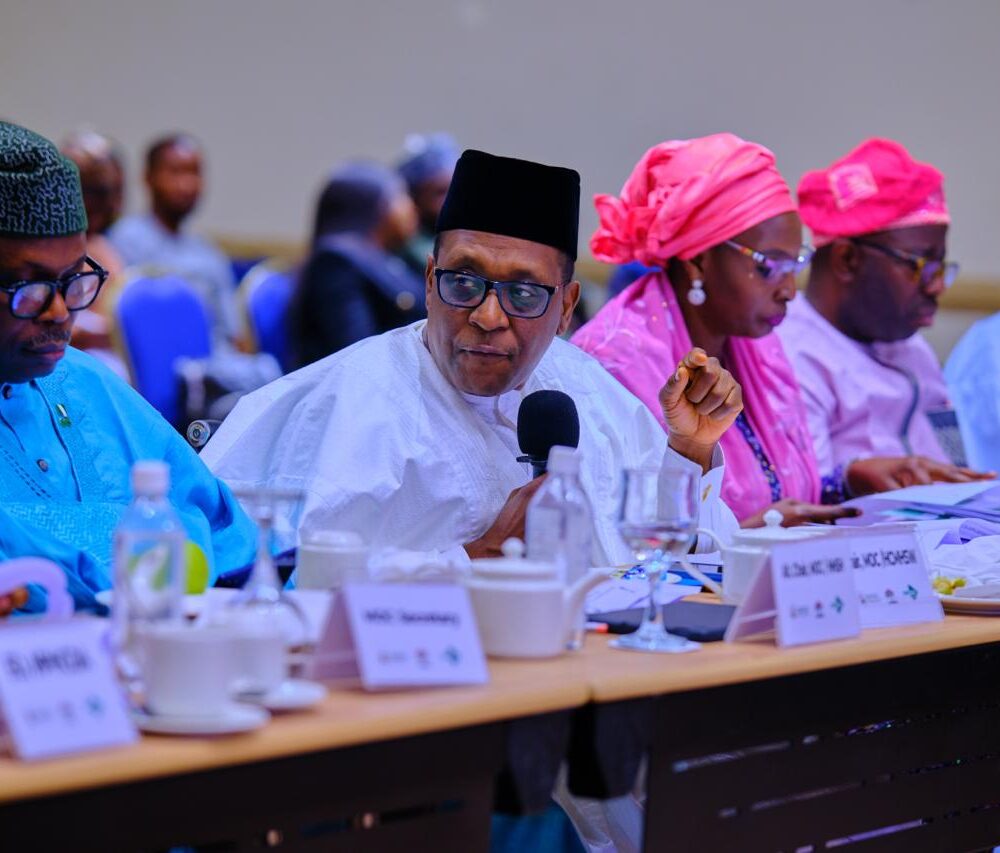

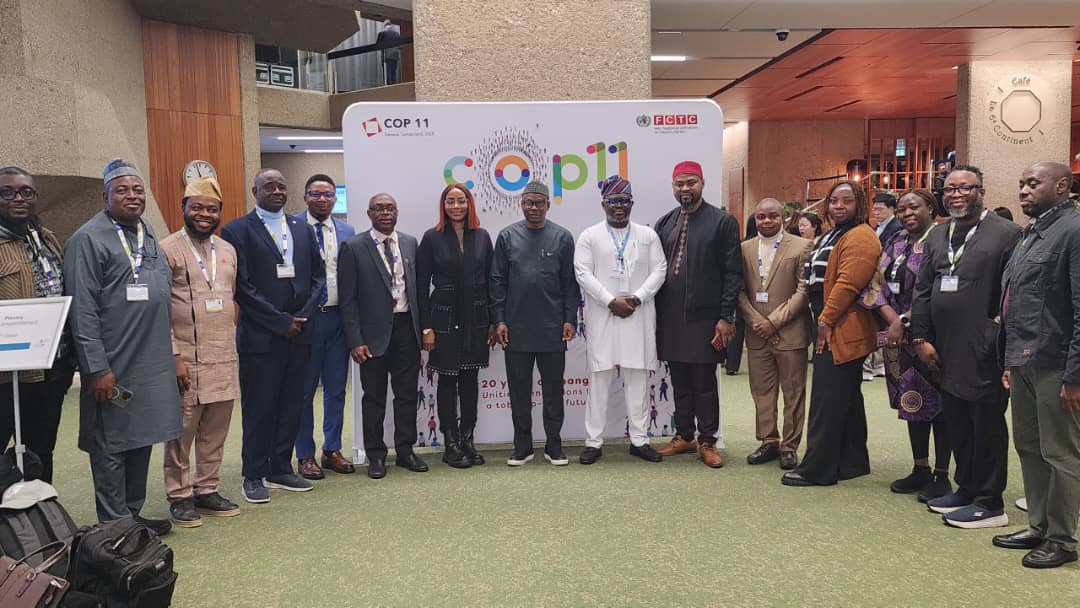
Nigeria has announced significant progress in its implementation of the WHO Framework Convention on Tobacco Control (WHO FCTC), showcasing sharp declines in tobacco use and strengthened regulatory actions, including the landmark $110 million fine recently imposed on British American Tobacco Nigeria (BATN).
Delivering Nigeria’s high-level statement at the WHO FCTC Conference of Parties (COP11) in Geneva on Monday, Minister of State for Health and Social Welfare, Dr. Iziaq Adekunle Salako, reaffirmed the country’s commitment to a tobacco-free future and alignment with the African Group. He commended the COP11 leadership for convening the global meeting and noted that Nigeria has significantly accelerated tobacco control reforms since COP10.
Dr. Salako announced the completion of Nigeria’s second Global Adult Tobacco Survey (GATS 2025), the country’s first since 2012, revealing a clear decline in daily tobacco use among adults. He said the latest findings show that graphic health warnings are having strong impact, with the proportion of smokers considering quitting rising from 26.7% in 2012 to 43.3% in 2025. He added that exposure to second-hand smoke in homes and public places has dropped sharply, reflecting improved compliance with national laws and changes in public behaviour.
The Minister explained that Nigeria is implementing new national frameworks designed to strengthen surveillance, enforcement, communication, and inter-agency collaboration in support of the National Tobacco Control Act (2015) and its Regulations (2018).
He highlighted Nigeria’s recent application of Article 19 of the WHO FCTC, describing the $110 million fine imposed on BATN by the Federal Competition and Consumer Protection Commission as one of the most consequential liability actions ⁰. The decision, he said, underscores the government’s resolve to hold the tobacco industry accountable for actions that undermine public health.
Dr. Salako also drew attention to new regulations introduced by the National Film and Video Censors Board, which enforce a comprehensive ban on tobacco advertising, promotion, and sponsorship across Nollywood films, television, digital platforms, and music videos. He described the move as a historic step for a country that hosts one of the world’s largest film industries and a major global music scene.
Reflecting on the COP11 theme, “Healthy planet, healthy future: uniting for a tobacco-free generation,” the Minister said the 20th anniversary of the WHO FCTC presents an opportunity force in renewed global commitment to preventing non-communicable diseases and reducing tobacco-related environmental harm. While acknowledging persistent challenges such as subnational enforcement gaps and emerging nicotine products, he emphasized that Nigeria remains fully committed to international cooperation and will continue to seek technical support and knowledge exchange to strengthen its tobacco control agenda.
He wished delegates successful deliberations as global partners work toward a tobacco-free world.
.