
The Federal Government of Nigeria, in partnership with global collaborators and research institutions, has successfully concluded the Global Evidence, Local Adaptation (GELA) project an ambitious, three-year health initiative aimed at improving newborn and child health outcomes by localizing evidence-based clinical guidelines to reflect Nigeria’s healthcare realities.
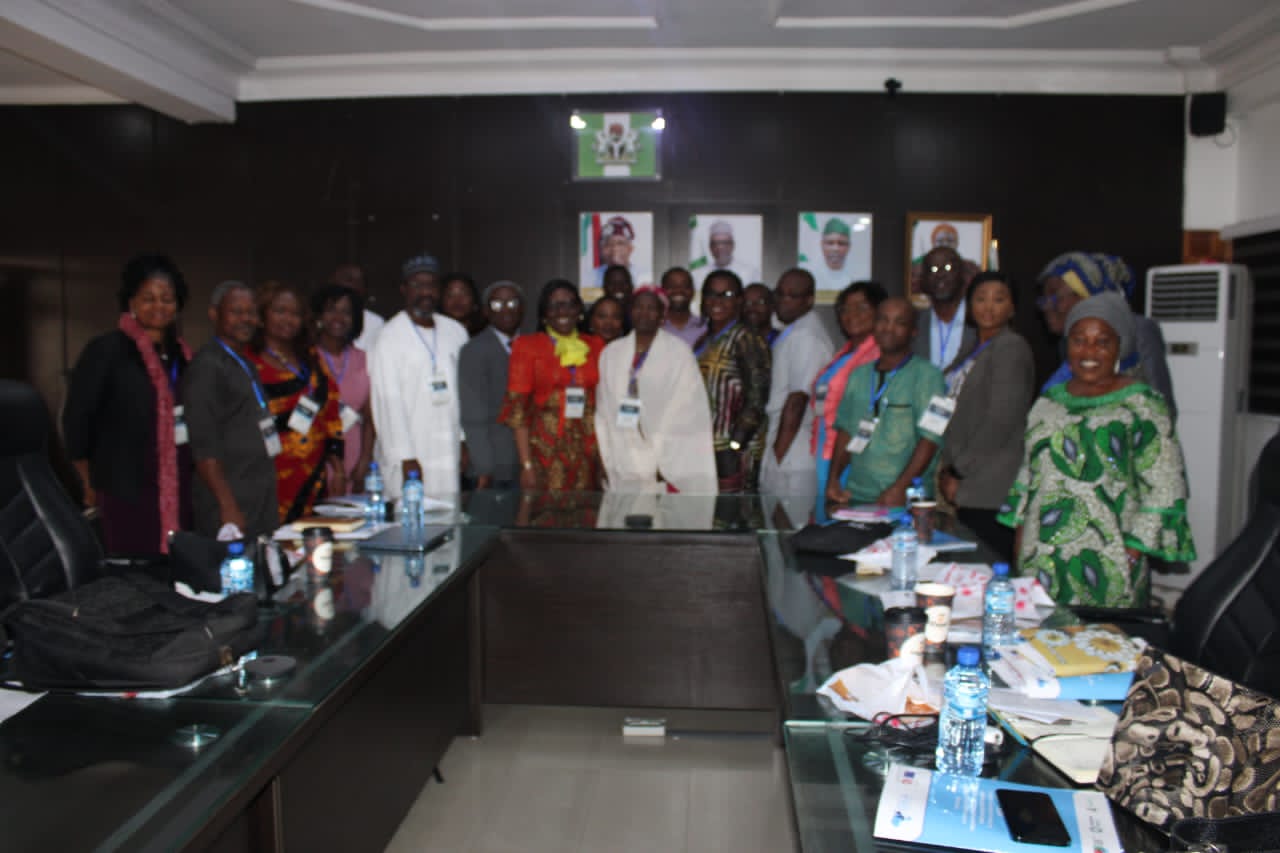
The End-of-Project Dissemination Meeting, held at the Federal Ministry of Health & Social Welfare Headquarters in Abuja, brought together key stakeholders from the Ministry, Cochrane Nigeria, international experts, academia, and professional bodies, including the Paediatric Association of Nigeria.
In her remarks, Dr. Amina, Director of the Child Health Division who represented the Director of the Family Health Department, expressed the Ministry’s full support for the GELA initiative. She reaffirmed the government’s commitment to science-based solutions for reducing child mortality and improving health services at the primary healthcare level.
Also speaking at the meeting, Dr. Gbenga Ijaodole, Deputy Director of Research and Knowledge Management representing Dr. Kamil Shoretire, Director of Health Planning, Research, and Statistics stressed the alignment of the GELA project with Nigeria’s national vision to save lives, alleviate suffering, and enhance access to quality healthcare, especially for vulnerable populations.
Launched in April 2022 and concluded in August 2025 after a brief extension, the GELA project was implemented in three sub-Saharan African countries Nigeria, Malawi, and South Africa. Nigeria served as a key implementation hub, with the initiative led by Cochrane Nigeria, headquartered in Cross River State. The project was funded by the European & Developing Countries Clinical Trials Partnership (EDCTP2), which had no role in the design or execution of the project.
According to Professor Martin Meremikwu, Director of Cochrane Nigeria, GELA’s greatest achievement lies in its dual focus: producing context-specific, high-quality clinical guidelines and building local capacity to engage in evidence synthesis and adaptation. He said the project demonstrated that while global science provides a framework, healthcare interventions must be locally tailored to be effective. He added that the project moved beyond merely adopting foreign guidelines and instead built a rigorous, evidence-informed process for local adaptation.
The project followed a structured six-stage approach through which over 27 health sub-topics were explored. Areas such as preeclampsia management were identified for further research due to gaps in available evidence.
Presentations by Dr. Moriam Chibuzor, Senior Scientist on the project, and Dr. Dachi Arikpo, Health Economist, highlighted the project’s methodology and the importance of stakeholder engagement, evidence mapping, and collaborative review processes. The initiative also served as a model for policy-research partnerships that can shape Nigeria’s broader health strategies.
According to Dr. Chibuzor, the final outputs are expected to contribute significantly to Nigeria’s role in the World Health Organization (WHO) guideline program, while simultaneously improving service delivery across all levels of care.
A major highlight of the meeting was the active participation of the Paediatric Association of Nigeria, with its President, Professor Ekanem Ekure, in attendance. She commended the Federal Ministry of Health and Social Welfare particularly the Child Health Division and the Family Health Department for their unwavering collaboration throughout the project’s lifecycle. She stated that the past three years had been marked by remarkable progress and meaningful cooperation. Professor Ekure, also representing the Atlantic Astronomy Bureau, praised the project’s impact, particularly in enhancing hand hygiene and infection prevention and control among healthcare workers, youth, and the general public, as well as in improving care for low-birth-weight and preterm babies to reduce neonatal mortality and boost survival rates.
The finalized guidelines, presented in draft formats, infographics, and interactive digital versions via the MAGICapp platform, are expected to influence national policy and clinical practice. Stakeholders at the meeting also explored dissemination strategies to ensure the guidelines are widely adopted and implemented across Nigeria’s health sector.
The successful completion of the GELA project reaffirmed Nigeria’s commitment to delivering cost-effective, high-quality, and contextually appropriate healthcare interventions, particularly for children and newborns, in line with the nation’s drive toward Universal Health Coverage and reducing preventable deaths.