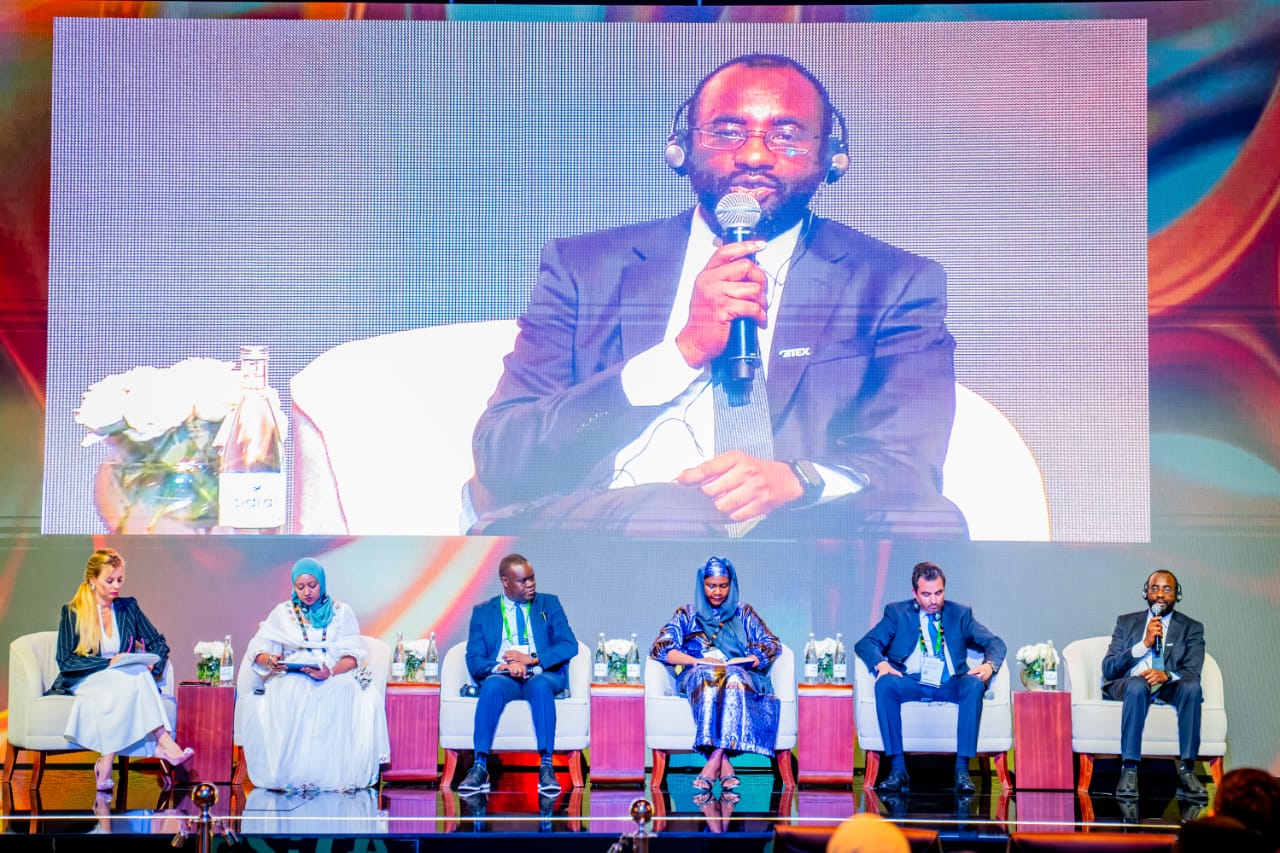
The Director General of Nigeria’s National Information Technology Development Agency (NITDA), Kashifu Inuwa, has warned that cybersecurity can no longer be viewed solely as a technical or IT challenge, urged a shift toward comprehensive “Total Resilience” in response to increasingly sophisticated AI-driven cyber threats.
Speaking during a high-level panel on Cyber Resilience at the 2026 GITEX Africa summit, Inuwa described the current digital landscape as being at a critical inflection point, where emerging technologies are fundamentally reshaping both opportunities and risks in cyberspace.
“Cybersecurity is no longer just a technical issue. It is a strategic imperative for national development,” Inuwa stated. “We must look beyond technology alone and build resilience through people, processes, regulations, and infrastructure.”
Inuwa emphasised that human factors remain the weakest link in cybersecurity, citing data that shows approximately 95% of digital breaches result from human error rather than technological failures. “The most sophisticated technology cannot protect us if the human element is overlooked,” he noted. “Our goal is to transform every citizen into a human firewall – the first and most critical line of defence.”
To strengthen this human dimension, the Nigerian government has rolled out the National Digital Literacy Programme, which targets 70% digital literacy by 2027 and 95% by 2030, with strong emphasis on digital safety and cybersecurity awareness. This is complemented by the 3 Million Tech Talent Programme, designed to develop a critical mass of Nigerian professionals in cybersecurity, data science, and artificial intelligence through specialised training, hackathons, innovation challenges, and mentorship schemes.
“We want to create an environment where young Nigerians become innovators and solution providers, rather than mere consumers of technology,” Inuwa said.
Addressing Nigeria’s position in global cybercrime indices, Inuwa called for a nuanced understanding, noting that nations with higher levels of digital adoption naturally experience greater cyber activity. He reiterated the government’s commitment to redirecting talent toward constructive innovation and national protection.
On the legislative front, Nigeria is actively reviewing and updating the Cybercrimes Act 2015 to address emerging threats. The country’s National Cybersecurity Architecture, coordinated by the Office of the National Security Adviser, is supported by a 24/7 Cybersecurity Operations Centre equipped with advanced capabilities, including AI-enabled threat detection and dark web monitoring.
Inuwa stressed the importance of public-private collaboration, noting that NITDA is working closely with government institutions, critical infrastructure operators, and the private sector.
“Cyber resilience is a collective responsibility,” he added. “By effectively integrating people, technology, and regulation, Nigeria can build a secure and globally competitive digital economy.”
The initiatives highlighted at GITEX Africa 2026 reflect Nigeria’s strategic approach to converting cybersecurity challenges into opportunities for innovation, economic growth, and enhanced national security in the era of artificial intelligence.