
In the Name of Allah, the Beneficent, the Merciful
All perfect praise be to Allah the Lord of the Worlds. May His peace and blessings be upon our beloved Prophet Muhammad (Peace be upon him) and upon all his family and companions.
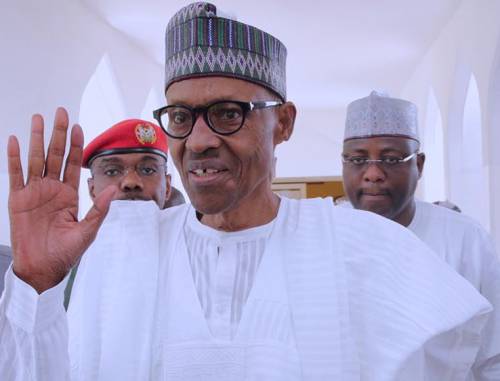
Dear brothers and sisters! Two years before his death, Nigeria’s former President Muhammadu Buhari publicly asked Nigerians for forgiveness.
The appeal has again resurfaced, following his passing in London at the age of 82 on Sunday, July 13.
On April 21, 2023, with just over a month left in office, Buhari had addressed a gathering of dignitaries, ministers, and residents of the Federal Capital Territory during an Eid-el-Fitr Sallah homage at the Presidential Villa in Abuja.
While delivering what would become one of his most reflective speeches as president, he thanked Nigerians for the honour to serve for two terms, 2015-2023, while also seeking their forgiveness.
Buhari also stated that he welcomed all complaints and criticisms in good faith, acknowledging them as part of the responsibility he had prayed for and willingly accepted from Allah. He said:
“Allah gave me an incredible opportunity to serve the country. We are all humans. If I have hurt some people along the line of my service to the country, I ask that they pardon me. All those that I have hurt, I ask that they pardon me.”
The former president also used the occasion to look back on more than four decades of service to the country, from his days as a young military officer to his time as military Head of State (1983 to 1985), and later, as a democratically elected president (2015 to 2023).
He recounted the trials he endured, including his imprisonment after being overthrown in a coup, three failed presidential campaigns, and his eventual comeback in 2015. He said:
“I dared the politicians and ended up at the Supreme Court three times. They laughed at me, and I responded, ‘Allah dey’,” he recalled, adding, “Allah sent technology to my rescue, with the Permanent Voter Card (PVC). The fraudulent people became unemployed.”
Respected brothers and sisters! Know that, among the Islamic articles of faith (Iman) is to believe in preordainment (Kaddara). Allah the Almighty had predetermined what will happen and what will not happen – among others. If someone is tested by the death of his beloved ones, or any calamity or atrocity or else, there is wisdom behind it. It is prohibited for any Muslim believer to rejoice in a misfortune that seemingly strikes anyone whom he treats as an enemy or whom he doesn’t like or whom he competes with.
Whoever rejoices in the misfortune of another what assurances does he have that a similar or worse catastrophe cannot strike him? Moreover, is he aware of Allah’s plans? Whatever you regard as calamity may turn out to be a blessing in disguise. Allah the Almighty tells Prophet Muhammad (Peace be upon him) that:
“If a blessing befalls you, it grieves them (ie your enemies), but if a calamity strikes you, they say: ‘We took our precautions beforehand’ and they turn away rejoicing. Tell them that nothing will befall us except what Allah has decreed for us. For He is our guardian and protector and on Him let the believers rely.” [Qur’an, 9: 50 – 51]
Among the things that Prophet Muhammad (Peace be upon him) used to pray and seek refuge with Allah the Almighty from – was his enemies rejoicing in his predicament. Abu Hurairah (RA) narrated that:
“The Messenger of Allah (Peace be upon him) used to seek refuge with Allah from the difficult moment of a severe calamity, from being overwhelmed by destruction, from being destined to an evil end, and from the malicious joy of enemies; rejoicing in his predicament.” [Bukhari]
You might rejoice in a person’s calamity and then Allah the Almighty responds by bestowing mercy on him.
Wathilah Bin Al-Asqa’a, the Prophet Muhammad’s bona-fide companion narrated that Prophet Muhammad (Peace be upon him) said:
“Do not rejoice at your brother’s misfortune lest Allah bestows mercy on him and afflicts you with a calamity.” [Al-Munziri graded it as Hasan, in Sahih At-Targhib, volume 3, page 310]
My good people! We deduce from the above Prophetic Hadith that gloating, rejoicing or being happy over someone’s grief, may result in being afflicted with a similar or worse calamity. Let Allah the Almighty deal with His servants whom He created because He is their creator and knows more about them than anyone else.
Only Allah can judge His servants: If anyone, especially the one you dislike, gets afflicted with a death or a calamity, do not conclude that it’s because of his sins. Who gave you the moral authority to judge others?
Jundub Bin Abdillah narrated that Prophet Muhammad (Peace be upon him) informed his companions about a man who quarreled with his friend, turned adversary, saying, ‘I swear by Allah that He will not forgive so – and – so!’ Allah the Almighty responded thus: “Who is He that thinks he can control Me; claiming that I won’t forgive so – and – so? For, I have, indeed, forgiven him and rendered your deeds null and void.” [Muslim]
Beloved brothers and sisters! Even if someone rejoices in your calamity, do not retaliate by doing the same when he suffers; ‘two wrongs cannot make a right.’ Prophet Muhammad (Peace be upon him) advised Jabir Bin Salim in a long Prophetic narration:
“… and if a person insults and humiliates you, do not retaliate in the same manner, because he will bear the evil consequences of that.” [Al-Albani rated it authentic in Sahih At-Tirmidhi]
Therefore, if anyone rejoices at your misfortune, leave it up to Allah the Almighty to deal with him. In as much as we yearn for Allah’s forgiveness, especially during this time of former President Muhammadu Buhari’s death, let us learn to forgive and forget.
If you forgive someone for something they did to you, it doesn’t mean you agree with what they did or believe it was right. Forgiving that person means you have chosen not to dwell on the matter anymore; you have moved on with your life.
Dear brothers and sisters! There are verses in the Qur’an that don’t just speak to the heart — they linger in it. For me, “أَلَا تُحِبُّونَ أَن يَغْفِرَ ٱللَّهُ لَكُمْ” (Surah An-Nur: 22) is one of those Qur’anic verses.
It has echoed within me countless times, especially in moments when forgiveness felt difficult, when hurt ran deep, and when I needed a reason to rise above. This Qur’anic verse doesn’t just call us to forgive — it reminds us why. It connects the way we treat others directly with our own standing before Allah. It asks a deeply humbling question: ‘Would You Not Love That Allah Forgives You?’ — a question that changes everything.
Respected servants of Allah! This Qur’anic verse was revealed in the aftermath of the painful incident of Ifk (slander) against our mother Aisha (RA). One of those who got involved in spreading the false rumour was Mistah Ibn Uthathah, a relative of Abubakar as-Siddiq, who used to financially support him due to his poverty and kinship. Deeply hurt by Mistah’s behaviour in the above incident, Abubakar swore not to provide for him anymore.
But Allah revealed this Qur’anic verse to redirect that emotion toward forgiveness:
“Let not those among you who are blessed with wealth and virtue swear not to help their relatives, the needy, and those who migrated in the cause of Allah. Let them pardon and overlook. Do you not love that Allah should forgive you? And Allah is Forgiving, Merciful.” [Surah An-Nur: 22]
As soon as Abubakar heard this, he responded with a heart full of sincerity:
“Yes, by Allah! I love that Allah should forgive me.”
He not only resumed his assistance and support for Mistah, but also swore never to withhold it again.
This Qur’anic verse is an insightful call for sincere Muslim believers: forgive, not because of others, but because you yourself are in need of Allah’s forgiveness.
Let it echo in our hearts:
“Do you not love that Allah should forgive you?”
When a friend lets you down… You trusted them. They betrayed it. The pain sits quietly, but deeply. And just as you begin to build a wall, this verse appears — not to deny your hurt, but to gently ask: Wouldn’t you want Allah to forgive you too, when you slip?
When a relative cross a line… Family bonds are sacred, but also complex. Harsh words, passive insults, or old wounds often haunt these ties. Instead of revenge or cold silence, the verse nudges your heart: Let go, for the One who watches all will repay all.
When a colleague gossips behind your back… You did nothing to deserve it, yet your name is dragged unfairly. You have a chance to repay in kind — but then you remember: forgiveness isn’t weakness. It’s divine strength:
“Do you not love that Allah should forgive you?”
When your child disappoints you… They failed expectations, broke rules, maybe even lied. Your anger is real. But so is your love. And suddenly, you see a glimpse of how Allah sees you — failing, stumbling, yet always given another chance.
When you recall your own past mistakes… How many times have you needed Allah’s forgiveness? And how freely did you hope He’d overlook your flaws? That same hope becomes a reason to forgive others, because you desire Allah’s mercy.
Remember Abdullah Ibn al-Mubarak, as narrated in Sahih Muslim, says:
“This is the most hopeful verse in the Book of Allah (Qur’an).”
If that doesn’t soften the heart, what will?
So—forgive when you are able, pardon when you are sought, overlook when you’re hurt, whenever there’s a way to do so.
Take comfort and strength in what the Allah, All-Forgiving, All-Merciful has offered you as a reason:
“Would you not love that Allah should forgive you?”
Let that be enough to heal your wound… and earn His pardon.
Fellow Muslim brothers and sisters! One of the most profound realities the Qur’an and Sunnah teach us is that Allah’s mercy, forgiveness, and favour are often linked with how we extend those same qualities to His servants and creation. It is a divine sunnah, a pattern written into the spiritual laws of the universe. Here are some examples:
The Prophet Muhammad (Peace be upon him) said:
“The merciful are shown mercy by the Most Merciful. Be merciful to those on the earth, and the One above the heavens will have mercy upon you.” [Abu Dawud and al-Tirmidhi]
This Hadith captures a spiritual equation: mercy begets mercy. If you desire Allah’s compassion, begin with His creation.
In another narration, the Prophet Muhammad (Peace be upon him) states:
“He who does not thank people has not truly thanked Allah.” [Ahmad, Abu Dawud and al-Bukhari in al-Adab al-Mufrad]
Imam al-Khattabi interprets it in two ways: firstly, that a person who makes a habit of ignoring or belittling the favours of others is likely to do the same with Allah’s blessings. Secondly, that Allah does not accept the gratitude of someone who fails to acknowledge and appreciate the kindness of fellow human beings.
Ibn al-Arabi adds that the variations in the narration all point to a core message: showing gratitude to people is directly tied to true gratitude to Allah. It is a divine command and a condition for receiving continued blessings.
Allah the Almighty draws a direct connection between His own Name ar-Rahman and the bond of rahim (the womb/family ties): Allah says in a Hadith Qudsi:
“I am Allah, and I am ar-Rahman. I created the rahim (ties of kinship), and derived its name from My Name. Whoever maintains it, I maintain him, and whoever cuts it off, I cut him off.” [Al-Tirmidhi and Abu Dawud]
How you uphold human bonds determines how your bond with the Divine is sustained.
In all these Hadiths, we see a repeated divine pattern:
● Be merciful, and mercy will reach you.
● Be grateful to others, and Allah will appreciate you.
● Keep family ties, and Allah will keep His support with you.
When we internalise this sunnah of Allah, we begin to realise: our treatment of people is not separate from our relationship with Him—it is a direct reflection of it.
So ask yourself:
● Do you want mercy? Be merciful.
● Do you long for divine recognition? Honour people.
● Do you seek nearness to Allah? Hold close the ties He holds dear.
● Do you want Allah to forgive you? Forgive others.
“Would you not love that Allah should forgive you?”
Respected brothers and sisters! Allah urges us in His Book to forgive others and be patient with their annoyance. One of the greatest means that will help the Muslim believer to free his heart of grudges and rancour is to be keen to show sincerity towards the Muslim believers in general, and to do that for the sake of Allah.
The Muslim believer is the brother of his fellow Muslim believer; he loves for him of good what he loves for himself, and he hates for him of evil what he hates for himself.
Undoubtedly there is no one among us who does not make mistakes and fall short, and does not wrong other people or transgress their rights to some extent; each of us would like people to forgive him for all the wrongs he has done to them, so that they will not ask for restitution thereof on the Day of Resurrection, which is the time when he will be most in need of his good deeds.
Allah, the Most High, urges us in His Book to forgive people and be patient with their annoyance, as He says:
“Who spend [in the cause of Allah] during ease and hardship and who restrain anger and who pardon the people – and Allah loves the doers of good.” [Qur’an, 3:134]
And:
“If [instead] you show [some] good or conceal it or pardon an offense – indeed, Allah is ever Pardoning and Competent.” [Qur’an, 4:149]
And:
“And if you punish [an enemy, O believers], punish with an equivalent of that with which you were harmed. But if you are patient – it is better for those who are patient.” [Qur’an, 16:126]
And:
“And whoever is patient and forgives – indeed, that is of the matters [requiring] determination.” [Qur’an, 42:43]
And:
“But if you pardon and overlook and forgive – then indeed, Allah is Forgiving and Merciful.” [Qur’an, 64:14]
Forgiveness is something that is also mentioned a great deal in the Sunnah. Imam Muslim narrated from Abu Hurairah that the Messenger of Allah (Peace be upon him) said:
“Charity does not decrease wealth. No one forgives, but Allah increases him in honour, and no one humbles himself before Allah but Allah raises him in status.”
Imam Ahmad narrated that Ubadah Ibn as-Samit said: I heard the Messenger of Allah (Peace be upon him) say:
“There is no man who suffers an injury to his body, then he forgives [the one who caused it] as an act of charity, but Allah will absolve his sins commensurate with the extent of his charity.” [Classed as Sahih by al-Albani in as-Sahihah, no. 2273]
Imam Ahmad narrated that Abdur-Rahman Ibn Awf said: The Messenger of Allah (Peace be upon him) said:
“There are three things concerning which, by the One in Whose Hand is the soul of Muhammad, I would certainly swear an oath: wealth does not decrease because of charity, so give charity; no man pardons another for some mistreatment, seeking thereby the pleasure of Allah, but Allah will raise him in status thereby; and no one asks of people but Allah will increase him in poverty.” [Classed as Sahih by al-Albani in Sahih at-Targhib, no. 2426]
And Imam Ahmad narrated from Abdullah Ibn Amr Ibn al-As from the Prophet (Peace be upon him) that he said, when he was on the minbar (pulpit):
“Show mercy, and you will be shown mercy; forgive, and Allah will forgive you.” [Classed as Sahih by al-Albani in Sahih at-Targhib, no. 2465]
Fellow Nigerians! As mentioned above, when Mistah Ibn Uthathah indulged in gossip during the slander incident (al-ifk), and Allah sent down revelation confirming the innocence of Aisha (may Allah be pleased with her), Abubakar, who had been spending on Mistah because he was his relative and was poor, said: By Allah, I shall never spend anything on Mistah again after what he said about Aisha. Then Allah revealed the words:
“And let not those of virtue among you and wealth swear not to give [aid] to their relatives and the needy and the emigrants for the cause of Allah, and let them pardon and overlook. Would you not like that Allah should forgive you? And Allah is Forgiving and Merciful.” [Qur’an, 24:22]
Abubakar said: Yes indeed, by Allah, I would like Allah to forgive me. So he resumed spending on Mistah as he used to do, and he said: By Allah, I shall never deprive him of it.
This Hadith was narrated by al-Bukhari and Muslim.
Undoubtedly Allah does not bestow such a great characteristic upon anyone except the elite and best of His creation. The Muslim should take the righteous as his example. What could be more difficult than having a poor relative on whom you spend and whom you treat kindly, then he casts aspersions on your honour by speaking ill of it? Yet despite that, Abubakar resumed spending on Mistah (may Allah be pleased with them both) and swore that he would never stop doing so. This can only be due to his purity of heart and his love of doing good, pardoning and forgiving, otherwise he would not have sworn to never stop spending on him.
Fellow brothers and sisters! One of the best ways in which a Muslim believer can help himself to bear with patience whatever befalls him of annoyance and mistreatment from other people is to think of his own sins, shortcomings and failings in his duties towards Allah, and how much he would like Allah to pardon him and conceal his faults. This is how Allah, the Almighty, encouraged Abubakar as-Siddiq to forgive Mistah, as He said:
“…and let them pardon and overlook. Would you not like that Allah should forgive you? And Allah is Forgiving and Merciful.”
In other words, deal with people on the basis of pardoning and overlooking, as you would like them to treat you in the same manner, for the reward is of the same nature as the deed.
Hence Allah, the Most High, promised the one who would behave in this manner (forgiving people) a high status, for his reward is due from Allah. Allah, may He be exalted, says:
“…but whoever pardons and makes reconciliation – his reward is [due] from Allah.” [Qur’an, 42:40]
Shaykh as-Sa‘adi (may Allah have mercy on him) said:
“Stating that the reward of the one who forgives is due from Allah motivates him to forgive and to treat others as he wants Allah to treat him. Just as he wants Allah to forgive him, he should forgive others, and just as he wants Allah to pardon him, he should pardon others, for the reward is of the same nature as the deed.” [See Tafsir as-Sa‘adi, page 760]
One of the greatest means that will help the Muslim believer to free his heart of grudges and rancour is to be keen to show sincerity towards the Muslim believers in general, and to do that for the sake of Allah, because he knows that Allah is pleased with that and loves it.
It was narrated from Abdullah Ibn Mas‘ud that the Prophet (Peace be upon him) said:
‘There are three things that the Muslim believer should never fail to do: doing righteous deeds sincerely for the sake of Allah, showing sincerity towards the leaders, and staying close to the main body of the Muslims (jama‘ah), for their supplication will be answered.” [Narrated by Ahmad and at-Tirmidhi; classed as sahih by al-Albani]
When the Messenger of Allah (Peace be upon him) was asked, Which of the people is best, he said:
“Everyone who is pure of heart and sincere of speech.” They said: Sincere of speech, we know what this is, but what is pure of heart? He said: “It is (the heart) that is pious and pure, with no sin, injustice, rancour or envy in it.” [Narrated by Ibn Majah; classed as sahih by al-Albani in Sahih Ibn Majah]
This Hadith encourages one to have a sound heart and to cleanse it of grudges and rancour.
How good is the believer’s condition, as he has a sound heart