
By James Isaac, Abuja
The Nigerian Senate has uncovered discrepancies amounting to a staggering ₦210 trillion in the audited accounts of the Nigerian National Petroleum Company Limited (NNPCL), prompting a demand for urgent explanations within seven days.
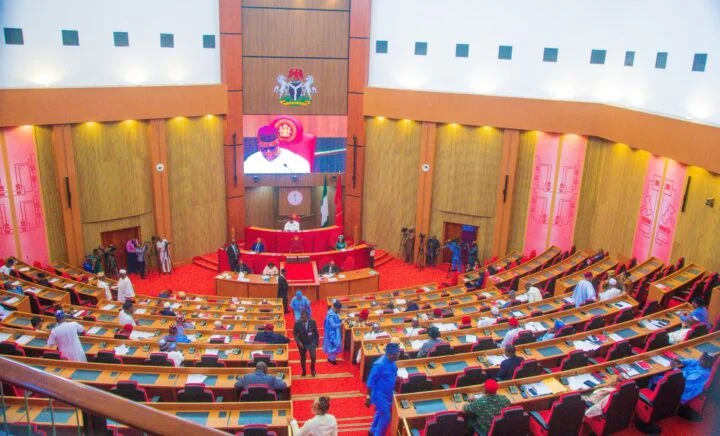
The Senate Public Accounts Committee (SPAC), chaired by Senator Aliyu Wadada (SDP), made the discovery during a probe session on Wednesday at the National Assembly, as part of its constitutional oversight to ensure transparency and accountability in the use of public funds.
Central to the inquiry was a contradiction in NNPCL’s financial disclosures. While the National Petroleum Investment Management Services (NAPIMS), a subsidiary of NNPCL, reported over ₦9 trillion in profits between 2017 and 2021, the parent company recorded a ₦16 billion operational loss during the same period.
Senator Wadada and his colleagues questioned why NAPIMS’ reported profits were not reflected in NNPCL’s group financials, suggesting possible concealment and financial misrepresentation.
Further inconsistencies were discovered in the 2023 audited report of the NNPCL, which recorded ₦103 trillion in accrued expenses and ₦107 trillion in receivables figures presented without supporting documentation or contract details. Lawmakers raised concerns over the sudden submission of a separate document by NNPCL hours before the hearing, containing materially different data from the published audit report.
The committee also flagged troubling discrepancies in subsidy payments, noting a ₦2.1 trillion variance between figures listed on different pages of the audit. Additionally, a ₦2.7 trillion forex loss in 2017 absent from subsequent years of oil trading raised further red flags.
Lawmakers criticized the ₦1.2 trillion in Joint Venture cost deductions between 2019 and 2021, argued that such charges should have been borne by international oil companies via cash calls, rather than deducted from Nigeria’s crude oil revenues.
When grilled, NNPCL’s Chief Financial Officer, Mr. Adedapo Segun, acknowledged that internal reconciliations had been made, but admitted the final audit did not reflect these adjustments. This admission was interpreted by the committee as a deliberate attempt to distort financial information.
In a scathing conclusion, Senator Wadada said, “This is not just mismanagement; this is sabotage. The concealment of revenue streams and national assets is economic terrorism against the Nigerian people.”
He further warned that the credibility of NNPCL’s financial reporting is critical, especially as the company prepare for a potential Initial Public Offering (IPO). Legislators cautioned that presenting manipulated data to investors could irreparably damage Nigeria’s image and investor confidence.
The Senate has issued 11 written queries to NNPCL and its external auditors and expects written responses within seven days. Failure to comply, lawmakers said, could lead to criminal investigations and further legislative action.
The SPAC has also recommended a comprehensive forensic audit of NNPCL’s financial records from 2015 to 2023, demanding full disclosure of individuals and entities linked to ₦27 trillion in impairments, and clarification on the disappearance of key oil assets from national records.