
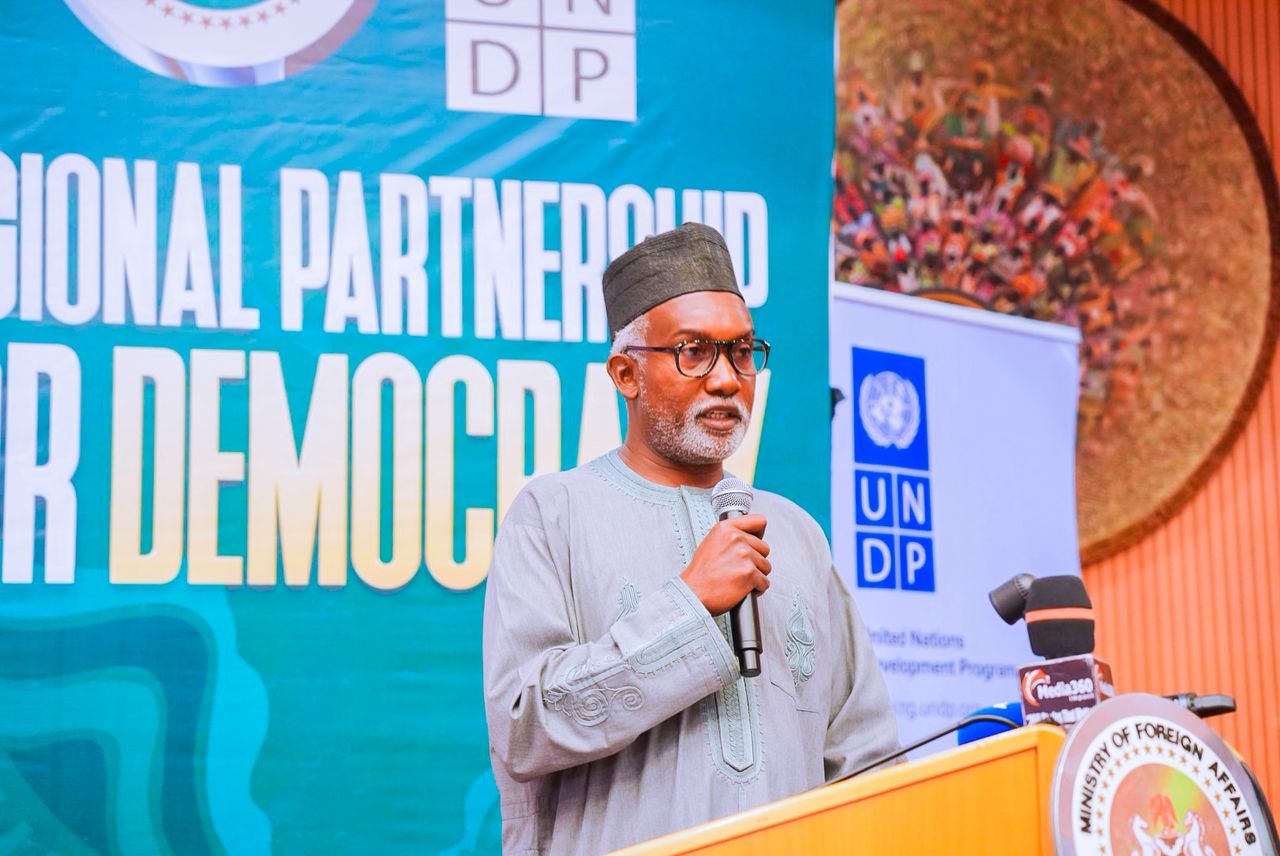
Nigeria’s Minister of Foreign Affairs, H.E. Yusuf Tuggar, has launched the Regional Partnership for Democracy (RPD) in Abuja, described it as a home-grown framework designed to strengthen and stabilise democratic governance across Africa.
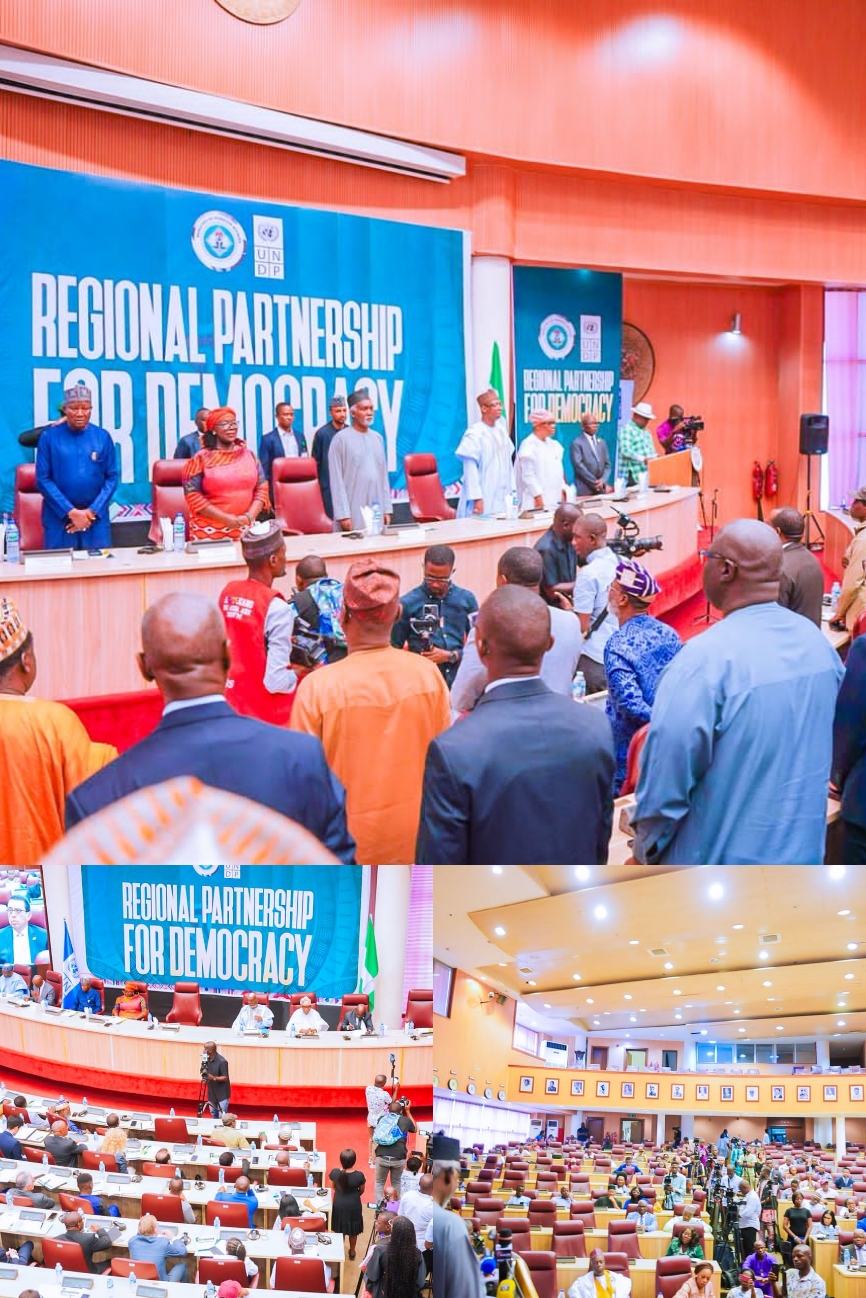
At the signing ceremony, Tuggar said the initiative marked a new chapter in Africa’s democratic journey and reflects President Bola Ahmed Tinubu’s commitment to building democratic systems that are rooted in African values, shaped by local realities and informed by global best practices. He expressed Nigeria’s deep appreciation to the United Nations Office in Nigeria for its technical guidance, and to development partners whose support continues to advance peace, stability and democratic resilience across the continent.
Tuggar noted that the launch came at a time when democratic governance in Africa is facing profound challenges. He pointed out that despite various national reforms and mechanisms such as the African Union’s Peer Review Mechanism, many parts of the continent still struggle with credible electoral processes, political violence, limited citizen participation, institutional weakness and administrative impunity. According to him, these issues often contribute to unconstitutional government changes and prolonged political instability, directly undermining the aspirations captured in the AU Agenda 2063, including the ambition to “silence the guns.”
The minister said many of Africa’s governance issues stem from the transplantation of foreign systems that do not fully reflect the continent’s cultural and historical contexts. This mismatch, he argued, frequently results in democratic stagnation or abuses of power. He explained that the RPD was created to address these realities by promoting a brand of democracy that is authentic, legitimate and durable because it aligned with African norms and experiences.
Tuggar praised the diplomatic community, civil society organisations and technical experts who contributed to the development of the RPD document, noted that their insights ensured the framework is both intellectually robust and practically grounded. He emphasised that the initiative is not merely a policy tool but Nigeria’s contribution to the long-term flourishing of democracy in Africa.
He announced that the RPD Secretariat will be housed at the Ministry of Foreign Affairs, while its technical team will operate from the Office of the UN Resident Coordinator in Abuja an arrangement designed to ensure neutrality, operational continuity and inclusiveness. Although Nigeria and the UN are the initial signatories, Tuggar stressed that the RPD is open to all West African nations and, over time, to other African regions seeking adaptable, locally appropriate democratic models.
The minister called on development partners and “friends of Africa” to support the framework, describing it as a credible and politically viable mechanism for curbing democratic backsliding and restoring institutional legitimacy. He also warned about the dangers of misinformation in the digital age, noting that democracy increasingly operates in a “post-truth era” where social media often amplifies falsehoods. He said the RPD will help African states address these challenges and improve public trust.
Tuggar closed his remarks by urging participants to carry the message of the RPD back to their countries and institutions. He expressed confidence that the initiative will help build a future in which democracy in Africa is genuinely owned by its people, culturally grounded and resilient enough to endure.