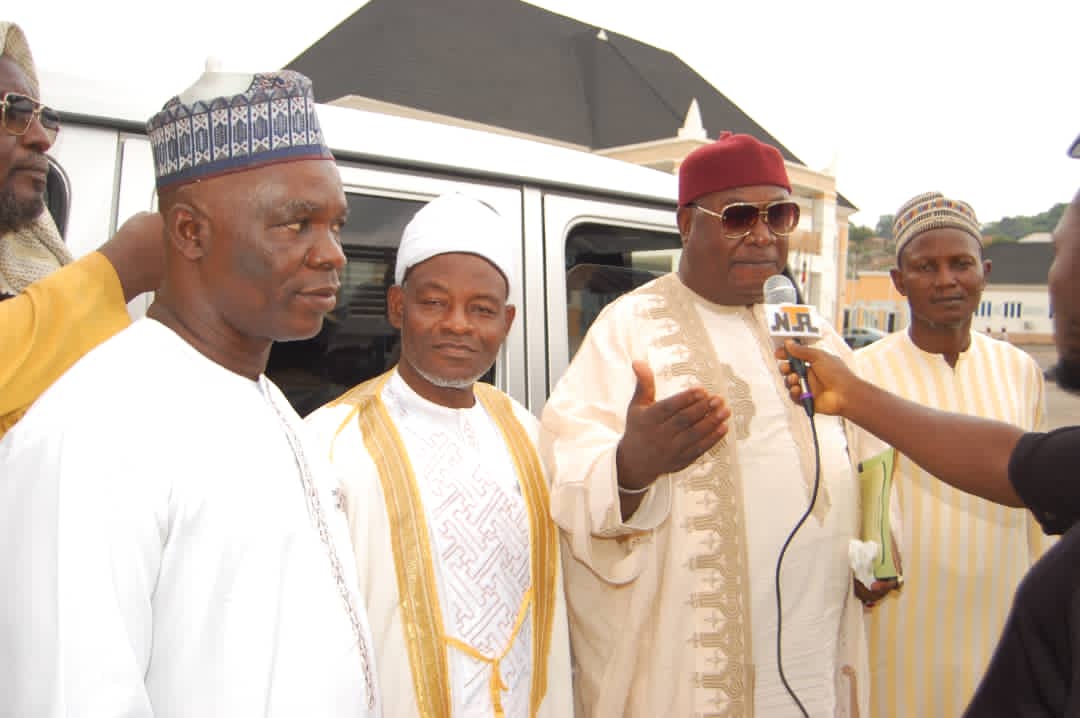
The Ebira Muslim community has called on Islamic scholars, Imams and Ulamas to actively participate in governance and nation-building as part of efforts to address Nigeria’s mounting socio-economic and political challenges.
The call was made during the Hijrah celebration organised by the Ebira Muslim community, where speakers reflected on the significance of the migration of Prophet Muhammad (SAW) from Makkah to Madinah and its lessons for contemporary society.
Addressing participants, leaders of the Ebira Muslim Association and other collaborating Islamic organisations noted that the Hijrah marked the beginning of Islamic political leadership, with the Prophet serving as both spiritual and administrative leader of the Muslim community.
According to them, the event serve as a reminder that Islamic scholars have a responsibility to contribute positively to governance and public affairs in line with the prophetic injunction of promoting good and discouraging wrongdoing.
The speakers lamented the current state of the nation, citing corruption, economic hardship, poverty and declining public trust in leadership, and urged Muslim scholars to engage in politics with sincerity and a commitment to justice rather than personal gain.
They also cautioned Muslim youths against participating in masquerade-related activities, describing such practices as inconsistent with Islamic teachings. The speakers stressed that the lessons of Hijrah encourage Muslims to abandon practices considered contrary to the faith and remain steadfast in pure Islamic worship.
The gathering expressed concern over what it described as a growing decline in Arabic and Islamic education across Kogi State, particularly in Ebiraland. While acknowledging the efforts of Islamic scholars in promoting Qur’anic memorisation and religious learning, they noted that inadequate government support and a shortage of qualified Arabic teachers have weakened Arabic education in the area.
According to the association, the decline has contributed to increasing cases of indiscipline, immorality and other social vices among some youths due to insufficient grounding in Islamic teachings.
To address the challenge, the group called on the Kogi State Government to provide greater support for Arabic and Islamic education through policy reforms, infrastructure development and the recruitment of qualified teachers.
The association also commended the Ohinoyi of Ebiraland, traditional rulers across the region and the Chairman of Jama’atu Nasril Islam, Alhaji Ambassador Usman Bello, for their efforts in promoting peace, discipline and religious values.
Similarly, Kogi State Governor, Ahmed Usman Ododo, was praised for ongoing road infrastructure projects across Ebiraland and other parts of the state, as well as the consistent payment of workers’ salaries.
Among the recommendations presented to the governor were the continuation of road projects, provision of comprehensive water facilities across Kogi Central, revival of Arabic teaching at the College of Arabic and Islamic Studies (CAISO), and the establishment of a Department of Arabic and Islamic Education within the State Ministry of Education.
The group further advocated the transformation of the Central Juma’ah Mosque Markaz established by Sheikh AbdulRahman Abdullah into a full-fledged Arabic and Islamic educational institution capable of awarding diplomas and degrees.
Other requests included government support for private Arabic and Islamic schools through the deployment of qualified Arabic teachers, collaboration in drilling boreholes across communities, provision of vehicles for Da’awah activities, and assistance for orphanages, widows and other vulnerable members of society.
The association concluded by urging traditional rulers, government officials and philanthropists to continue supporting initiatives aimed at promoting education, social welfare and religious development in Ebiraland, while praying for peace, prosperity and divine blessings for the state and the nation.