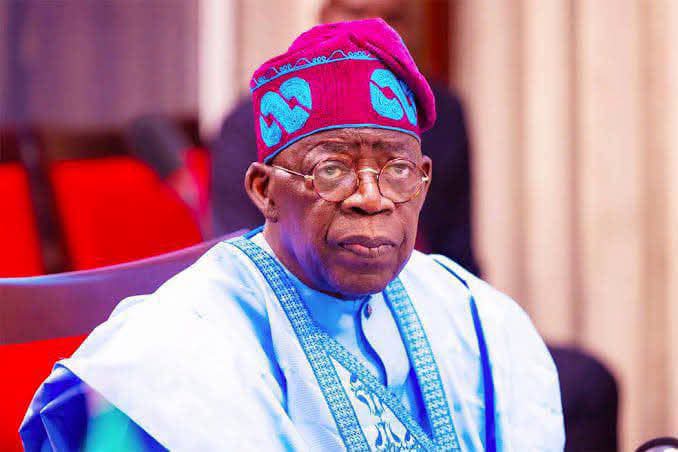
The Independent Media and Policy Initiative (IMPI) has said Nigerians are the real drivers of President Bola Ahmed Tinubu’s economic reforms, describing citizens as the “actual executors” of policies aimed at transforming the country from a consumption-driven economy to a productive, market-oriented one.
In Policy Statement 040, signed by its Chairman, Dr. Omoniyi M. Akinsiju, the policy group argued that the Tinubu administration had departed from decades of what it described as unsustainable economic practices, including fuel subsidies, multiple exchange rates and artificial currency controls, in favour of structural reforms designed to restore long-term economic stability.
According to IMPI, the administration’s economic reforms have followed a “J-curve” trajectory, with painful short-term consequences giving way to signs of macroeconomic recovery.
The group noted that the first phase of the reforms between 2023 and 2024 witnessed soaring inflation and increased poverty following the removal of petrol subsidy and the floating of the naira. It, however, said subsequent monetary and fiscal measures had begun yielding results, citing a decline in headline inflation to 15.91 per cent in June 2026 and projected GDP growth of between 4.1 and 4.4 per cent this year.
IMPI said Nigeria has now entered a third phase focused on structural growth, industrial expansion and job creation, with foreign reserves rising to about $52 billion as of June 2026.
The policy group praised Nigerians for enduring the economic hardship brought about by the reforms, saying their resilience prevented a reversal to populist policies and provided government with the fiscal space needed to stabilise the economy.
It identified three major roles played by citizens in the reform process: absorbing the immediate economic shocks, enforcing government accountability through civic engagement and public scrutiny, and driving behavioural changes by supporting local production and embracing formal economic activities.
According to the group, Nigerians have consistently demanded transparency in the utilisation of savings from fuel subsidy removal while monitoring intervention programmes such as the Nigerian Education Loan Fund (NELFUND), Compressed Natural Gas (CNG) transport initiatives and direct cash transfer schemes.
The organisation also urged citizens to continue supporting local manufacturers and businesses, arguing that increased patronage of locally made goods would reduce dependence on imports, strengthen domestic industries and lessen exposure to foreign exchange volatility.
Comparing the current administration with previous governments, IMPI said earlier economic policies encouraged rent-seeking, discouraged productive investments and exposed the economy to repeated oil price shocks through artificial exchange rate controls and heavy subsidies.
It maintained that the Tinubu administration had instead embraced difficult but necessary reforms by unifying the foreign exchange market, removing fuel subsidies and pursuing transparent market pricing.
The statement also highlighted fiscal reforms under the Federal Ministry of Finance and the Nigerian Revenue Service (NRS), noting that tax collections rose from ₦14.27 trillion in the first half of 2025 to ₦21.6 trillion during the same period in 2026. It attributed the increase to tax administration reforms, digitalisation and efforts to block revenue leakages rather than higher tax rates.
IMPI further pointed to reforms in the power sector, including projects linked to the Ajaokuta-Kaduna-Kano (AKK) gas pipeline, as measures expected to reduce energy costs and stimulate industrial development across states.
The organisation acknowledged that the reforms had imposed significant hardship on many Nigerians but argued that the challenges were inevitable in correcting decades of structural distortions. It welcomed government intervention programmes, including the $3.2 billion social investment package covering NG-CARES, SOLID and HOPE initiatives, aimed at supporting vulnerable households, farmers and small businesses.
According to IMPI, signs of renewed international confidence in Nigeria include foreign capital inflows rising from $12.32 billion in 2024 to $23.22 billion in 2025, strong stock market performance, improved manufacturing growth and favourable assessments from global institutions and investors.
Reaffirming its support for the Tinubu administration’s economic agenda, the group said Nigeria was gradually laying the foundation for sustainable industrialisation and long-term prosperity.
“The ultimate hero of this economic transition is the Nigerian citizen,” IMPI stated, adding that government must ensure the sacrifices made by citizens translate into visible development, improved infrastructure and better living standards.
The organisation concluded that with sustained policy consistency and continued public support, Nigeria could emerge as Africa’s industrial powerhouse and a leading force in the global economy.