
The Senate Committee on Customs and Excise has thrown its weight behind the ongoing reforms of the Nigeria Customs Service (NCS) under Comptroller-General Adewale Adeniyi, describing the Service’s technology-driven transformation as evidence of judicious investment in public resources.
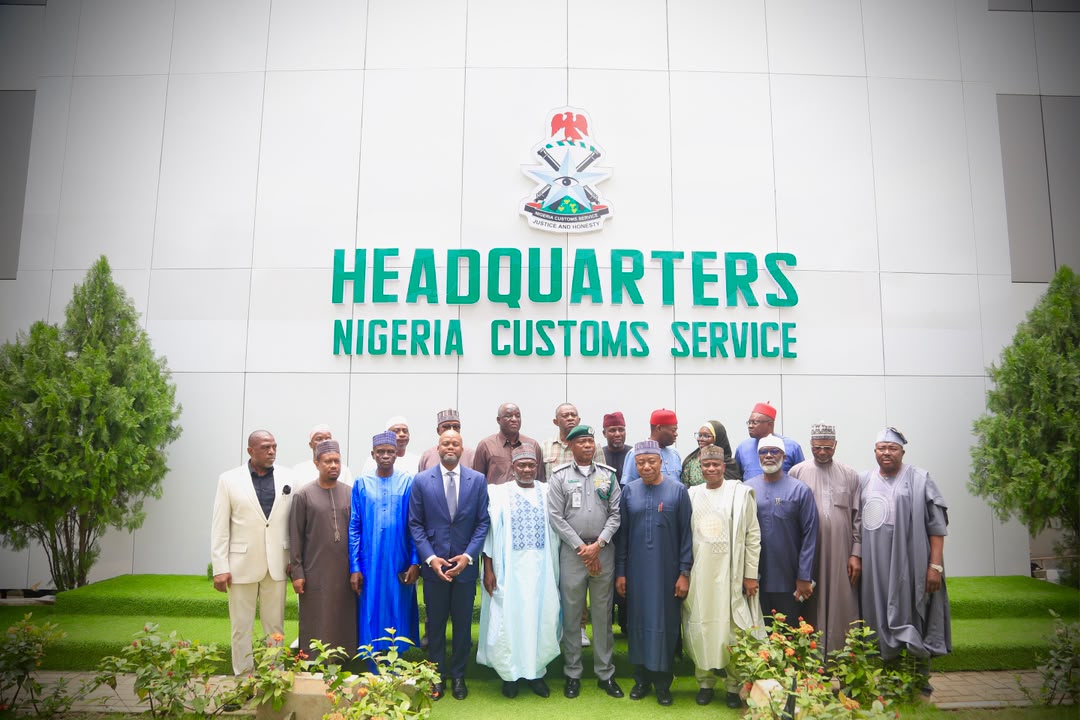
The commendation came on Thursday, August 6, 2026, during a two-day retreat between the NCS and the Senate Committee on Customs and Excise aimed at strengthening legislative oversight and reviewing the Nigeria Customs Service Act.
As part of the programme, members of the committee toured the Customs House in Maitama, Abuja, where they inspected the Service’s modernisation initiatives, technology-driven operations and institutional reforms.
Speaking after the tour, Chairman of the committee, Senator Isah Jibrin, said the visit provided lawmakers with an opportunity to witness firsthand the transformation taking place within the Customs Service.
“We have heard about these reforms from afar, but today we have seen them ourselves. The transformation taking place in the NCS is remarkable, particularly in the deployment of technology, modern infrastructure and operational innovations that are repositioning the Service for greater efficiency,” Jibrin said.
The senator said the tour had also given the committee a clearer understanding of how public funds appropriated to the NCS were being utilised, particularly in relation to capital expenditure.
He noted that the reforms demonstrated that government resources were being invested responsibly to strengthen Customs operations, facilitate legitimate trade and enhance national revenue generation.
“When the NCS comes before the National Assembly seeking approval for capital expenditure, we now have a clearer understanding of what those resources are being used for. The reforms we have seen today clearly demonstrate that government funds are being invested responsibly to strengthen Customs operations, improve trade facilitation and enhance national revenue,” he said.
Responding, CGC Adeniyi attributed the progress recorded by the Service to the deliberate deployment of technology across virtually every aspect of Customs administration and operations.
He explained that the digital transformation began with personnel administration, postings, staff matters and pensions before being extended to the Service’s core operational responsibilities.
“Technology helps us to work faster and more efficiently. We started by deploying digital solutions into personnel administration, postings, staff matters and pensions before extending them to our core operational responsibilities, and we will continue until virtually every aspect of Customs operations is technology-driven,” Adeniyi said.
The Customs chief also disclosed that advanced technological solutions were being deployed to strengthen enforcement and improve the operational effectiveness of officers.
These include virtual shooting simulators, geospatial intelligence and digital surveillance systems designed to enhance intelligence gathering, patrol planning and border enforcement.
According to Adeniyi, geospatial intelligence is being used to map patrol routes and determine more efficient locations for checkpoints across the country.
He added that modern training facilities, including virtual shooting ranges, were equipping personnel with improved skills while reducing the limitations associated with conventional training methods.
Adeniyi further explained that the Service’s modernisation drive was being implemented within the framework of the Nigeria Customs Service Act.
He cited the Authorised Economic Operator Programme, Advance Ruling, Time Release Study and scanner deployment among initiatives backed by the law and designed to improve trade facilitation, transparency and operational efficiency.
“The law requires us to modernise our operations. Initiatives such as the Authorised Economic Operator Programme, Advance Ruling, Time Release Study, scanner deployment and other technology-driven reforms are all backed by the provisions of the Nigeria Customs Service Act,” he said.
The Comptroller-General reaffirmed the commitment of the NCS to sustaining the modernisation programme, stressing that technology would remain central to efforts to improve revenue collection, strengthen enforcement and facilitate legitimate trade.
The Senate committee’s commendation is expected to further deepen collaboration between the legislature and the Customs Service as lawmakers continue their review of the legal and institutional framework governing the Service.