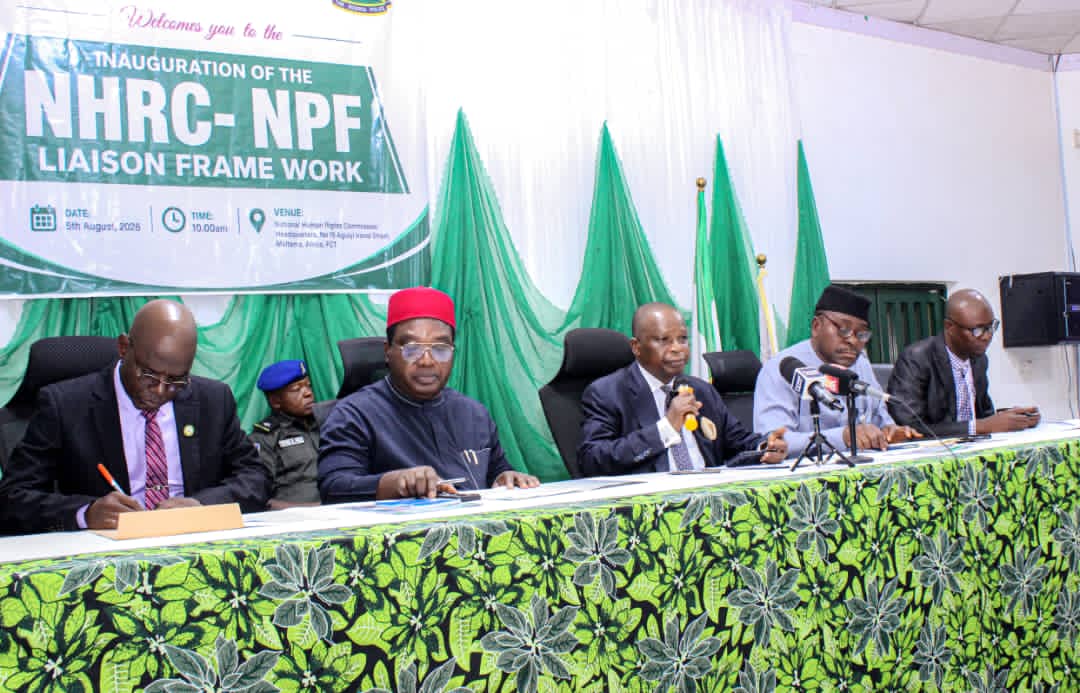
The Attorney-General of the Federation and Minister of Justice, Chief Lateef Fagbemi (SAN), has called for stronger human rights compliance within Nigeria’s law enforcement system, stressing that every Nigerian deserves to feel safe, protected and respected whenever they interact with security agencies.
Fagbemi made the call during the inauguration of the National Human Rights Commission–Nigeria Police Force (NHRC–NPF) Joint Implementation and Liaison Framework in Abuja, described the initiative as a major milestone in the country’s criminal justice reform efforts.
According to the Attorney-General, while Nigeria has enacted landmark laws such as the Administration of Criminal Justice Act, the Anti-Torture Act and the Nigeria Police Act, the true measure of their impact lies in faithful implementation.
He noted that meaningful reform requires sustained collaboration among institutions, adding that effective policing and respect for human rights are complementary goals that strengthen the rule of law, build public confidence and ensure justice for all.
The Executive Secretary of the National Human Rights Commission, Tony Ojukwu (SAN), described the framework as the beginning of a new phase in the relationship between the Commission and the Nigeria Police Force.
Ojukwu explained that the initiative was developed through sustained engagement between both institutions and is designed to provide a structured platform for collaboration rather than isolated interventions.
Under the framework, the NHRC and the Police will collaborate through joint visits to detention facilities, faster resolution of complaints, regular human rights training, information sharing and coordinated implementation of reforms across the country.
Representing the Inspector-General of Police, the Deputy Inspector-General of Police in charge of the Force Criminal Investigation Department said the framework reflected the Police leadership’s commitment to professionalism, transparency, integrity and respect for human rights.
He disclosed that liaison officers have already been appointed at the Force Headquarters, zonal commands and state commands to facilitate effective implementation of the framework nationwide.
Stakeholders drawn from the Police Service Commission, the Legal Aid Council of Nigeria, the Administration of Criminal Justice Monitoring Committee and civil society organisations welcomed the initiative, describing it as a shift from confrontation to collaboration.
They urged both the NHRC and the Nigeria Police Force to ensure that the reforms translate into tangible improvements at police stations, detention centres and in everyday interactions between police officers and members of the public.
Participants agreed that the success of the framework would ultimately be measured not by the document itself but by its impact on the lives of Nigerians.
They expressed optimism that effective implementation would reduce human rights violations, strengthen police accountability, improve public trust in law enforcement and enhance confidence in Nigeria’s justice system.