Former President Goodluck Jonathan, the Chinese Embassy in Nigeria and the Federal Ministry of Foreign Affairs have called for stronger collaboration among the media, diplomats and intelligence stakeholders to combat fake news, disinformation and Foreign Information Manipulation and Interference (FIMI), warning that information warfare poses increasing threats to democracy, peace, trade and global security.


The call was made on Wednesday at the 2026 Diplomatic, Security, Trade and Investment International Conference organised by the Diplomatic Correspondents’ Association of Nigeria (DICAN) at the Rotunda Hall of the Ministry of Foreign Affairs, Abuja.
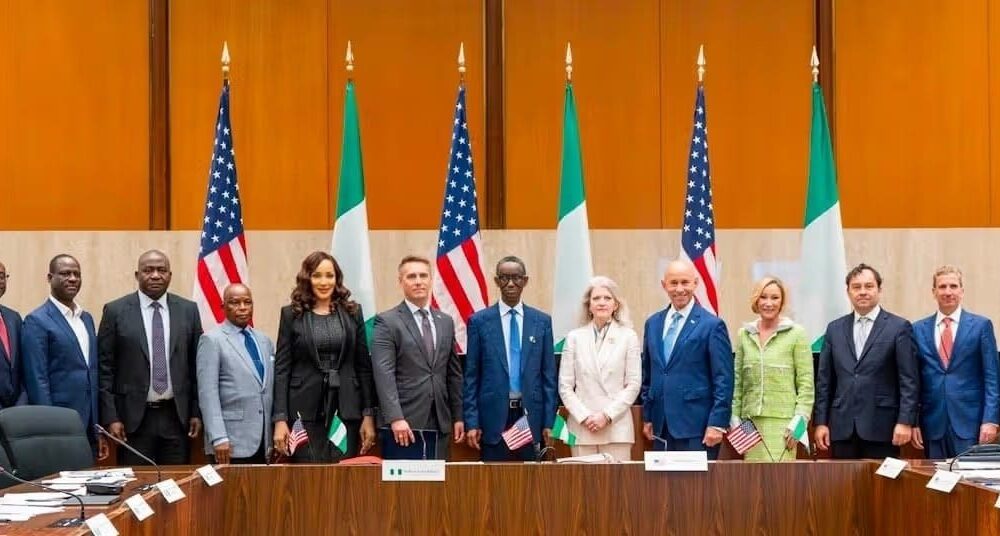
The conference, themed: “Information Warfare (FIMI): Strengthening Global Security, Trade and Investment Through Collaborative Truth: Role of Diplomacy, Intelligence and Media,” brought together diplomats, security experts, media professionals, government officials and development partners to deliberate on the growing impact of disinformation on governance, security and international relations.
Delivering a goodwill message on behalf of the Minister of Foreign Affairs, Bianca Odumegwu-Ojukwu, the Permanent Secretary of the ministry, Amb. Dunoma Umar Ahmed, commended DICAN for organising what he described as a timely and strategic gathering focused on diplomacy, peace building, regional cooperation and global development.
He noted that diplomatic correspondence plays a critical role in shaping public understanding of foreign policy and international affairs, particularly in an increasingly interconnected and rapidly evolving global environment.
According to him, the media remains an indispensable partner in promoting constructive dialogue, mutual understanding and informed discourse among nations.
“Diplomatic journalism serves not only as a bridge between governments and citizens, but also as a catalyst for transparency, accountability and cooperation,” he stated.
Ambassador Ahmed reaffirmed Nigeria’s commitment, through the Ministry of Foreign Affairs, to strengthening strategic partnerships and advancing the country’s foreign policy objectives anchored on national interest, economic diplomacy, regional stability and the protection of Nigeria’s image globally.
He also commended the media for projecting Nigeria positively on the international stage and fostering greater awareness of diplomatic engagements and achievements.
The ministry urged participants to utilise the conference as an opportunity to deepen professional collaboration, exchange ideas and explore innovative approaches to diplomatic reporting in the digital age.
“I am confident that the deliberations and outcomes of this conference will contribute significantly to strengthening diplomacy, media professionalism and international understanding,” he added.
The keynote address was delivered by Bamas Victoria, who underscored the dangers posed by misinformation, fake news and digital manipulation in the contemporary information ecosystem.
She stressed the need for stronger fact-checking mechanisms, media literacy and cross-sector collaboration to safeguard public trust, democratic institutions and national security.
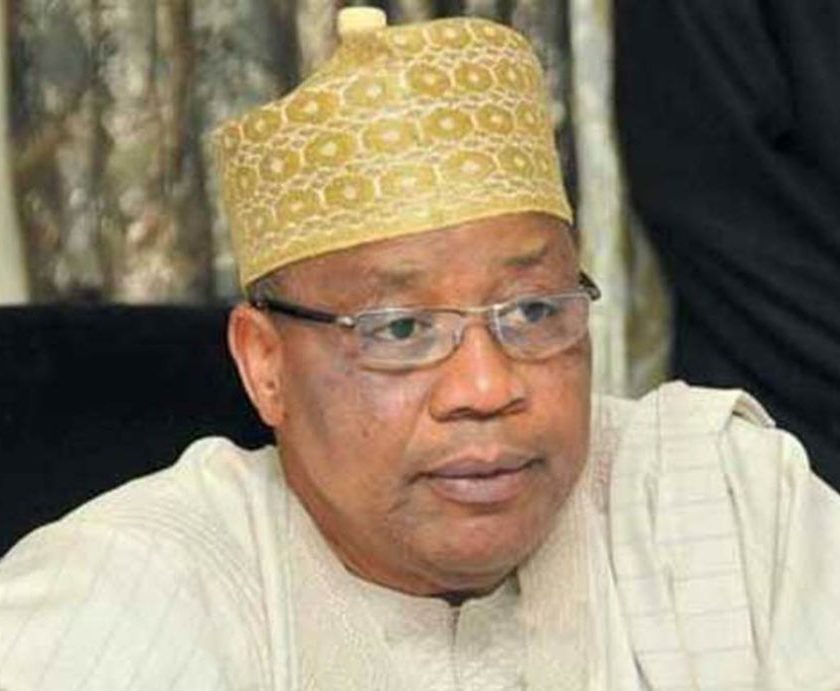
In his remarks, former President Jonathan, represented by the Executive Director of the Goodluck Jonathan Foundation, Ann Iyonu, described misinformation, fake news and manipulated content as dangerous tools capable of undermining democracy and destabilising societies.
Jonathan said the world now faces “a new kind of conflict fought not only with weapons, but with information,” stressing that false narratives and disinformation campaigns have become potent instruments for creating division, fuelling insecurity and weakening trust in institutions.
“In Nigeria, we have seen how fake news and unverified information can inflame tensions, deepen ethnic and religious divisions, fuel insecurity and weaken confidence in public institutions,” he said.
The former president stressed that collaborative truth, driven by diplomacy, intelligence and responsible journalism, remains essential to strengthening democratic institutions and preserving national security.
He further urged journalists and media organisations to uphold professionalism, accuracy and fairness, noting that credible elections and democratic stability depend heavily on citizens having access to factual and verified information.
Also speaking, Zhou Hongyou, Minister at the Embassy of the People’s Republic of China in Nigeria, highlighted the growing strategic partnership between Nigeria and China as both countries mark the 55th anniversary of diplomatic relations in 2026.
He praised Nigerian journalists for their role in promoting China-Nigeria relations and acknowledged their commitment to objective reporting on issues concerning China, particularly the Taiwan question.
Zhou reaffirmed China’s appreciation of Nigeria’s commitment to the One-China principle as contained in the joint statement issued during President Bola Ahmed Tinubu’s state visit to China in September 2024.
According to him, China and Nigeria have continued to deepen cooperation in trade, infrastructure, education, culture and people-to-people exchanges, while China recently granted zero-tariff treatment to exports from African countries with diplomatic ties, including Nigeria.
He disclosed that the Chinese Embassy recently sponsored exchange and training programmes in China for representatives of nearly 20 Nigerian media organisations, focusing on digital reporting, international communication and media capacity building.
Earlier in his welcome remarks, DICAN Chairman, Idehai Frederick, warned that FIMI has evolved into a sophisticated global threat driven by artificial intelligence, deepfakes and coordinated disinformation campaigns.
He disclosed that DICAN, in partnership with the Centre for Communication Development and Diplomacy in Africa (CCDDA) and PR Nigeria, had mobilised 69 civil society organisations across Nigeria to strengthen the fight against fake news, misinformation and information manipulation.
According to him, six regional situation rooms and dedicated desk officers have been established nationwide to monitor, verify and analyse manipulated content and misleading information.
The highlight of the conference was the official unveiling of the Nigeria Fact-Check and Information Integrity Network (NFIIN) by Ambassador Dunoma Umar Ahmed.Personalities who have distinguished themselves including corporate organisations were honoured with award at the event.
The network is expected to serve as a collaborative national platform for promoting information integrity, digital responsibility, peace, security and public trust through coordinated fact-checking and strategic communication.
On the economic front, the Executive Director and Chief Executive Officer of the Nigerian Export Promotion Council (NEPC), Nonye Ayeni, disclosed that Nigeria recorded over $6.1 billion in non-oil exports in 2025, representing an 11.5 per cent increase over the 2024 performance.
She said the achievement reflected Nigeria’s gradual transition toward value-added exports and industrial processing, while calling for stronger diplomatic collaboration and international partnerships to improve market access for Nigerian products and support the country’s economic diversification agenda.
The conference attracted diplomats, intelligence officials, representatives of government agencies, corporate leaders, journalists and civil society organisations from across the country.