
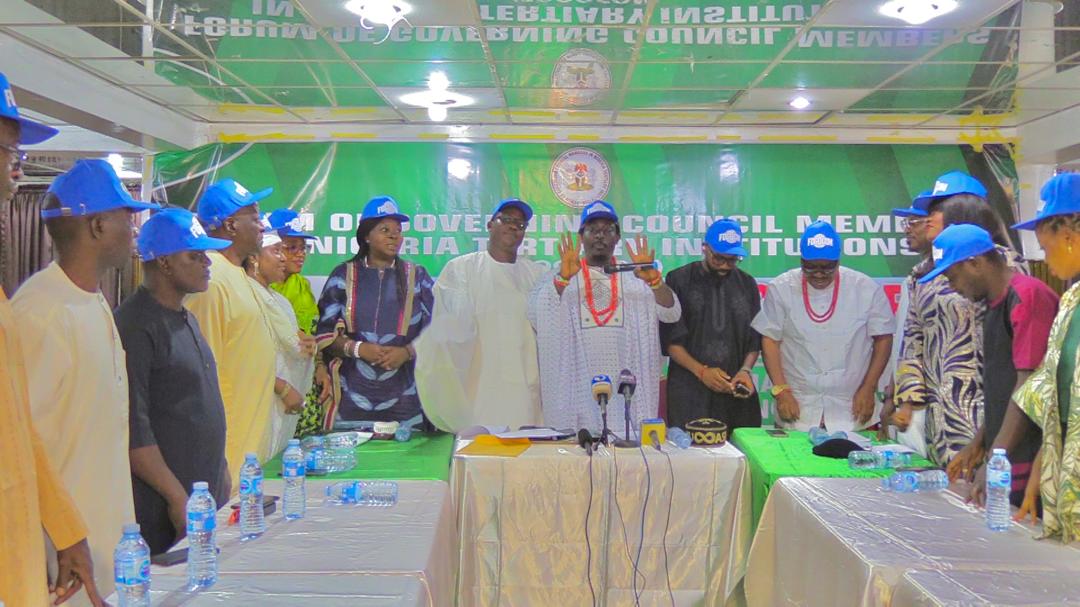
The Forum of Governing Council Members in Nigerian Tertiary Institutions (FOGOCOM) has thrown its weight behind President Bola Ahmed Tinubu’s re-election bid in 2027, citing what it described as unprecedented progress in Nigeria’s tertiary education sector under the administration’s Renewed Hope Agenda.
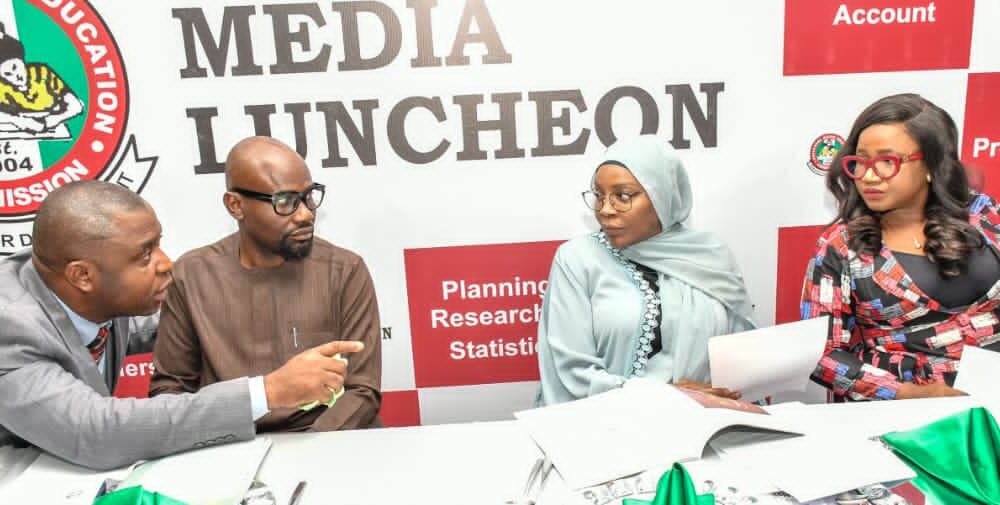
The endorsement came at a National Press Conference held on Saturday in Abuja, where governing council members from universities, polytechnics and colleges of education across the country gathered to review developments in the education sector and assess the impact of government interventions.
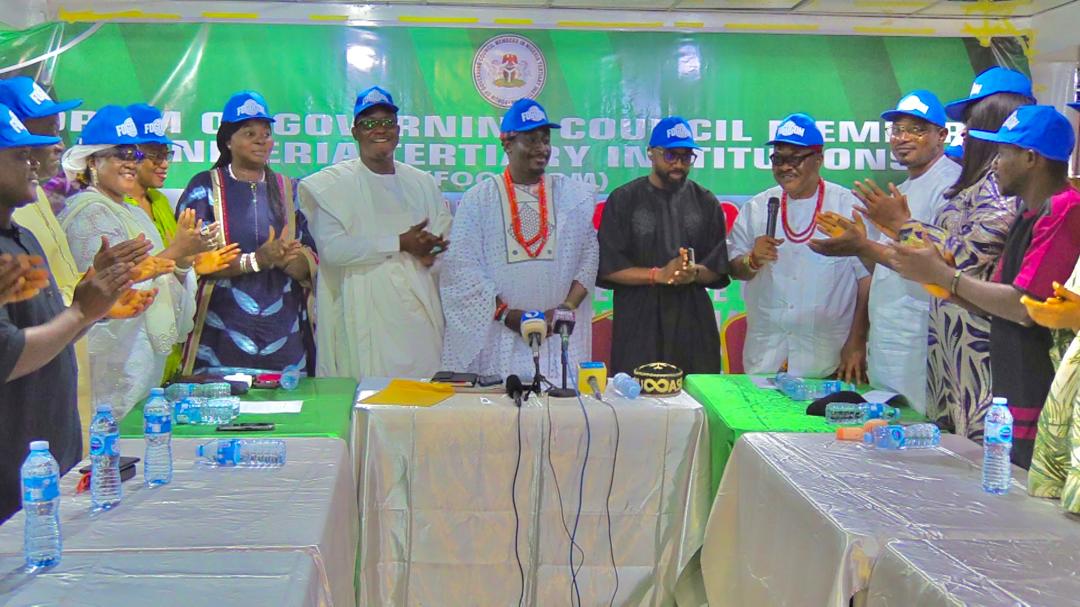

The event opened on a solemn note as participants observed a minute of silence in honour of victims of insurgency, terrorism, banditry and other forms of insecurity across the country. The forum also prayed for the safe return of citizens still in captivity and commended the sacrifices of security personnel working to restore peace nationwide.
Addressing journalists, FOGOCOM National Chairman, Chief (Dr.) Akin-Thomas Babajide, said members of governing councils had witnessed firsthand the positive changes taking place in tertiary institutions under the Tinubu administration, describing the reforms as historic and transformative.
According to him, the Federal Government has demonstrated an uncommon commitment to strengthening higher education through improved funding, infrastructure development, institutional stability, research support, student welfare initiatives and enhanced governance structures.
“Education remains the foundation upon which every great nation is built. The development of our universities, polytechnics, colleges of education and specialised institutions is critical to national growth, innovation and economic transformation. We are witnessing a renewed commitment by the Federal Government to strengthening tertiary education and empowering institutions to fulfil their mandates,” he said.
The forum particularly commended the administration for restoring confidence in governing councils and recognising their strategic role in institutional governance, accountability and policy implementation.
Members noted that the Renewed Hope Agenda has translated into practical interventions that are improving learning environments, expanding access to higher education and strengthening institutional management across the country.
A major focus of the conference was the Nigerian Education Loan Fund (NELFUND), which FOGOCOM described as one of the most impactful educational initiatives in Nigeria’s history.
According to the forum, the student loan programme has opened the doors of higher education to thousands of young Nigerians who would otherwise have been forced to abandon their academic aspirations due to financial constraints.
FOGOCOM disclosed that more than 1.38 million students have benefitted from the scheme, while over ₦242 billion has been disbursed to cover tuition fees and student upkeep allowances.
The forum praised the initiative for reducing financial barriers to education and ensuring that indigent students can remain in school regardless of their economic background.
Responding to questions from journalists, FOGOCOM members urged parents and students to take advantage of the opportunities provided by the scheme, stressing that access to the programme is open to all eligible Nigerian students, including those attending federal, state and private tertiary institutions.
The forum also dismissed concerns that students in rural communities might face difficulties accessing the loan programme, arguing that the same digital infrastructure used for admission processing, examinations and institutional applications can be utilised for loan applications.
FOGOCOM leaders further observed that many parents remain unaware of the full benefits of the scheme, calling for increased public awareness to ensure that more students benefit from the initiative.
Beyond student financing, the forum highlighted significant progress in physical infrastructure across tertiary institutions nationwide.
Members pointed to increased interventions through the Tertiary Education Trust Fund (TETFund), which they said has supported the construction and rehabilitation of lecture halls, hostels, laboratories, libraries and other critical academic facilities.
They noted that governing councils across the country have witnessed unprecedented levels of investment in educational infrastructure, creating better learning environments for students and improving institutional capacity.
The forum specifically praised the Federal Government’s decision to deploy ₦110 billion through the TETFund High Impact Intervention Project for the rehabilitation and modernisation of medical schools in 18 federal and state universities.
According to FOGOCOM, the intervention represented a strategic response to the shortage of healthcare professionals in the country and demonstrates government’s commitment to strengthening medical education and reversing the trend of brain drain within the health sector.
Members also cited the Energising Education Project as one of the administration’s notable achievements, noting that 24 federal tertiary institutions have already migrated to solar hybrid power systems, while additional universities are expected to benefit in subsequent phases.
They explained that the initiative has significantly reduced energy costs, improved electricity supply within campuses and enhanced the overall academic environment.
On the issue of insecurity, FOGOCOM acknowledged that the Tinubu administration inherited significant security challenges but maintained that notable progress has been recorded in tackling threats across the country.
The forum argued that the Federal Government’s efforts have resulted in the rescue of many victims and improved security around educational institutions, thereby creating a more conducive atmosphere for teaching and learning.
Members maintained that some recent security incidents should be viewed within the broader context of the nation’s ongoing efforts to address deeply rooted challenges, adding that government interventions continue to yield positive outcomes.
FOGOCOM also praised what it described as improved industrial harmony within the education sector, noting that institutions have enjoyed greater stability and uninterrupted academic activities compared to previous years.
The forum further expressed appreciation to President Tinubu for reviewing and enhancing the allowances of governing council members, describing the gesture as evidence of the administration’s commitment to strengthening institutional governance.
According to the group, the improved welfare package has further empowered governing councils to discharge their responsibilities more effectively and contribute meaningfully to the growth and development of tertiary institutions.
While applauding the administration’s achievements, FOGOCOM appealed to the Federal Government to extend the tenure of governing councils in polytechnics and colleges of education from three years to four years.
The forum argued that a longer tenure would provide greater continuity, enable councils to complete ongoing reforms and strengthen institutional stability.
In what amounted to a vote of confidence in the administration, FOGOCOM formally endorsed President Tinubu’s continuation in office beyond 2027, insisting that continuity would help consolidate ongoing reforms and sustain progress recorded in the education sector.
The forum maintained that the achievements recorded under the Renewed Hope Agenda have laid a solid foundation for long-term educational development and national growth.
“As preparations begin for the 2027 general elections, we remain committed to mobilising support for the continuation of the Renewed Hope Agenda. We believe continuity in leadership will further consolidate the gains already recorded and advance Nigeria’s journey toward greater prosperity, educational advancement and institutional development,” the forum stated.
Representing more than 1,000 governing council members serving across Nigeria’s tertiary institutions, FOGOCOM concluded by reaffirming its commitment to supporting policies and programmes aimed at strengthening higher education, empowering future generations and building stronger institutions capable of driving national development.
For the forum, the verdict is clear: the Renewed Hope Agenda has delivered measurable gains in tertiary education, and sustaining those gains, it believes, required continuity of leadership beyond 2027.