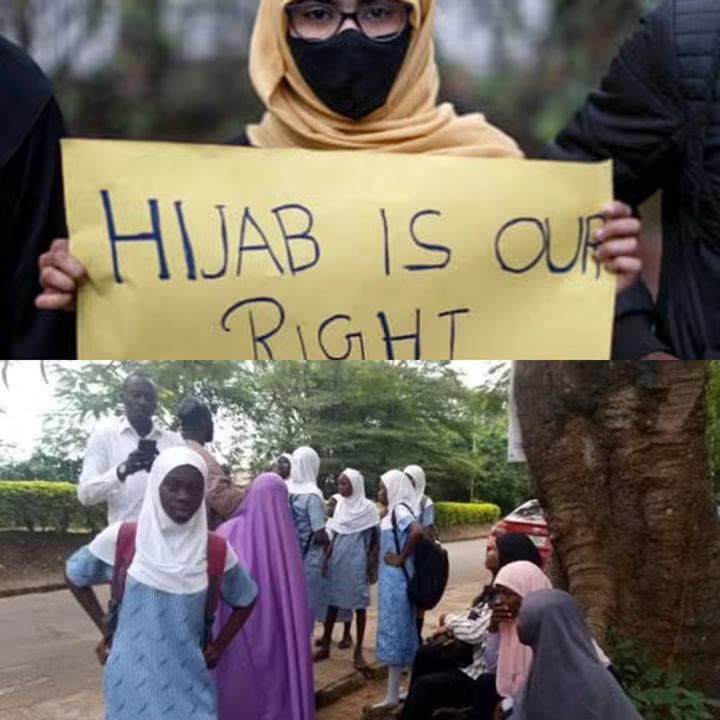


The Muslim Rights Concern (MURIC) has strongly condemned the judgment of the Court of Appeal overturning an earlier High Court decision that permitted the use of hijab by Muslim students at the International School, University of Ibadan (ISI-UI), describing the ruling as “a travesty of justice.”
In a statement issued on Saturday, the Executive Director of MURIC, Professor Ishaq Akintola, said the appellate court’s decision amounted to “a forced abortion in the temple of justice” and vowed that the organisation would challenge the judgment at the Supreme Court.
The Court of Appeal, in a split judgment of two to one delivered on Friday, overturned the lower court’s ruling in favour of 11 Muslim female students who had challenged the school’s restriction on the use of hijab after a seven-year legal battle.
The appellate court held that ISI-UI is a private institution because it does not receive government subventions and ruled that although freedom of religion is a fundamental right, it is a personal right that can be waived where students voluntarily accept a school’s code of conduct.
Reacting to the judgment, MURIC argued that the ruling contradicted what it described as established legal principles and the Supreme Court’s previous pronouncement on the use of hijab.
According to Akintola, no private institution has the authority to override constitutionally guaranteed fundamental rights, insisting that Muslim students retain the right to practise their religion regardless of a school’s internal regulations.
He maintained that the organisation would pursue the matter to the Supreme Court, alleging that the judgment undermined the religious identity and rights of Muslim students.
“This miscarriage of justice will not go unchallenged. We are heading to the Supreme Court,” Akintola said, adding that the legal battle over the hijab issue was far from over.
The Court of Appeal’s ruling has continued to generate mixed reactions from stakeholders, with religious groups and rights advocates expressing divergent views on its implications for religious freedom and school regulations in Nigeria.