The Federal Government has reaffirmed its commitment to accelerating Nigeria’s industrialisation, boosting trade competitiveness and attracting sustainable investments, announcing that it has facilitated more than US$50 billion in foreign direct investment (FDI) commitments as part of efforts to build a US$1 trillion economy.
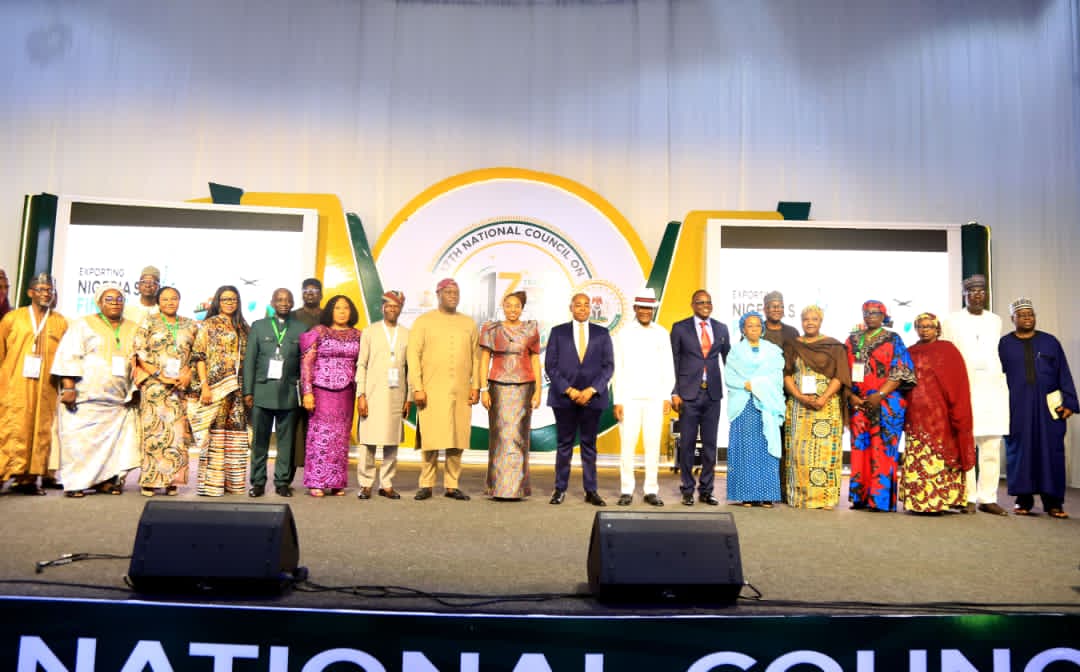
The announcement was made by the Minister of Industry, Trade and Investment, Dr. Jumoke Oduwole, at the opening of the Executive Session of the 17th National Council on Industry, Trade and Investment (NCITI) in Enugu on Wednesday.
According to the minister, Nigeria has also recorded US$6.1 billion in non-oil exports, disbursed over ₦600 billion through the Bank of Industry, captured more than 500,000 Micro, Small and Medium Enterprises (MSMEs) in the national database, and supported nearly 300,000 Nigerians through skills development programmes.
She said the achievements demonstrate the impact of the Tinubu administration’s Renewed Hope Agenda and reflect steady progress toward transforming Nigeria into a trillion-dollar economy.
Oduwole stressed that the ministry remains focused on translating economic reforms into tangible outcomes through increased production, expanded exports, investment attraction and job creation.
Speaking on the council’s theme, “Enhancing Competitiveness in Industry, Trade and Investment for Inclusive Growth and Global Market Integration,” the minister highlighted key government priorities, including industrial cluster development, manufacturing expansion, investment facilitation, digital trade, implementation of the National Single Window, stronger intellectual property protection and deeper participation in the African Continental Free Trade Area (AfCFTA).
She urged all implementing institutions to ensure that resolutions reached at the council are backed by clear ownership, timelines and measurable outcomes to drive Nigeria’s industrial transformation.
Declaring the council open on behalf of Enugu State Governor Dr. Peter Ndubuisi Mbah, the Deputy Governor, Barr. Ifeanyi Ossai, called for concerted efforts to address structural challenges affecting Nigeria’s competitiveness, including high financing costs, regulatory bottlenecks and limited access to development finance.
Ossai advocated stronger collaboration among governments, financial institutions and the private sector to create a more conducive environment for industrial growth, investment and employment generation.
Also speaking, the Minister of State for Industry, Senator John Owan Enoh, reaffirmed the Federal Government’s commitment to implementing the Nigeria Industrial Policy 2025 through the Industrial Revolution Work Group (IRWG), with emphasis on affordable industrial financing, value addition, manufacturing expansion and enhanced public-private partnerships to increase industry’s contribution to the nation’s Gross Domestic Product (GDP).
Earlier, the Enugu State Commissioner for Trade, Investment and Industry, Dr. Samuel Ogbu-Nwobodo, welcomed delegates and highlighted the state’s reforms in infrastructure, security, digital governance, investment facilitation and ease of doing business, describing Enugu as a preferred destination for investment and industrial development.
Representatives of the United Nations Industrial Development Organization (UNIDO), the Nigerian Association of Chambers of Commerce, Industry, Mines and Agriculture (NACCIMA) and the Nigerian Society of Engineers (NSE) also pledged continued support for the Federal Government’s efforts to strengthen industrial development, improve competitiveness and promote sustainable economic growth.
In his closing remarks, the Permanent Secretary of the Federal Ministry of Industry, Trade and Investment, Dr. Chris Osa Isokpunwu, expressed appreciation to the Enugu State Government, development partners, the organised private sector and delegates, expressing confidence that the council’s deliberations would produce practical resolutions to accelerate industrialisation, expand trade, attract greater investments and foster inclusive economic growth across Nigeria.