President Bola Tinubu’s Villa scriptwriters are supremely gifted. Go back and read Mr. Bayo Onanuga’s So Long a Letter on the Gbajabiamila-Adeyemi ‘feud’ over an agency that is simultaneously legal and illegal. The lengthy statement is a work of prose, daintily littered with repetition and refrain; rhyme and rhythm.
Check out this excerpt: “On 27 October, 2025, Adeyemi was arrested… The police filed an eight-count charge on November 27, 2025… He is due in court on July 27, 2026.”
Read it again: arrest on the 27th. Charge on the 27th. Court slated for the 27th. Is the 27th a code for something? If it is, should we not be curious about what it encrypts—or decrypts? If it is merely a repetition, is it deliberate or accidental?
Adolf Hitler famously praised repetition as a valuable tool of propaganda and said so in the Mein Kampf. Modern psychologists describe a related phenomenon; they call it the Illusory Truth Effect. It fits in here. Repetition can make the bitter sound sweet and give evil a rhythm to which the unwary begin to dance.
Now, let us be more serious.
You accused a man of abducting your government. You arrested him on 27 October 2025. You waited (or wasted) one full month before filing criminal charges against him on 27 November. Then you went to a very deep sleep. Seven months after those charges were filed, you issued an almost one-month notice that the accused would finally appear in court on 27 July, 2026. That sequence raises questions. Guilt hesitates. Forgive me if that is how I read your body language.
Yet, while your left hand was filing criminal charges in November 2025, your right hand was quietly inserting ₦1.3 billion into the 2026 budget for the very agency whose existence formed the basis of the arrest and prosecution.
Hello! What kind of government are you?
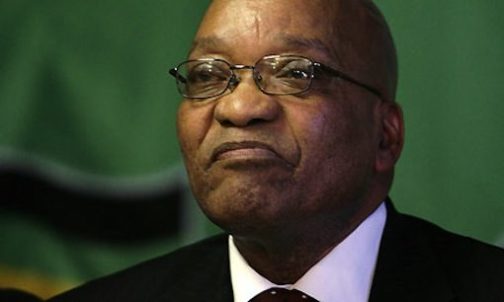
Like attracts like; ugly tortoise seeks out its fellow tortoise, and slimy snail finds its fellow snail. As the Yoruba say, Ẹni bí ahun nií rí ahun he; ènìyàn bí ìgbín nií hè’gbín. Check Adeyemi’s images online. From the photographs and videos that I have seen, one impression repeatedly strikes me: calculated deference to power. Whether at public events or in carefully staged photographs with prominent figures, the man’s performance seems designed to project proximity and importance. To my eyes, that is the marker of very dangerous sycophancy.
This man was visible everywhere ‘working’ for your government. You saw and watched him do all sorts of things; you said nothing and did nothing. Now, either you have finally broken free from the spell of this your nemesis or Èṣù has poured palm oil on the matter between you. Suddenly, you tell us that the man is fake and his agency counterfeit and he fires back with withering allegations of graft and bribery of humongous proportions.
Sycophants do the dirty work of the powerful. They fawn over their patrons with the devotion of household pets. But, unlike devoted dogs and cats, their loyalty stretches only as far as their stomachs. That is what makes them dangerous. Today they praise; if you annoy them tomorrow, they betray. Their allegiance is to their appetite, not to you.
Meanwhile, the man you accused of running a criminal parallel government remained virtually untouched. He is free, still free. On Thursday last week, he even spoke by telephone on Seun Okinbaloye’s Politics Today on Channels Television. Apparently, he was not criminal enough for that call to be used to trace and arrest him. The Yoruba have a saying: Adẹ́tẹ̀ rí wèrè, ó kán lù’gbé—Leper sees madman, he flees into the bush. Perhaps this man is so powerful, and knows so much, that even the all-powerful state is afraid of him.
What vocabulary is left for describing a government that behaves like this with a straight face?
I am tempted to further ask: is this government a government?
I wish this regime could be as candid as the man who declares, “I am not what I am.” That is Iago, the master manipulator in Shakespeare’s Othello. In Act 1, Scene 1, without batting an eyelid, Iago declares that his public identity is a carefully constructed disguise. Lest anyone should miss the point, he takes three short steps into Scene 3 and lays bare his contempt for everyone around him. They are mere tools in his hands, and he says so without apology: “Thus do I ever make my fool my purse.” True to his words, that is the man Shakespeare gives us throughout the play.
Unlike the current manipulators, Iago is the deceiver who hides in plain sight; he openly declares what he is and what he intends to do, yet no one ‘hears’ him until it is too late. If that character were a Yoruba man, he would be the master wrestler who announces to his opponent exactly how he will throw him—and then proceeds to do precisely that.
Now, because tomorrow will forget what this case is all about, let me restate it here. The Chief of Staff to the President, Mr. Femi Gbajabiamila, issued a disclaimer on one Adeyemi Adeniyi Matthew, accusing him of fraudulently operating the so-called Presidential Foreign Intervention Promotion Council (PFIPC), a body the Presidency says never legally existed. Adeyemi responded with a press conference, denying the allegations and producing documents which he said showed official recognition of the agency, including references in the national budget. He capped his rebuttal with sweeping allegations of corruption and bribery against Gbajabiamila.
By the time the man finished his presentation, the government’s image had fallen below three pence.
Now, in the light of this unfolding scandal, let me ask: Has the entire Bola Tinubu government become Iago, the master manipulator, presenting one face to the public while another lurks behind the curtain?
A fictitious council allocated billions in a country’s national budget. What do fake, fictitious and counterfeit really mean? Imagine a masquerade whose identity is counterfeit wrestling in the mud with an enchanting impostor. That is the curious spectacle presented by the PFIPC, its self-acclaimed director-general, and the presidency. In this strange contest, each side accuses the other of unreality. One says the agency is real and founded in 2024; the other says the council never existed but behaved for months as though it did. One denounces being called an impostor; the other cannot explain how the alleged imposture found office space, official dealings and a budgetary allocation. The result is a political theatre in which the audience is left wondering who, exactly, is wearing the mask.
In literary theory, fiction is a world separate from reality, yet modelled after it. Literary scholar, Biodun Jeyifo, famously calls it “the truthful lie.” In today’s Nigeria, that distinction appears to have collapsed. Our fictions wear agbádá, they occupy official offices, hold meetings, seek diplomatic notes, open Central Bank accounts, receive civil servants and even find their way into the national budget.
Nigerians easily get divided. We take sides in every contest no matter how shameful. In this shame, regime people are throwing a lot online to get back their lost face. This agency had existed since Buhari years, some of them said. Enemies of the government fought back. They said that is not true. What existed under Buhari was Presidential Economic Advisory Council. The rat with the current bad odour is called ‘Presidential Foreign Intervention Promotion Council.’ Between both camps stands Nigeria, naked and embarrassed. My professor-friend described it as “a scandal of mega proportions.” She was right.
If the agency is fake, how did it acquire the appearance of government? If it is real, why is the Presidency denying its child? The matter is no longer merely about one man.
Nigeria is a strange, dangerous country. A fetish nation does strange things. Entries on pages 50 and 51 of the 2026 budget have become the shrine before which Nigerians dance in a trance. There, under the Presidency, sits the “Presidential Economic Advisory Council/Presidential Foreign Intervention Promotion Council,” carrying an allocation of over ₦1.3 billion. That entry is either proof of official existence or proof of official criminal crudity. Either way, it indicts the system.
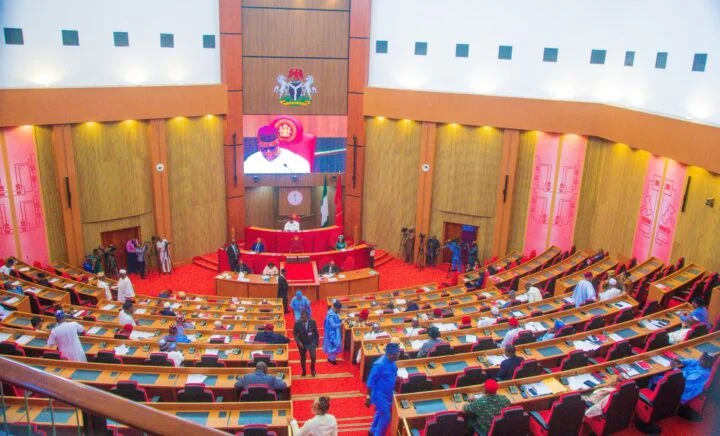
Budgets do not write themselves. They are prepared, scrutinised, defended, passed and signed. Yet no one behind those formidable gates smelt the odious shrew.
I have asked several questions. I have some more: Between the discovery of the alleged fraud in October 2025 and the presentation of the 2026 budget in December 2025, who inserted the agency into the budget? Who defended the allocation before the National Assembly? Who approved it? And who failed to notice it through the executive and legislative stages of the budget process?
Curiosity. How many more of such fictitious agencies and entries do we have in our budgets? When did such egregious infusions start? Is this a confirmation of the allegations that ghost agencies may exist as warehouses of heist? Could this strange incident be the answer to the conundrum of government announcing huge revenue intakes while ministries and agencies cry of fund starvation? Where, then, does the money go? Into phantom agencies as this?
The State House statement paints Adeyemi as a con artist, an impostor who built a palace of forged papers and persuaded government figurines to bow before it. That is serious. But even that defence deepens the shame. Where was the Federal Government with all its security agencies when a fraud was securing office space, getting diplomatic attention, budgetary visibility and banking access? This fraud is not a small fraud. It is a society of concentric frauds.
History has seen fake embassies, fake police stations, fake courts, fake appointments and ghost workers. What is far rarer is a fictitious government agency walking the corridors of the state, occupying official office space, receiving staff posted from the Office of the Accountant-General of the Federation, operating a Central Bank account and appearing in the national budget.
I won’t be surprised if the whole world is already saying “this Nigerian case belongs in a category of its own.”
There have been bizarre cases elsewhere, even in advanced democracies, but none appears to match the current champion.
I cite two foreign examples.
On December 5, 2016, the BBC published a stranger-than-fiction story with the headline: “How did fake US embassy operate in Ghana for a decade?” The report began: “News has travelled the world that an organised gang based in Ghana ran a fake embassy selling real US visas for $6,000 (£4,700) for ‘about a decade’. How did they get away with it for so long?” The US State Department, according to the BBC, said Ghanaian and Turkish organised crime syndicates had operated the fake embassy—complete with a US flag and a portrait of President Barack Obama—”unhindered for about a decade.”
My second example is even more astonishing. The US Government Accountability Office exists to audit federal agencies and expose fraud and abuse, usually by asking questions and poring over documents. But, as WIRED reported on July 21, 2017, the agency one day decided to go “a little more cowboy.” It created “a fictitious law enforcement agency—complete with a fake website and a bogus address that traced back to an empty lot—and applied for military-grade equipment from the Department of Defense.”
And did it get the equipment?
It did. The mighty US Department of Defense was deceived into parting with “$1.2 million worth of military gear, including night-vision goggles, simulated M-16A2 rifles, and pipe bomb material from the Defense Department’s 1033 program, which supplies state and local law enforcement with excess materiel.”
Francis Bacon warned: “If a man will begin with certainties, he shall end in doubts; but if he will be content to begin with doubts, he shall end in certainties.” The temptation is to dismiss extraordinary stories because they sound impossible. With Nigeria, doubt everything but dismiss none. The country has surpassed fiction.
In July 2021, the International Centre for Investigative Reporting (ICIR) reported a lawsuit challenging budgetary allocations by the Federal Government to institutions not established by law. “In the 2021 budget (and others before it) the Federal Government and the National Assembly authorised billions of naira to be spent by bodies unknown to law,” the plaintiff alleged in Suit No. FHC/ABJ/CS/273/2021.
The suit listed several agencies by their names. One, according to the plaintiff, was “supposed to be defunct, having been replaced” by another agency, yet it still enjoyed “operational” status and continued to receive federal funding. You want to ask what became of that suit? I am also asking.
Disturbing examples above. Even against that troubling background, the current PFIPC scandal stands apart as an almighty. A fake agency is one thing; a phantom agency recognised by the machinery of government is quite another. That is what makes this affair so extraordinary.
And this is where Nigeria becomes more frightening than fiction. In fiction, the reader knows the world is invented. In Nigeria, the invented world acquires flesh and blood. It demands allocation, recognition and respect. A non-existent agency can behave like an existing one because the state itself has become a theatre of documents without discipline. We run a country where office acts more powerful than law, where seals defeat scrutiny, and where the absurd becomes official simply by surviving long enough.
The courts (if there are still real courts) will determine the criminal case. But the larger judgment already belongs to the public. Whether Adeyemi is a lone trickster or merely the visible finger of a hidden hand, this scandal exposes a system that has become dangerously porous. A state that cannot distinguish between its agencies and its apparitions is already in trouble. What we have is government as fictitious reality; it is not comedy. It is institutional collapse in its worst form. And there is nothing funny about that.
So, what next? The presidency says the man will soon have his day in court. The man replies on live television that he looks forward to meeting the state there. Both sides, it seems, are ready for the decisive encounter. As Shakespeare’s Hamlet reminds us, “The readiness is all.”
When a matter becomes this grave, the Yoruba do the unthinkable. They go for the forbidden face of the masquerade. So, I say, for once, let us unmask the masquerade. Ẹ jẹ́ ká ṣí aṣọ lójú eégún. As we wait for that to happen on the 27th, I invoke another Shakespearean line, this time, in Merchant of Venice, Act 2, Scene 2: “Truth will come to light; murder cannot be hid long;…” If that courtroom is where both accuser and accused insist they want to be, then let it be the place where masks fall, where pretence ends, and truth has the final word.
That is, if this saga of fictitious agencies does not end in a fictitious court.