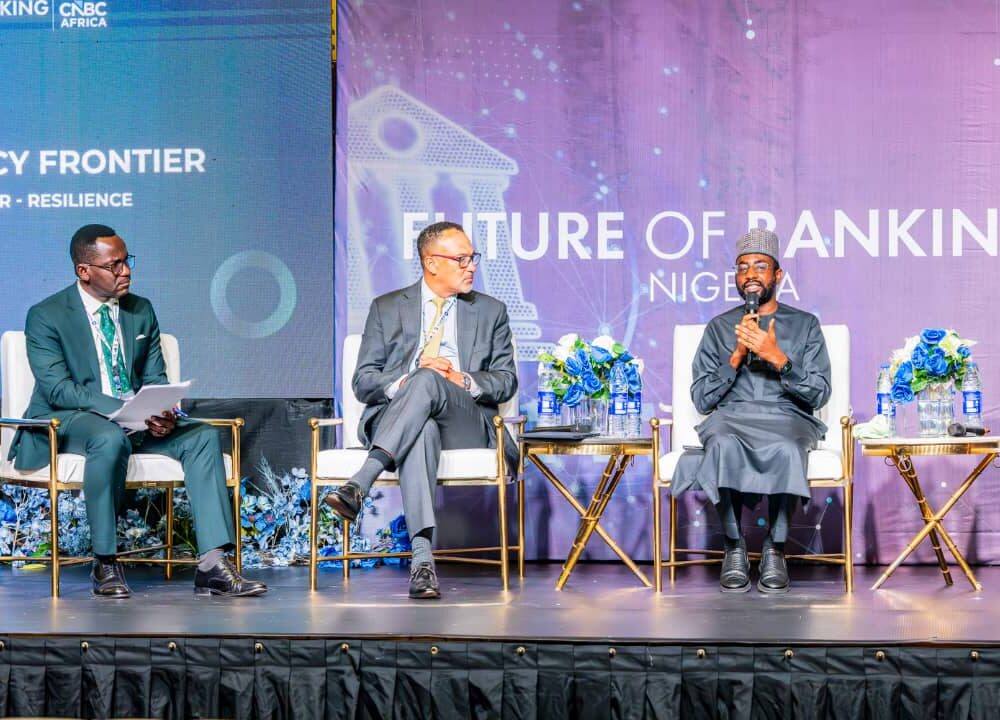


The Director-General of the National Information Technology Development Agency (NITDA), Kashifu Inuwa, has issued a clarion call for massive investment in Africa’s digital public infrastructure, described it as the foundation for sustainable transformation, job creation, and intra-African trade.


Speaking at the 2nd Annual Sustainability Week Africa held at The Westin, Cape Town, Inuwa declared that Africa’s economic destiny depend on its “compute capacity,” which he said is central to achieving digital independence and competitiveness in the global economy.
“In the 21st century, compute power is a primary factor of production, and we cannot rely on exporting our raw data to other regions to process and build products for us,” the NITDA boss stated during a panel session on Digital Infrastructure for Jobs and Trade in Africa.
The DG stressed that Africa must build its own computing infrastructure to fully harness the potential of artificial intelligence (AI) and other emerging technologies. Drawing lessons from Europe’s collaborative approach to high-performance supercomputers and AI factories, he urged African governments to create policies and incentives that attract private-sector investment in digital infrastructure.
Inuwa explained that Digital Public Infrastructure (DPI) operates at two levels the shared physical and technical infrastructure such as connectivity and cloud capacity, and the functional layer which included digital identity, payment systems, and data exchange platforms that enable seamless access to services.
Citing Nigeria’s progress, Inuwa disclosed that over 130 million Nigerians have been captured under the national digital identity system, with ongoing efforts to establish a National Data Exchange Platform and a DPI Centre of Excellence to promote interoperability and best practices across all levels of government.
He credited Nigeria’s Minister of Communications, Innovation and Digital Economy, Dr. Bosun Tijani, for spearheading the DPI agenda, added that the initiative could serve as a model for other African nations.
“We are building the actual DPI data exchange well, building APIs, and developing best practices that can guide other countries across the continent,” he said.
On digital literacy, Inuwa reaffirmed Nigeria’s commitment to achieving 70% digital literacy by 2027 and 95% by 2030 under the National Digital Literacy Framework, highlighting ongoing partnerships with Cisco and the National Youth Service Corps (NYSC) to train students, women, and traders in digital tools and AI-powered applications.
He called for robust policy frameworks to guide AI adoption and promote technology development across the continent, emphasizing that digital transformation should be viewed as “an enabler for every sector of the economy.”
“In Africa, we need to build our own capacity for digital self-determination. We cannot continue to depend on imported hardware and software. Our goal is to build a better life for our citizens, and technology will help us achieve that,” he noted.
Inuwa concluded by urging stronger collaboration between governments, the private sector, and development partners to harmonize digital standards and scale innovation continent-wide.
“Africa’s advantage lies in our ability to leap, to build collaboratively, and to design technology for inclusion. If we build the digital rails together, our youth will drive Africa straight into the heart of the global digital economy,” he affirmed.
Share via: