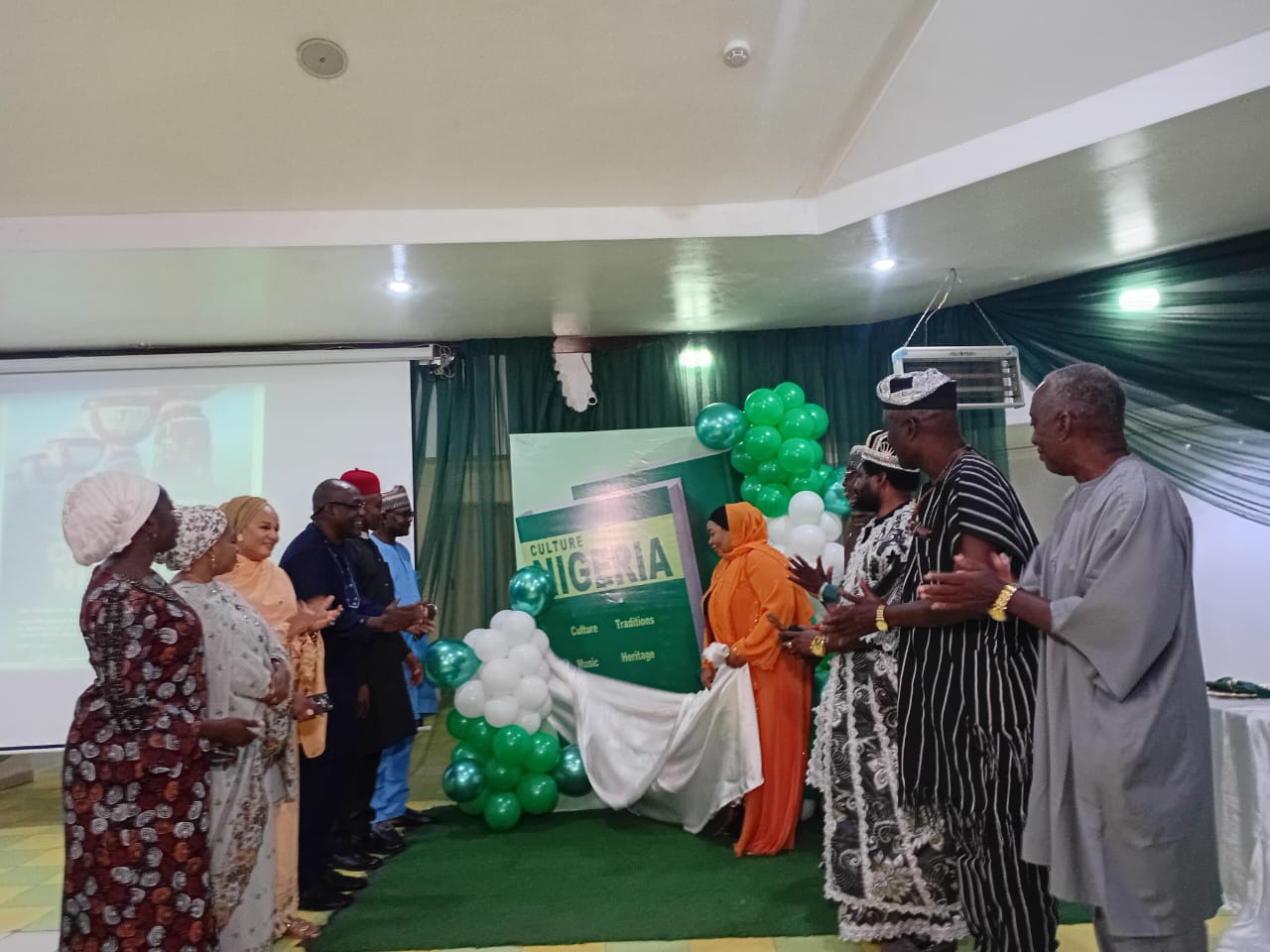
The Nigeria Union of Journalists (NUJ), in collaboration with O&i Contact Limited, has unveiled a new book, Culture Nigeria, positioning it as a vital contribution to national discourse and a blueprint for fostering unity, peace and sustainable development through the country’s rich cultural heritage.
The book was presented at a ceremony jointly organised by the NUJ National Secretariat and O&i Contact Limited in Abuja.
Speaking at the event, the President of the Nigeria Union of Journalists, Comrade Alhassan Yahya, represented by the National Secretary of the Union, Achike G. Chude, described the publication as more than a literary accomplishment, saying it comes at a critical time when Nigeria is grappling with economic, social and structural challenges.
He stressed that Nigeria’s diverse cultural heritage should be regarded as a foundation for national cohesion rather than a relic of the past, noting that culture remains central to politics, governance and sustainable development.
According to him, the country’s over 250 ethnic groups should be seen as a source of strength capable of driving economic growth, social harmony and national integration, instead of serving as a basis for division.
The NUJ President expressed concern over what he described as the persistent exploitation of ethnic and cultural differences by political actors for electoral gains, warning that such practices have deepened identity politics and weakened public confidence in national institutions.
He called for a transition from the politicisation of culture to what he termed the “culturisation of politics,” where governance is guided by indigenous values such as integrity, accountability, honour and mutual trust.
On the nation’s security challenges, he maintained that while military operations remain essential, they cannot single-handedly address the underlying causes of insecurity. He identified culture as one of Nigeria’s most underutilised tools for restoring peace, noting that traditional rulers, community leaders and local associations historically played key roles in maintaining law, order and social harmony.
He added that strengthening traditional institutions would improve community intelligence gathering and enhance early-warning mechanisms for tackling emerging security threats.
The NUJ President also warned that insecurity flourishes when young people become disconnected from cultural values that promote respect for life, hard work and communal responsibility, making them more susceptible to criminality and violent extremism.
Highlighting culture’s economic potential, he described Nigeria’s creative industry including Nollywood, Afrobeats, fashion and literature as one of the country’s most valuable non-oil sectors with the capacity to generate employment, attract foreign exchange and strengthen Nigeria’s global influence through cultural diplomacy.
He noted that by publishing Culture Nigeria, the NUJ had reaffirmed the media’s responsibility not only to report current events but also to preserve and promote Nigeria’s cultural identity.
According to him, the country’s present challenges cannot be resolved through legislation and military action alone without rebuilding the shared cultural values that bind Nigerians together.
Describing the publication as an inspiring compendium, he said the book showcases the richness and diversity of Nigeria across its geopolitical zones while encouraging citizens to rediscover their shared heritage and build a stronger collective national identity.
Author of the book, Isaac Osaikhiwu, described Culture Nigeria as a monumental compendium documenting the cultures of the various peoples of Nigeria and examining the relationship between culture, governance and national development.
He explained that the publication seeks to demonstrate how the nation’s wellbeing is closely linked to the socio-cultural values embraced by its citizens, particularly at a time of perceived decline in cultural values.
Osaikhiwu expressed optimism that the book would inspire Nigerians to appreciate their cultural heritage, strengthen national unity and encourage both leaders and citizens to uphold values that promote peace, good governance and sustainable development.
Other dignitaries at the event urged Nigerians to project a positive image of the country, emphasising that despite its challenges, Nigeria remains a nation endowed with immense cultural diversity, resilience and enormous potential. They called on citizens to celebrate the nation’s achievements while working collectively towards overcoming its challenges.