
The National Drug Law Enforcement Agency (NDLEA) and the United Nations Office on Drugs and Crime (UNODC) have unveiled a weeklong programme of activities to commemorate the 2026 World Drug Day, while reaffirming their commitment to intensifying efforts against drug trafficking networks and substance abuse across Nigeria.
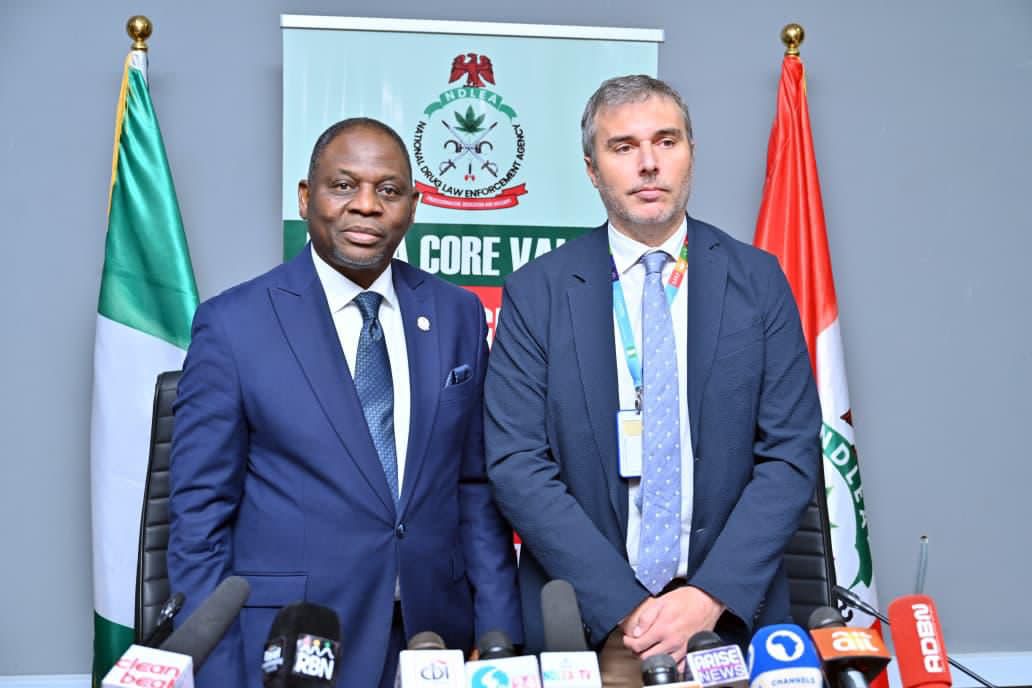
The announcement was made during a joint press briefing held at the NDLEA headquarters in Abuja on Friday, where the anti-narcotics agency declared that it would continue targeting criminal networks and their financial structures to weaken the illicit drug trade.
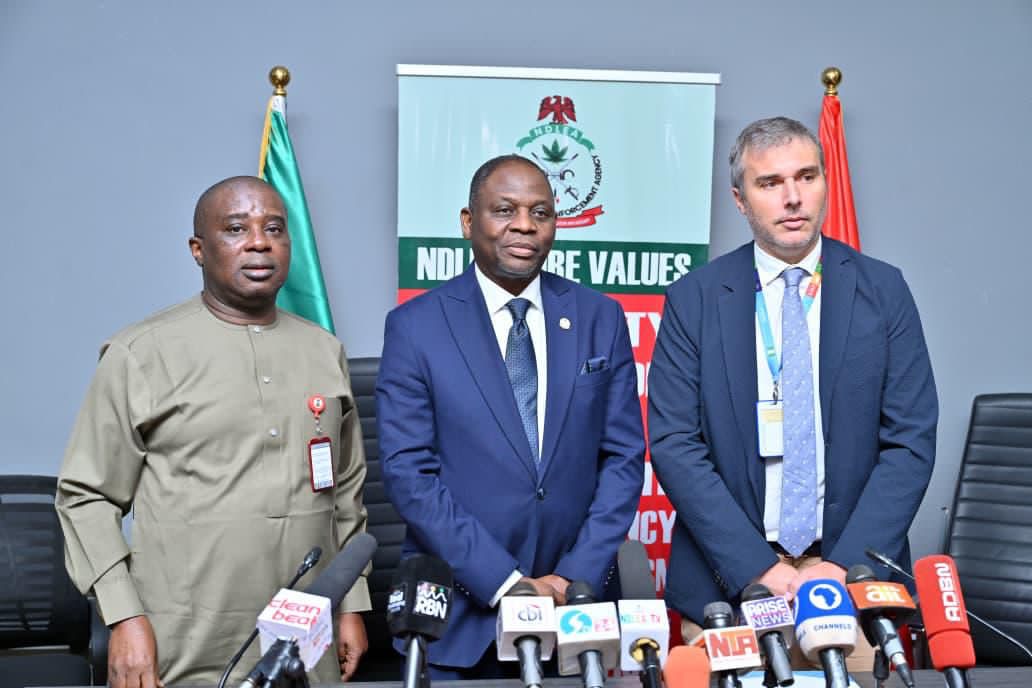
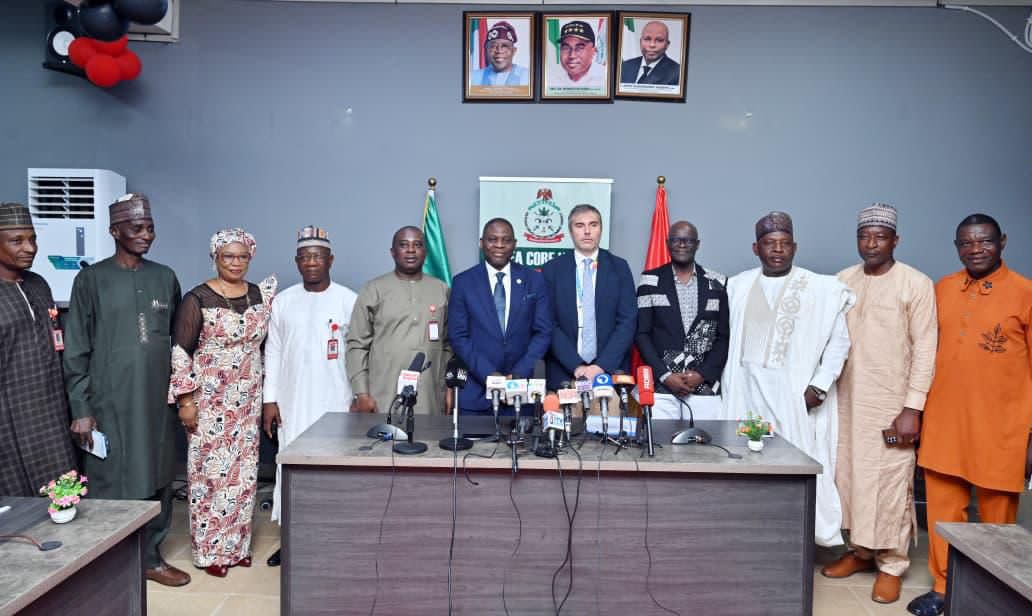
Speaking at the briefing, Chairman and Chief Executive Officer of NDLEA, Brigadier General Mohamed Buba Marwa (retd.), said World Drug Day, observed globally on June 26, provided an opportunity to assess progress made in combating drug abuse and trafficking while setting the agenda for future interventions.
Represented by the Secretary of the Agency, Shadrach Haruna, Marwa said the theme for the 2026 World Drug Day, “The World Drug Problem: Persisting Issues, New Challenges, Innovative Responses,” aptly reflects the changing dynamics of the global drug landscape.
According to him, the emergence of synthetic drugs, sophisticated trafficking syndicates and digital illicit markets has created new challenges that require proactive, technology-driven and innovative responses.
“At the NDLEA, we have long recognised that old strategies cannot solve new problems. Under the continuous support of the Federal Government and our diverse stakeholders, we have heavily modernised our operations and balanced our enforcement capabilities with aggressive social advocacy,” he said.
Marwa explained that the agency’s flagship War Against Drug Abuse (WADA) initiative remains a major platform for preventive action and has been strengthened to address emerging threats through the use of data, community intelligence and innovative public enlightenment strategies.
He announced that the weeklong commemoration would commence on Friday, June 19, with a press conference and a special Juma’at service at the National Mosque in Abuja.
The activities will continue on Saturday, June 20, with the annual Walk Against Drugs organised in collaboration with Baze University, Nile University and the MTN Foundation. The walk will begin at the African University of Science and Technology, Galadimawa, Abuja.
A thanksgiving church service is scheduled for Sunday, June 21, while the national essay competition finale themed “Say No to Drug: Building a Healthy and Responsible Generation” will hold at the NDLEA headquarters on Monday, June 22.
On Tuesday, June 23, the agency will host NGO Day to recognise the contributions of civil society organisations in grassroots anti-drug campaigns. This will be followed by a Youth Out-of-School Programme on Wednesday, June 24, targeting youths in markets and motor parks across the Federal Capital Territory with anti-drug messages.
According to Marwa, Thursday, June 25, will be devoted to strategic reviews and preparations for the grand finale scheduled for Friday, June 26, at the State House Conference Centre, Abuja.
He said the event would bring together senior government officials, members of the diplomatic corps and international stakeholders to unveil new policy frameworks aimed at tackling contemporary drug challenges.
Highlighting recent achievements of the agency, Marwa said the WADA campaign, launched on World Drug Day in 2021, has evolved into a robust whole-of-society initiative that encourages active citizen participation in the fight against drug abuse.
He also noted that NDLEA’s “Offensive Action” against drug cartels, launched in January 2021, has continued to yield significant results through the dismantling of major trafficking syndicates and the successful prosecution of drug kingpins.
“Our legal department has achieved unprecedented conviction rates, fortified heavily by the Proceeds of Crime Act (POCA). We are not just arresting traffickers; we are liquidating their financial empires,” he stated.
Marwa stressed that through civil forfeiture proceedings, assets suspected to be proceeds of drug-related crimes are being confiscated and transferred to the Federal Government, effectively cutting off the financial lifelines of criminal organisations.
He expressed appreciation to President Bola Ahmed Tinubu for his support of the agency’s operations and also commended state governments, international partners and local security agencies for their collaboration.
The NDLEA chairman specifically acknowledged the support of UNODC, the United States Drug Enforcement Administration (DEA), the Bureau of International Narcotics and Law Enforcement Affairs (INL), the United Kingdom’s Home Office International Operations, Border Force, National Crime Agency, the French Police, Germany’s Federal Criminal Police Office (BKA) and other partners.
He also praised the Nigerian Armed Forces, Nigeria Customs Service, Nigeria Police Force, Nigeria Immigration Service, National Agency for Food and Drug Administration and Control (NAFDAC), Nigerian Financial Intelligence Unit (NFIU), Federal Road Safety Corps (FRSC) and the Nigeria Security and Civil Defence Corps (NSCDC) for their cooperation.
In his remarks, the UNODC Country Representative in Nigeria, Cheikh Ousmane Toure, represented by Deputy Country Representative Danielo Campisi, said the global drug problem continues to evolve and demands coordinated responses from governments and stakeholders.
He noted that Nigeria faces the challenge of addressing persistent drug-related problems while adapting to emerging threats and changing patterns of criminal activity.
“The problem persists, but it is not insurmountable. The challenges are evolving, but so are our solutions, and our response must be united, informed and forward-looking,” Campisi said.
He reaffirmed UNODC’s commitment to supporting Nigeria through evidence-based interventions, innovation, human-centred approaches and international cooperation.
“As we commemorate World Drug Day, UNODC reaffirms its commitment to supporting Nigeria’s efforts. Together, we can strengthen our collective response to the world drug problem, addressing persistent issues, responding to new challenges and advancing solutions that protect people and communities,” he added.