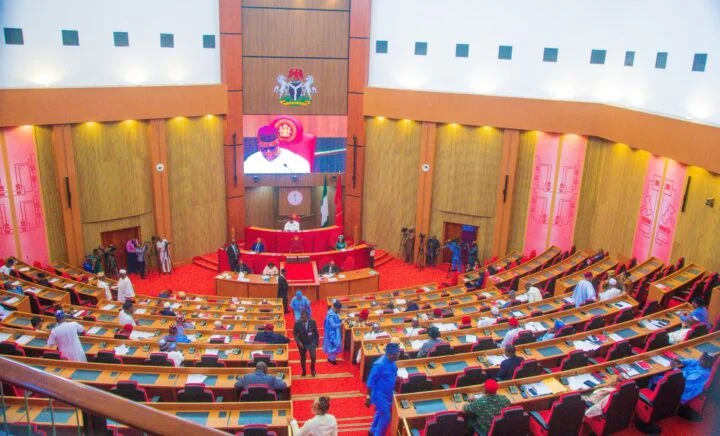

A major crack emerged in the relationship between the Executive and the House of Representatives on Tuesday as lawmakers engaged in a heated debate over the poor implementation of approved budgets, with Speaker Tajudeen Abbas stopped an attempt to summon President Bola Ahmed Tinubu to explain the delays.
The tense session exposed growing frustration among lawmakers across party lines over what they described as the persistent non-release of funds for projects already approved in the 2024, 2025 and 2026 Appropriation Acts.
The controversy began when Hon. Benedict Etanabene, representing Okpe/Sapele/Uvwie Federal Constituency of Delta State, raised a constitutional point of order, informing the House that he had received a circular from the Office of the Accountant-General of the Federation announcing the suspension of funding for zonal intervention projects pending fresh verification requirements.
Etanabene argued that the development had worsened the already poor implementation of federal budgets and urged the House to invoke its constitutional oversight powers by inviting President Tinubu and members of his economic team to appear before Parliament to explain the situation.
Citing Sections 4, 88 and 89 of the 1999 Constitution (as amended), the lawmaker said Nigerians deserved to know why projects approved by the National Assembly were not being funded.
“We cannot explain to our constituents what is happening. Today, we collect money, yet we cannot point to projects because the budgets are not being implemented. Presently, Nigeria is implementing the 2024, 2025 and 2026 budgets concurrently. This is not in the best interest of the country,” he said.
The call received loud support from lawmakers across party lines, including members of the ruling party, reflecting growing dissatisfaction within the Green Chamber over the pace of budget implementation.
The debate gathered further momentum when Hon. Alex Ikwechegh, representing Aba North/Aba South Federal Constituency of Abia State, moved a substantive motion titled, “Urgent Need to Address the Poor Funding of Appropriated Budgets and Delayed Releases to MDAs as Revealed During the 2026 Budget Defence Sessions.”
Ikwechegh said the credibility of Nigeria’s appropriation process depended not only on the passage of budgets but also on the timely release and utilisation of approved funds.
He disclosed that ministers and heads of Ministries, Departments and Agencies (MDAs), during the ongoing 2026 budget defence sessions, revealed alarming levels of underfunding of the 2025 budget, with some agencies receiving no capital releases throughout the fiscal year, while others received only a fraction of their approved allocations.
According to him, the disclosures confirmed repeated complaints by indigenous contractors who had staged protests in 2025 and early 2026 over unpaid certificates for completed government projects.
He recalled that President Tinubu had, during the Federal Executive Council meeting of December 10, 2025, directed the immediate settlement of verified contractor liabilities estimated at about ₦1.5 trillion and approved the establishment of an inter-ministerial committee to reconcile records and facilitate payments.
Ikwechegh also noted that the National Assembly subsequently approved borrowing in excess of ₦1 trillion to finance outstanding contractor obligations, alongside provisions contained in the 2026 Appropriation Act.
Despite those interventions, he lamented that releases to MDAs had remained slow or, in some instances, non-existent, thereby stalling critical infrastructure projects, worsening contractors’ financial challenges and eroding public confidence in the budget process.
The lawmaker further criticised a Treasury circular dated June 29, 2026, reportedly issued by the Office of the Accountant-General of the Federation, which made the issuance of a Certificate of Verification and Compliance by the Federal Ministry of Special Duties and Intergovernmental Affairs a condition for payment on constituency projects.
He argued that while the directive might have been well-intentioned, it had created another layer of bureaucracy that was delaying the execution of projects already approved by Parliament.
Ikwechegh urged the House to prevail on President Tinubu to personally intervene and ensure the speedy implementation of the approved budgets, stressing that lawmakers had previously invited ministers, service chiefs and members of the economic management team to account for government policies.
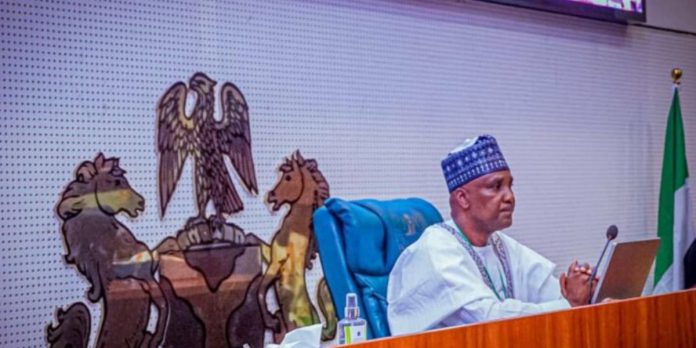
However, when the debate shifted towards adopting the proposal to summon the President, Speaker Abbas firmly ruled against it.
The Speaker declared that the aspect of the motion seeking to invite President Tinubu could not be adopted by the House, describing such a move as inconsistent with parliamentary practice.
“The issue of summoning the President as included in the debate of Hon. Ikwechegh cannot be adopted by the House. Such action is unparliamentary,” Abbas ruled.
His intervention effectively halted the move, although it did little to calm the growing anger among lawmakers, many of whom insisted that the Executive must urgently address the funding crisis affecting constituency and capital projects nationwide.
The debate nevertheless underscored widening concerns within the House over the slow implementation of appropriated budgets, with several lawmakers warning that the continued delay in funding projects could weaken public confidence in both the Executive and the National Assembly.
Political observers believed the issue could further test relations between the Executive and the Legislature as lawmakers intensify oversight of budget implementation ahead of the 2027 general elections, with many members worried that the non-execution of constituency projects may affect their political standing before their constituents.