Institutions reveal their character not in moments of comfort but in moments of ambition.
For the Federal Road Safety Corps (FRSC), the recent voyage to Cairo was more than an official engagement. It was a declaration that the future of road safety will no longer be driven merely by checkpoints, patrol vehicles and traffic regulations. It will be driven by intelligence, technology and data.
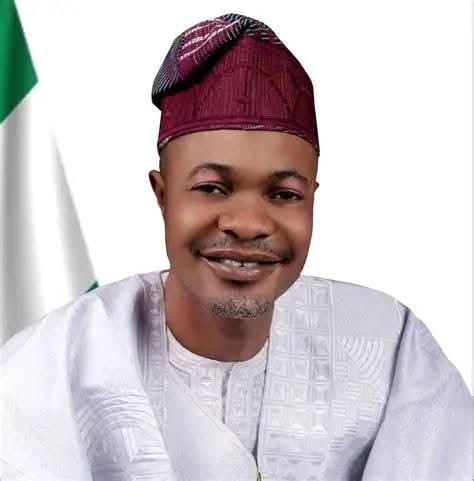
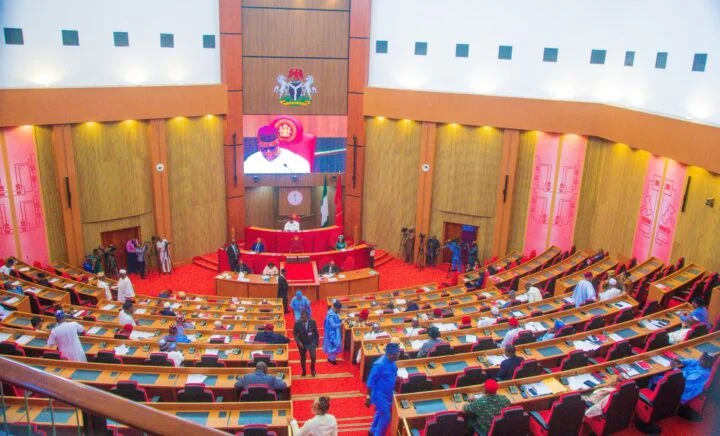
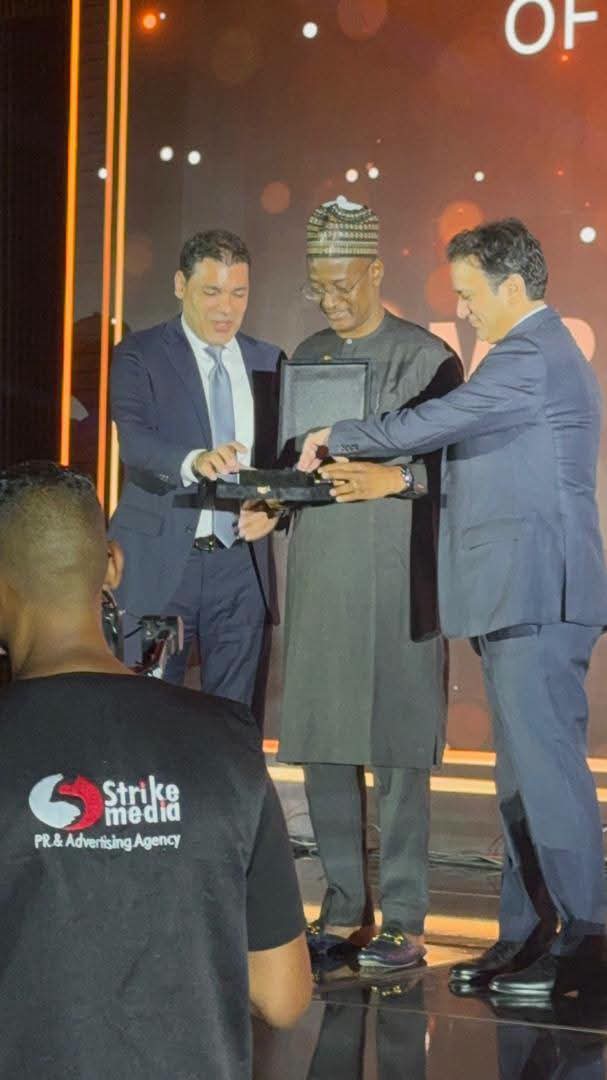
That is why the Corps Marshal, Shehu Mohammed, mni, joining the Speaker of the House of Representatives, Rt. Hon. Abbas Tajuddeen, on Nigeria’s strategic mission to Egypt deserves to be viewed not as another government trip, but as an iconic, ingenious and timely intervention in the country’s long search for an efficient transport ecosystem.
Nations that aspire to greatness do not wait for the future; they deliberately build it.
For too long, Nigeria’s transport management has operated with fragmented information, disconnected databases and reactive decision-making. Road crashes were investigated after they occurred. Traffic patterns were analysed after congestion had already crippled economic activity. Resources were deployed based largely on experience rather than predictive intelligence.
That model belongs to another era.
The Smart National Transport Databank Project offers something profoundly different. It promises a transport ecosystem where decisions are powered by real-time information, where accident-prone corridors are identified before tragedy strikes, where enforcement becomes more intelligent than intrusive, and where government agencies work from a single source of verified transport data.
For the FRSC, this is not simply technological advancement. It is institutional evolution.
Under the leadership of Corps Marshal Shehu Mohammed, the Corps has increasingly embraced the philosophy that saving lives begins long before officers arrive at an accident scene. Prevention has become as important as intervention. Intelligence now stands beside enforcement as an equal pillar of road safety administration.
That thinking explains why the Corps has enthusiastically embraced the Smart National Transport Databank.
With an integrated national database, the FRSC will be better positioned to forecast crash trends, optimise patrol deployments, strengthen driver compliance, improve emergency response coordination and provide policymakers with credible evidence upon which transport decisions can confidently rest.
This is road safety elevated from routine administration to strategic governance.
Equally noteworthy is the proposed establishment of Driver Training and Development Centres across Nigeria through the partnership involving ARCORP Egypt, the FRSC and the Nigerian Institute of Transport Technology under a Public-Private Partnership framework.
Nigeria has often invested heavily in roads while paying insufficient attention to those who use them. Better highways alone do not reduce fatalities. Better-trained drivers do.
Professional driver education remains one of the most cost-effective investments any nation can make in public safety. By supporting internationally benchmarked training centres, the FRSC is helping to shift Nigeria from a culture of licensing drivers to a culture of producing competent road professionals.
That distinction could save thousands of lives over the coming years.
The Cairo engagement also demonstrates something increasingly refreshing about the Corps under its present leadership: a willingness to collaborate rather than operate in institutional isolation.
The Speaker of the House of Representatives brings legislative commitment. The Nigerian Institute of Transport Technology contributes technical expertise. The Federal Ministry of Transportation provides policy direction. International partners offer tested innovations. The FRSC supplies operational experience acquired through decades of safeguarding Nigerian roads.
This convergence of institutions is precisely how meaningful reforms are built.
Critics may question the value of overseas engagements, and rightly so. Public officials must always justify foreign missions with measurable outcomes. But the answer to wasteful travel is not isolation; it is purposeful engagement.
The Egyptian mission possesses precisely that quality.
It moves beyond ceremonial diplomacy into practical nation-building. It advances an already established Memorandum of Understanding into concrete implementation. It seeks technology rather than applause, partnerships rather than protocol, and solutions rather than symbolism.
Few institutions understand the human cost of poor transport governance better than the FRSC. Every statistic represents a family altered forever. Every preventable crash exposes weaknesses that smarter systems can correct.
That is why this initiative matters.
Around the world, the most successful road safety agencies increasingly rely on integrated digital platforms, predictive analytics and interconnected databases. Nigeria cannot afford to remain outside that global transformation. By positioning itself at the forefront of this digital transition, the FRSC is demonstrating that road safety in the twenty-first century is as much about information as it is about enforcement.
The Corps is not merely responding to global trends; it is helping Nigeria catch up with them.
History often celebrates bridges, highways and airports because they are visible. Yet the invisible infrastructure of data is becoming even more consequential. It quietly determines where roads are built, how traffic flows, where investments are directed and, ultimately, whose lives are saved.
The Smart National Transport Databank belongs to that invisible infrastructure.
If implemented with the discipline and consistency that its architects envision, future generations may remember the Cairo mission not as a diplomatic footnote but as the moment Nigeria chose to replace fragmented transport administration with intelligent mobility.
In that story, the Federal Road Safety Corps will deserve more than passing recognition.
It will deserve credit for seeing tomorrow before many others did—and for having the courage to begin building it today.
Abdullahi O Haruna writes from Abuja and is the Dean Musing School of Thoughts