In a significant move to advance technological innovation and human capital development in Nigeria, the Deputy Speaker of the House of Representatives, Rt. Hon. Benjamin Okezie Kalu, has pledged his full support for Bildup AI Learning, a transformative platform leveraging Artificial Intelligence (AI) to enhance education and skills training across the country.
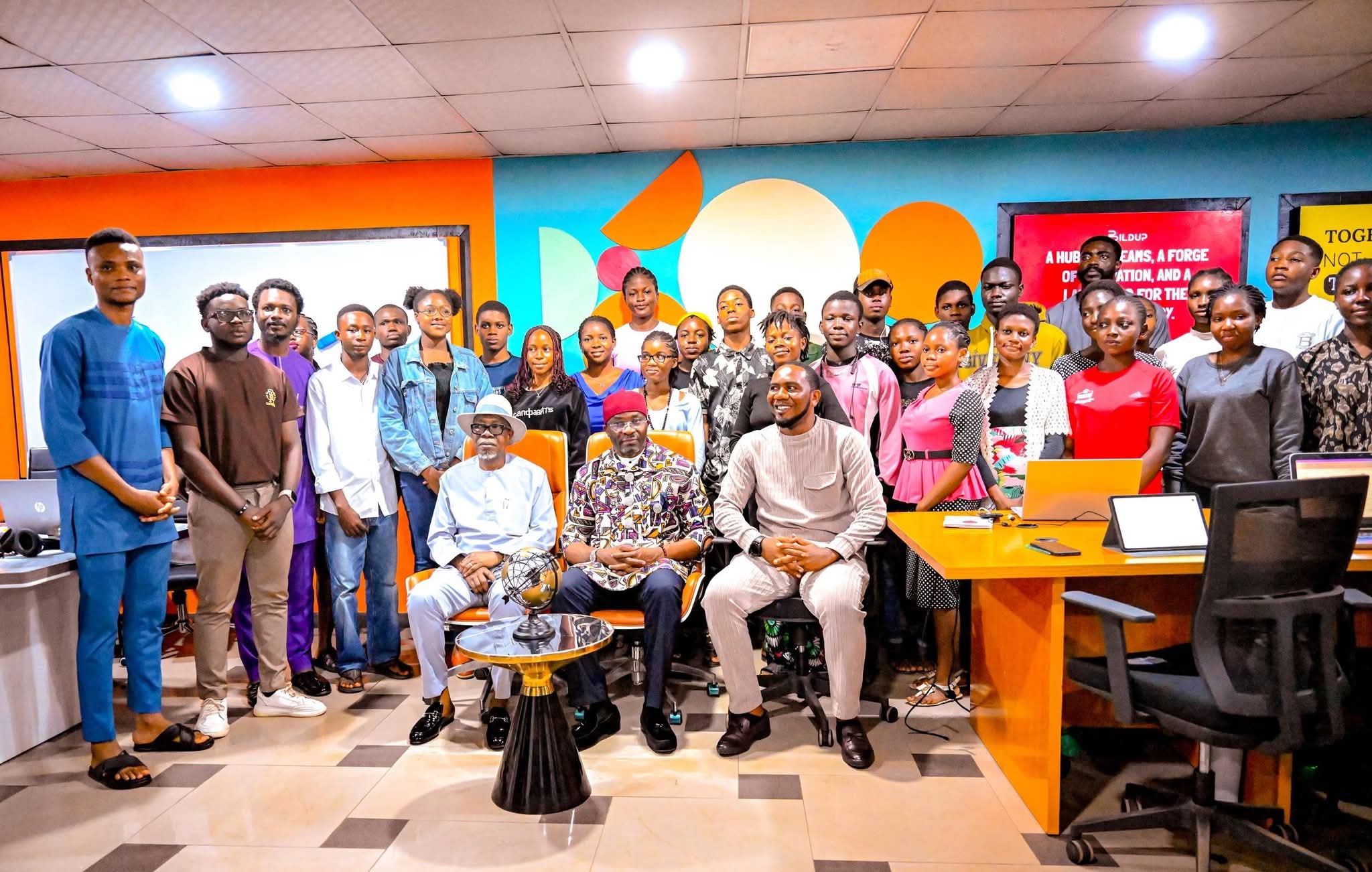
Kalu made this commitment during a visit to the Bildup AI Learning hub in Enugu, where a group of young Nigerians are engaged in various educational programs powered by AI. The visit was part of a retreat for the House Committee on Review, and Kalu was accompanied by the Majority Leader of the House, Professor Julius Ihonbvere, and other prominent lawmakers.
During the visit, the Deputy Speaker lauded the initiative for its potential to democratize access to quality education, particularly in underserved regions of Nigeria. He emphasized the need for the government to support such innovative efforts that could position Nigeria as a global leader in technology and human capital development.
“This initiative has the potential to revolutionize our education system, providing equal access to quality learning for students, especially those in remote or underserved areas. It aligns perfectly with the vision of the Nigerian government for human capital development,” Kalu remarked.
The Deputy Speaker further stressed that technology, particularly AI, can play a pivotal role in Nigeria’s economic transformation. Highlighting Nigeria’s large and growing population, Kalu pointed out the country’s vast potential to become a key player in the global services sector. He noted that with the right investment in technology and human capital, Nigeria can export services to global giants such as Oracle, Facebook, and Instagram, while generating significant foreign exchange revenue.
Kalu also pledged to work closely with Bildup AI Learning to integrate its platform into government-supported initiatives and constituency projects. “We are committed to showcasing this project to key government ministries, including the Ministry of Education and the Ministry of Science and Technology, to ensure it becomes a national priority. We will also collaborate with NGOs that are seeking credible platforms to channel their resources,” he added.
The Deputy Speaker’s remarks underscored his belief in the potential of technology to catalyze national development. “Our human capital is one of Nigeria’s greatest resources. As we continue to innovate, we must build an ecosystem that empowers our youth to contribute meaningfully to the global economy,” Kalu emphasized.
Chibuike Aguene, the CEO of Bildup AI, explained that the platform is designed to bridge the gap in education by offering personalized, AI-powered tutoring to students. “Bildup AI is the first of its kind in Africa, providing a one-to-one learning experience that replicates the interaction with a human teacher. With this platform, students can complete a program in a fraction of the time traditionally required. For instance, students preparing for exams such as the JAMB have used the platform to improve their scores significantly,” Aguene explained.
He further highlighted that the platform is not intended to replace teachers but to enhance their work by giving students access to world-class learning tools. “We are not replacing teachers, but we are empowering them with AI tools that can increase the effectiveness of their teaching. Whether in urban centers or rural areas, students now have the ability to learn from the best,” Aguene stated.
The CEO also noted that Bildup AI has already incorporated the Nigerian government’s recent policy mandating tech skills as a compulsory subject in schools. This integration ensures that students receive relevant, future-focused training that aligns with global trends in education and technology.
“The AI mentors interact with students in a personalized manner, speaking in accents and styles that resonate with individual learners. This means that students can now access the highest quality of education, regardless of their geographical location,” Aguene said.
Kalu’s endorsement of Bildup AI mark a pivotal moment in Nigeria’s push toward embracing technology as a key driver of economic and educational progress. He urged the students involved in the program to continue pursuing excellence and innovation. “You are disruptors, not just of tradition but of the status quo. You are the future of Nigeria, and your work in technology will help build the country’s future,” he stated.
The Deputy Speaker also proposed the inclusion of AI learning into the country’s constituency projects, allowing students nationwide to benefit from the platform’s innovative approach to education. “This is a tool that we can use to further human capacity building, making quality education accessible to all,” Kalu affirmed.
Bildup AI’s unique approach to personalized education is also positioning the platform to play a key role in shaping the future of education in Africa. Aguene proudly noted that the platform was developed entirely in-house in the South East of Nigeria, further cementing the region’s growing reputation as a hub for tech innovation. The platform’s integration with a marketplace will also allow students to showcase their skills and access both local and global opportunities.
As Nigeria continue to invest in its human capital, the partnership between the government and innovative tech platforms like Bildup AI promised to propel the country toward a brighter, more digitally-enabled future.