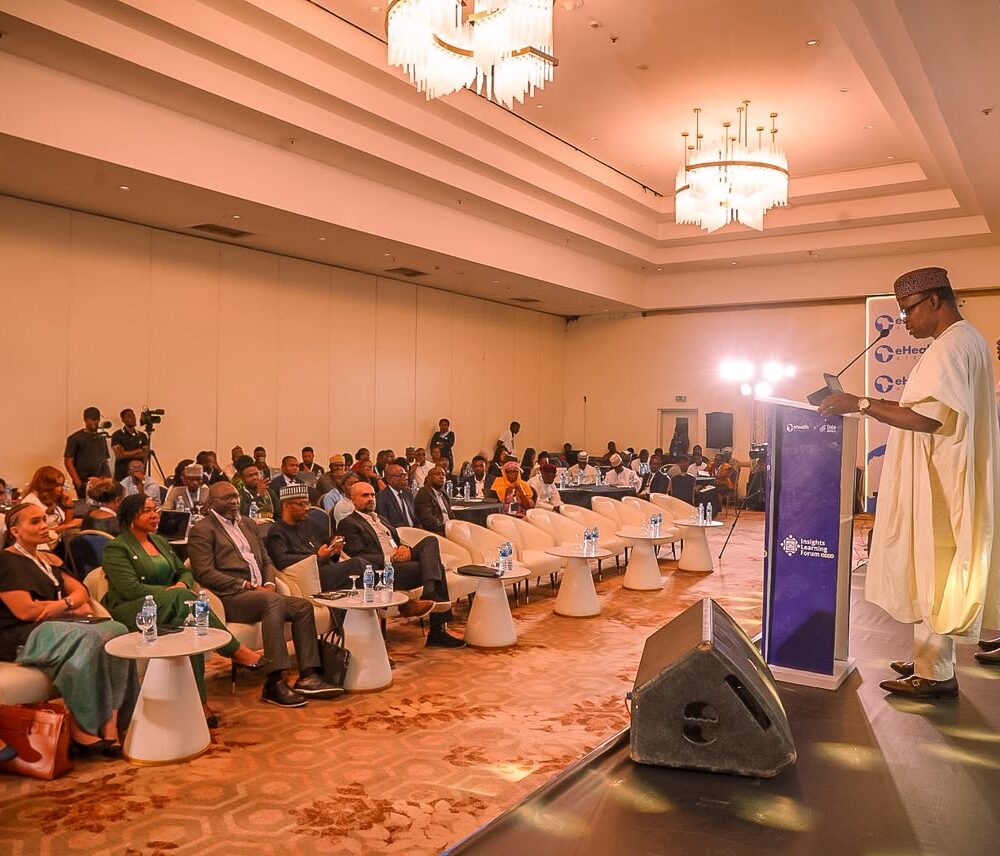


The Federal Government has launched a series of flagship development programmes valued at more than $1.07 billion to strengthen primary healthcare, improve governance, deepen human capital development and accelerate poverty reduction across Nigeria.
The programmes, unveiled on Thursday at the Presidential Villa, Abuja, form part of the Federal Government’s strategy to consolidate economic recovery and ensure that the gains of ongoing reforms translate into improved living standards for Nigerians.
Representing President Bola Ahmed Tinubu at the launch, the Minister of Finance and Coordinating Minister of the Economy, Professor Taiwo Oyedele, said the initiatives were designed to make the country’s economic progress meaningful to ordinary citizens.
He said Nigeria’s economy had recorded significant improvements, including stronger GDP growth, increased per capita income in dollar terms, improved foreign reserves and a decline in inflation, adding that about 15 million vulnerable households had benefited from expanded social transfer programmes.
Among the key initiatives unveiled are the Human Capital Opportunities for Prosperity and Equity-Governance (HOPE-GOV) programme, backed by $500 million, and the Primary Healthcare Provision Strengthening Programme (HOPE-PHC) with $570 million in funding.
According to the government, the HOPE-GOV programme will improve governance, budget planning and recruitment of teachers and healthcare workers, particularly in underserved communities, while HOPE-PHC will strengthen primary healthcare delivery through the Basic Healthcare Provision Fund.
Speaking at the event, the Coordinating Minister of Health and Social Welfare, Professor Muhammad Ali Pate, said the programmes align with President Tinubu’s Renewed Hope Agenda and are being implemented through the Nigeria Health Sector Renewal Investment Initiative (NHSRII).
He explained that the health sector reform blueprint is built on four pillars: effective governance, quality and equitable healthcare delivery, strengthening the healthcare value chain, and improving health security and resilience.
Pate highlighted major achievements recorded under the initiative, revealing that 3,026 Primary Healthcare Centres have been revitalised nationwide, while 231 secondary hospitals have received maternal and newborn care equipment valued at $200,000 per state.
He added that 43,417 women and newborns had benefited from emergency rural medical transport services, while 42,970 Comprehensive Emergency Obstetric and Newborn Care (CEmONC) services were delivered between October 2024 and March 2026.
The minister further disclosed that 78,054 frontline healthcare workers had been trained, with 45.5 million patient visits recorded at facilities supported under the Basic Healthcare Provision Fund within a single quarter.
According to him, the reforms are driving increased utilisation of healthcare services, with more women opting for facility-based childbirth, greater uptake of family planning services and improved childhood immunisation coverage.
Also speaking, the World Bank Country Director for Nigeria, Mathew Verghis, commended the Federal Government’s efforts to expand access to quality healthcare, describing the Universal Health Coverage Compact as a strong platform for accountability among governments, development partners, civil society and the private sector.
He said the HOPE-PHC programme and its associated Multi-Donor Trust Fund would strengthen investments in Nigeria’s health sector and improve outcomes for mothers, children and vulnerable populations.
The event also featured the formal launch of the Nigeria Community Action for Resilience and Economic Stimulus Additional Financing (NG-CARES AF), the HOPE Programme comprising HOPE-GOV, HOPE-PHC and HOPE-EDUand the Solutions for Internally Displaced Persons and Host Communities (SOLID) programme, which the Federal Government described as key pillars of its inclusive and sustainable national development agenda.