
Participants at the National Migration Conversation 2026 have urged the Federal Government to strengthen border governance, promote safe and regular migration, and enhance inter-agency collaboration to maximise the economic and security benefits of Nigeria’s borders.
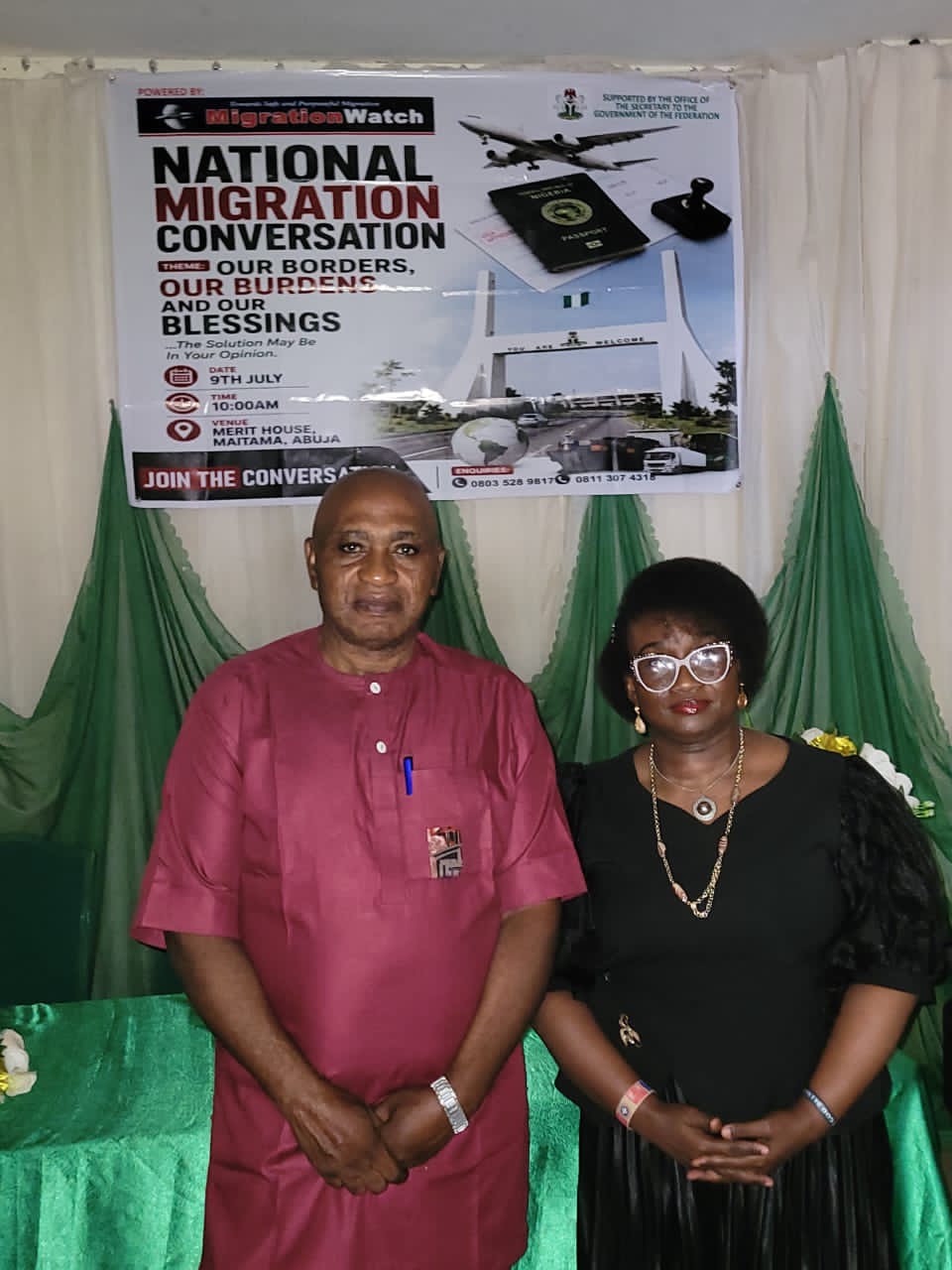
The one-day dialogue, held on July 9, 2026, at Merit House, Maitama, Abuja, was themed “Our Borders, Our Burdens and Our Blessings: Pathway to Safe and Profitable Border Management.” It was convened by Migration Watch Magazine under the leadership of its Executive Editor, Onoja Saint Michael, with the endorsement of the Office of the Secretary to the Government of the Federation (OSGF) and technical support from the International Organization for Migration (IOM) Nigeria.
The event brought together policymakers, government agencies, migration experts, academics, civil society organisations, media practitioners, students and development partners to examine the challenges and opportunities surrounding migration and border management in Nigeria.
A keynote address was delivered by Prof. Adeyinka Adeniji, while Prof. Jude Terna Kur moderated the panel discussion. Representatives of NAPTIP, the Nigerians in Diaspora Commission (NiDCOM), the University of Abuja and the Federal University of Technology, Minna also delivered goodwill messages.
Following extensive deliberations, participants observed that Nigeria’s borders remain strategic national assets capable of driving economic growth, regional integration, trade, tourism and cultural exchange when effectively managed. They, however, expressed concern over irregular migration, human trafficking, insecurity, weak border infrastructure, inadequate funding and limited public awareness of safe migration pathways.
The participants stressed the need for stronger coordination among security and migration agencies, improved border technology, increased investment in border communities and expanded legal migration opportunities to curb irregular migration and protect vulnerable groups.
Among the key recommendations adopted were the modernisation of border infrastructure, improved intelligence sharing among government agencies, enhanced public awareness campaigns on safe migration, stronger regional cooperation and greater investment in youth empowerment and job creation to reduce the drivers of irregular migration.
The communiqué also called for sustained collaboration between government institutions, development partners, the media and civil society to ensure migration policies contribute to national development while safeguarding Nigeria’s security and humanitarian interests.
The conversation concluded with a renewed commitment by stakeholders to support policies that promote orderly, regular and profitable migration, while strengthening Nigeria’s border management system in line with global best practices.