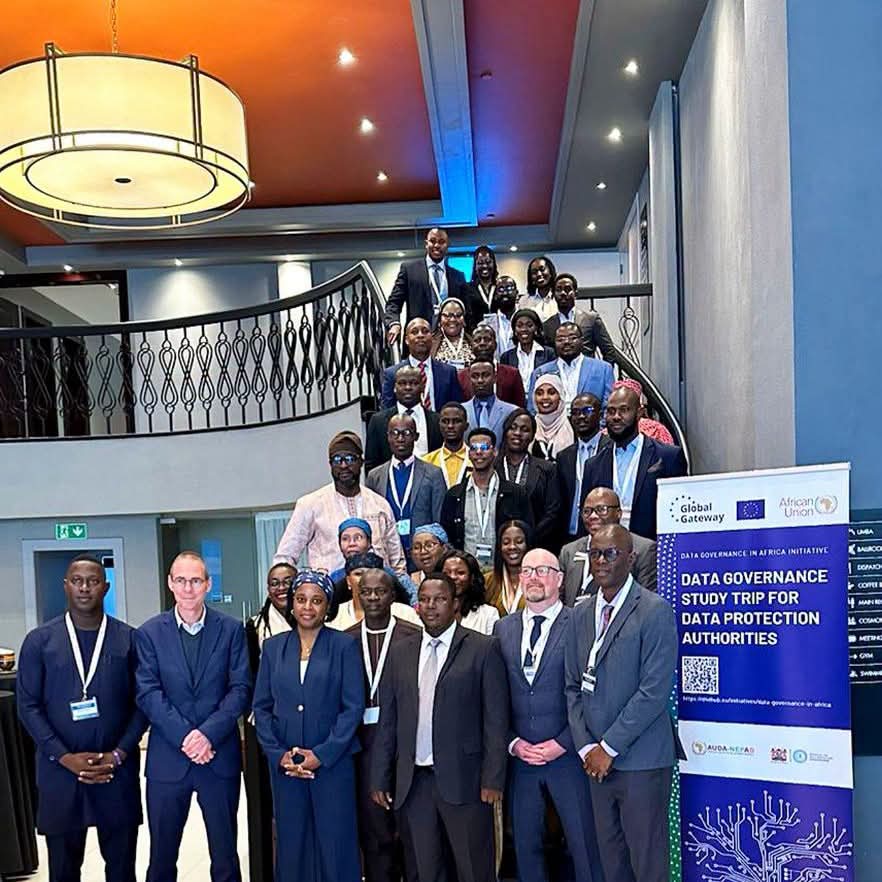


The National Information Technology Development Agency (NITDA) has inaugurated a Technical Working Group (TWG) aimed at strengthening regulatory collaboration and creating a coordinated sandbox framework to support digital innovation in Nigeria.
Speaking during the inauguration, the Director General of National Information Technology Development Agency, Kashifu Inuwa, represented by the Acting Director of Regulation and Compliance, Emmanuel Edet, said the initiative was designed to address structural regulatory challenges that often slow down innovation across the country’s digital ecosystem.
According to Inuwa, members of the Technical Working Group were carefully selected based on their institutional relevance and capacity to contribute practical solutions that reflect the realities of Nigeria’s rapidly evolving digital economy.
He explained that while regulatory agencies have legitimate mandates, the growing complexity of digital technologies now demands stronger institutional coordination to ensure that regulations encourage, rather than hinder, innovation.
“As government institutions, our core responsibility is to provide solutions to the challenges faced by Nigerians. Regulators often operate in silos while implementing their mandates, and in today’s digital environment, that model presents significant limitations,” he stated.
The NITDA boss noted that the pace of technological advancement continues to outgrow traditional regulatory systems, creating gaps that can delay innovative solutions capable of improving livelihoods and accelerating national development.
To address this, he said NITDA is championing a multi-agency regulatory framework that would bring regulators together to better understand overlapping responsibilities and jointly develop adaptive mechanisms that support innovation while maintaining effective oversight.
Central to the initiative is the introduction of regulatory sandboxes — controlled environments where innovators can safely test emerging technologies under the supervision of relevant authorities.
“Our guiding principle is that we learn by doing. Through these sandboxes, regulators can contribute to building safe spaces where innovation can be nurtured, tested, and scaled for the benefit of Nigerians,” Inuwa added.
He further clarified that the initiative is not intended to weaken the statutory powers of any regulatory institution, but rather to improve coordination and create a more responsive regulatory ecosystem capable of keeping pace with technological advancement.
According to him, enhanced inter-agency collaboration is critical to ensuring that Nigeria remains competitive in the global digital economy and fully leverages innovation as a driver of inclusive economic growth.
Providing an overview of the National Regulatory Sandbox, the National Coordinator of the Office for Nigerian Digital Innovation (ONDI), Victoria Fabunmi, explained that the framework would provide innovators with a structured and legally guided environment to test emerging technologies before receiving full market approval.
Fabunmi noted that innovators in sectors such as Artificial Intelligence, fintech, health technology, blockchain, agriculture, mobility, clean energy, and digital public infrastructure often face delays caused by fragmented approval processes and siloed regulations.
She described the National Regulatory Sandbox as a governance and legal framework that goes beyond a mere digital platform, adding that Nigeria’s model is intentionally sector-agnostic to encourage collaboration among multiple regulators across different industries.
Under the framework, startups and innovators will be able to engage with several regulators simultaneously within a controlled testing environment, thereby reducing bureaucratic bottlenecks and shortening time-to-market for innovative solutions.
Fabunmi added that the sandbox would also provide evidence-based regulatory insights that would enable participating agencies to make informed decisions collectively and formulate policies that support responsible innovation.
The inauguration of the Technical Working Group marks another major step in NITDA’s broader efforts to build a more agile, collaborative, and innovation-friendly regulatory environment in line with Nigeria’s ambition of becoming a leading digital economy in Africa.