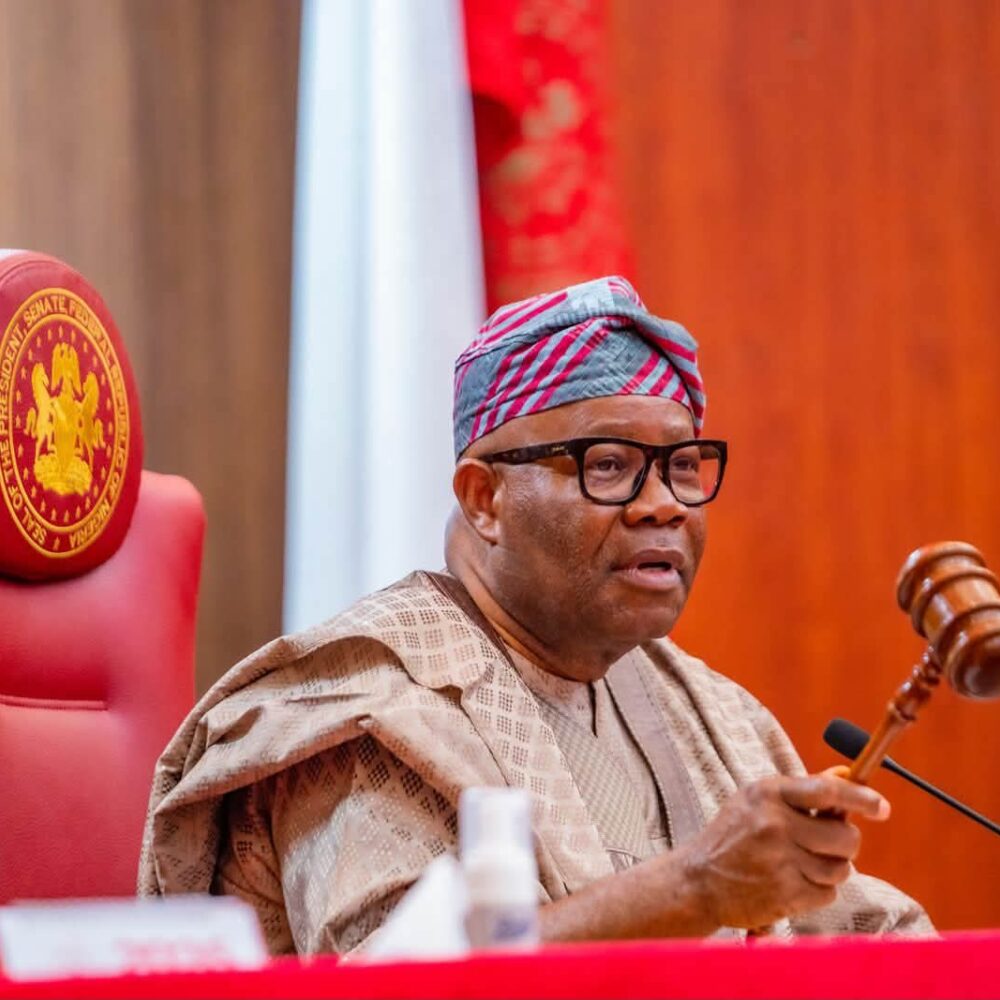


The controversy surrounding the Presidential Foreign Intervention Promotion Council (PFIPC) has moved beyond questions about the legality or legitimacy of the agency. It now raises a more fundamental constitutional issue: the independence of Nigeria’s institutions and the doctrine of separation of powers.
Nigeria’s constitutional democracy is founded on three co-equal arms of government; the Executive, the Legislature, and the Judiciary.
While each arm is expected to cooperate in the interest of good governance, none should abdicate its constitutional responsibilities in favour of another.
The Senate’s decision to await the outcome of an executive investigation, rather than conduct its own inquiry into the appropriation of over ₦1.3 billion reportedly linked to the PFIPC, has sparked legitimate constitutional concerns.
The issue is not whether the Executive has the power to investigate. It certainly does. The concern is whether the Legislature should rely solely on the Executive to investigate matters in which Parliament itself exercised constitutional powers, particularly its power of appropriation and oversight.
The National Assembly is constitutionally empowered to investigate the implementation of laws, the expenditure of public funds, and the activities of government institutions.
These oversight responsibilities exist independently of investigations by executive agencies. One does not replace the other.
When the Legislature declines to exercise its oversight powers and instead waits for the Executive to determine the facts, it risks creating the perception that Parliament is relinquishing one of its most important constitutional duties.
Such an approach may weaken the principle of checks and balances, which requires each arm of government to hold the others accountable while remaining accountable for its own actions.
This is not an argument for institutional rivalry. Rather, it is a call for institutional responsibility.
The Executive may investigate possible criminal or administrative misconduct, but the Legislature has a separate constitutional obligation to determine whether due legislative procedures were followed, whether public funds were properly appropriated and utilised, and whether reforms are necessary to prevent similar controversies.
Ultimately, public confidence in democratic governance depends not only on whether wrongdoing is punished but also on whether every arm of government faithfully performs its constitutional mandate.
The PFIPC controversy therefore presents an opportunity for the National Assembly to reaffirm its institutional independence and demonstrate that legislative oversight is neither optional nor transferable.
A healthy democracy is sustained when every arm of government performs its constitutional role without fear, favour, or dependence on another. That is the true essence of the separation of powers.
Amb. Anderson Osiebe, Executive Director, HallowMace Africa, Public Policy Expert and an Administrator writes from Ahuja – Nigeria.