
The Tinubu Media Support Group (TMSG) has described the recent proposal by state governors to raise the national minimum wage to N100,000 as evidence of the impact of President Bola Tinubu’s economic reforms on state finances.
In a statement signed by its Chairman, Emeka Nwankpa, and Secretary, Dapo Okubanjo, the group said the development underscores what it called improved liquidity across the sub-national governments since the implementation of the administration’s reforms.
According to the group, the current position of governors marks a shift from 2024, when states reportedly resisted the Federal Government’s proposal to increase the minimum wage to N70,000.
“Like many Nigerians, we were stunned to see the Chairman of the Nigerian Governors’ Forum and Governor of Kwara State, AbdulRahman AbdulRazaq, proposing a new national minimum wage of N100,000 during a Sallah visit to President Bola Tinubu,” the statement read.
The group noted that several states have already implemented wage increases above the previous benchmark, citing Lagos and Rivers States, which it said now pay up to N85,000, while Bayelsa, Niger, Enugu, and Akwa Ibom States reportedly pay around N80,000.
It further listed Ogun, Delta, Benue, and Osun States as paying between N75,000 and N77,000, while Imo State was said to have adopted N104,000 as its minimum wage in September 2025.
TMSG argued that improved revenue allocations from the Federation Account have strengthened state governments’ ability to meet salary obligations, noting that many states previously struggled to pay the former N30,000 minimum wage.
“It is a matter of public record that many of these states were unable to regularly pay the then minimum wage of N30,000 until the advent of the President Bola Tinubu administration which introduced economic reforms that made more funds available to the sub-nationals,” the group stated.
It added that the governors’ proposal reflects growing fiscal stability at the sub-national level and what it described as a response to current economic pressures.
The group also referenced data from the Debt Management Office (DMO), claiming that states are now less reliant on domestic borrowing for salary payments.
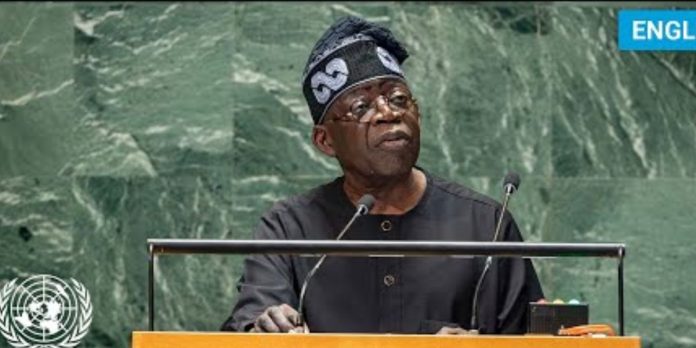
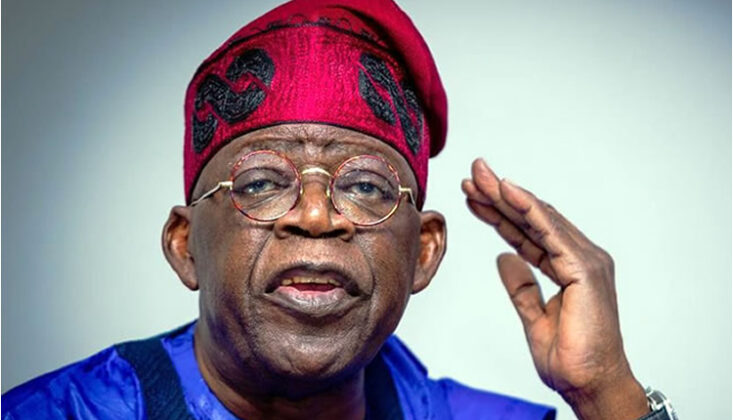
TMSG maintained that the development is “a testament to the robust efficacy” of the Tinubu administration’s reforms, adding that President Tinubu may even consider a higher benchmark in response to evolving economic realities.
President Bola Tinubu continues to drive the federal government’s economic reform agenda, while the Nigerian Governors’ Forum is expected to further deliberate on the proposed wage review in the coming months.
The group urged Nigerians to view the administration as committed to improving welfare outcomes despite ongoing economic challenges.