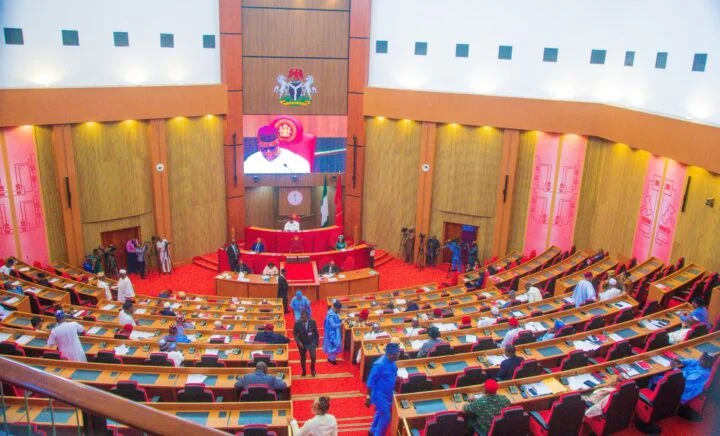


The Senate has intensified efforts to strengthen Nigeria’s digital regulatory framework by advancing a bill that would require global social media platforms and other major data-driven technology companies operating in the country to establish physical offices within Nigeria.
The proposed legislation, sponsored by Senator Ned Munir Nwoko (Delta North), was the subject of a public hearing organised on Thursday by the Senate Committee on ICT and Cyber Security. The bill seeks to amend the Nigeria Data Protection Act, 2023, by mandating social media platforms, data controllers and data processors operating in Nigeria to maintain operational offices within the country’s territorial boundaries.
Speaking during the hearing, Senator Nwoko said the bill is aimed at reinforcing Nigeria’s digital sovereignty, improving regulatory oversight, enhancing national security, protecting consumers and ensuring multinational technology companies become more accountable to Nigerian laws.
According to him, Nigeria, with over 220 million people and one of the world’s largest populations of social media users, contributes enormous economic value to global technology companies but receives limited institutional benefits because many of them have no physical presence in the country.
“Today, we are not considering an ordinary bill. We are considering the future of Nigeria’s digital sovereignty, economic interests, national security and the rights of over 200 million Nigerians who interact daily with some of the world’s largest technology companies,” Nwoko said.
He noted that millions of Nigerians rely on platforms such as Facebook, X (formerly Twitter), Instagram, WhatsApp, YouTube, TikTok and Snapchat for communication, commerce, education and civic engagement, yet the companies continue to operate in Nigeria without maintaining local offices.
Under the proposed amendment, the Nigeria Data Protection Commission would be empowered to compel affected companies to establish physical offices in Nigeria. Any company that fails to comply within 30 days of notification could face prohibition from conducting operations within the country.
The bill also introduces clearer legal definitions for terms such as “Data Controllers,” “Data Processors,” “Operators of Social Media Platforms,” “Physical Office,” and “Social Media Platforms” to facilitate effective implementation.
Defending the proposal, Senator Nwoko argued that the absence of local offices has delayed the resolution of consumer complaints, weakened regulatory engagement, limited enforcement of Nigeria’s data protection laws and deprived Nigerians of employment and technology transfer opportunities.
He stressed that the bill is not intended to stifle innovation or discourage investment but to encourage technology companies to become responsible corporate citizens by making long-term investments in Nigeria.
Drawing comparisons with countries including the United Kingdom, Ireland, India, Singapore, Australia, Japan, Brazil and the United Arab Emirates, Nwoko noted that global technology companies have established regional headquarters, engineering centres, legal compliance offices and customer support hubs in those countries, creating thousands of jobs while strengthening regulatory collaboration.
He questioned why Africa’s largest digital market should continue to operate without enjoying similar benefits.
The senator also argued that local offices would enhance national security by providing direct institutional channels for cooperation between technology companies and Nigerian authorities during criminal investigations. He cited recent cases where criminal elements allegedly exploited social media platforms during unlawful activities, saying faster engagement with platform operators could improve law enforcement responses.
Beyond security, he said the proposed law would improve protection of Nigerians’ personal data, strengthen consumer complaint resolution, enhance tax compliance and promote greater transparency in digital business operations.
Nwoko further stated that establishing local offices could create thousands of employment opportunities for Nigerian professionals in software engineering, customer support, legal compliance, public policy, content moderation and other technology-related fields, while encouraging collaboration between global firms, local universities and startups.
He called on government agencies, civil society organisations, technology companies, industry experts and other stakeholders to make constructive contributions during the legislative process to ensure the bill reflects Nigeria’s long-term digital and economic interests.
Chairman of the Senate Committee on ICT and Cyber Security, Senator Shuaibu Afolabi Salisu, assured participants that all memoranda and submissions received during the public hearing would be thoroughly reviewed before the committee present its recommendations to the Senate for further legislative action.
The bill received broad support from participants at the public hearing and now awaiting the committee’s consideration of submissions from stakeholders before progressing to the next stage of the legislative process.