

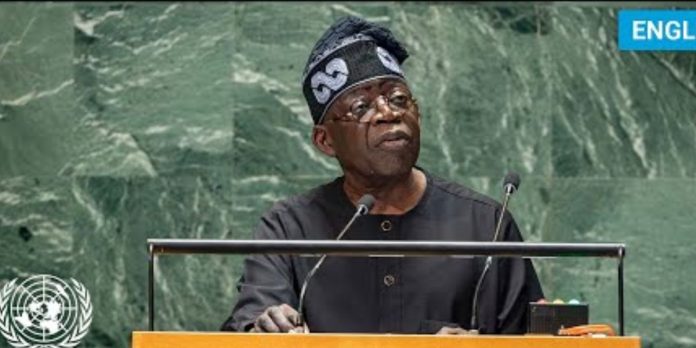
The Independent Media and Policy Initiative (IMPI) has said the economic reforms introduced by President Bola Tinubu over the past 36 months have fundamentally reset Nigeria’s fiscal and macroeconomic foundations, describing the administration’s policies as a decisive shift from a consumption-driven economy to one anchored on productivity, investment and sustainable growth.
In a policy statement signed by its Chairman, Dr. Omoniyi M. Akinsiju, the group argued that the Tinubu administration inherited a severe fiscal crisis in May 2023, characterised by soaring public debt, inflation, heavy reliance on the Central Bank of Nigeria’s Ways and Means advances and a debt service-to-revenue ratio of about 96 per cent.
According to IMPI, the administration moved swiftly to securitise the accumulated Ways and Means advances into long-term bonds, halt further inflationary borrowing from the CBN, remove fuel subsidy and unify the foreign exchange market.
The group traced Nigeria’s fiscal challenges to economic policies implemented between 1999 and 2015, alleging that despite earning about $994.4 billion from oil and gas during the administrations of former Presidents Olusegun Obasanjo, Umaru Musa Yar’Adua and Goodluck Jonathan, the country was left with mounting debt and weakened reserves.
It also criticised the Jonathan administration for borrowing to finance recurrent expenditure, describing the decision as a major fiscal error that entrenched Nigeria’s debt dependence.
IMPI further noted that while Nigeria’s total public debt rose to about $108.23 billion by the end of 2023, it declined to $94.2 billion by October 2025 before increasing to about $110.97 billion by April 2026 due to new infrastructure-related borrowing.
The policy group maintained that despite the additional borrowing, Nigeria’s debt-to-GDP ratio remained at a sustainable 32.3 per cent, while the debt service-to-revenue ratio dropped from 97 per cent in 2023 to 50 per cent in 2025.
On fuel subsidy, IMPI said Nigeria spent an estimated $81.45 billion on petrol subsidy between 2005 and 2022, describing the expenditure as a major drain on public finances. It added that subsidy removal significantly increased monthly allocations from the Federation Account Allocation Committee (FAAC), with distributions rising from an average of about ₦650 billion before the reform to over ₦1.5 trillion afterwards.
The organisation also commended the foreign exchange reforms, claiming that previous administrations spent about $388 billion defending the naira between 2000 and 2023 without preventing its depreciation. It contrasted this with the current administration’s estimated $7.8 billion intervention between 2024 and 2025, which it said contributed to improved exchange rate stability.
According to IMPI, the reforms have also boosted domestic production, expanded non-oil exports to a record $6.1 billion in 2025, increased tax revenue, broadened the tax base and improved Nigeria’s trade balance.
The group highlighted ongoing recruitment by financial institutions, oil and gas firms, manufacturing companies and development organisations as evidence that the economy is becoming more job-driven, while government initiatives such as the Renewed Hope Housing Programme are expected to create hundreds of thousands of additional jobs.
IMPI concluded that the Tinubu administration’s reforms have strengthened Nigeria’s fiscal position, improved investor confidence and laid the foundation for sustained economic growth, while urging continued implementation of policies aimed at expanding revenue generation and improving living standards.