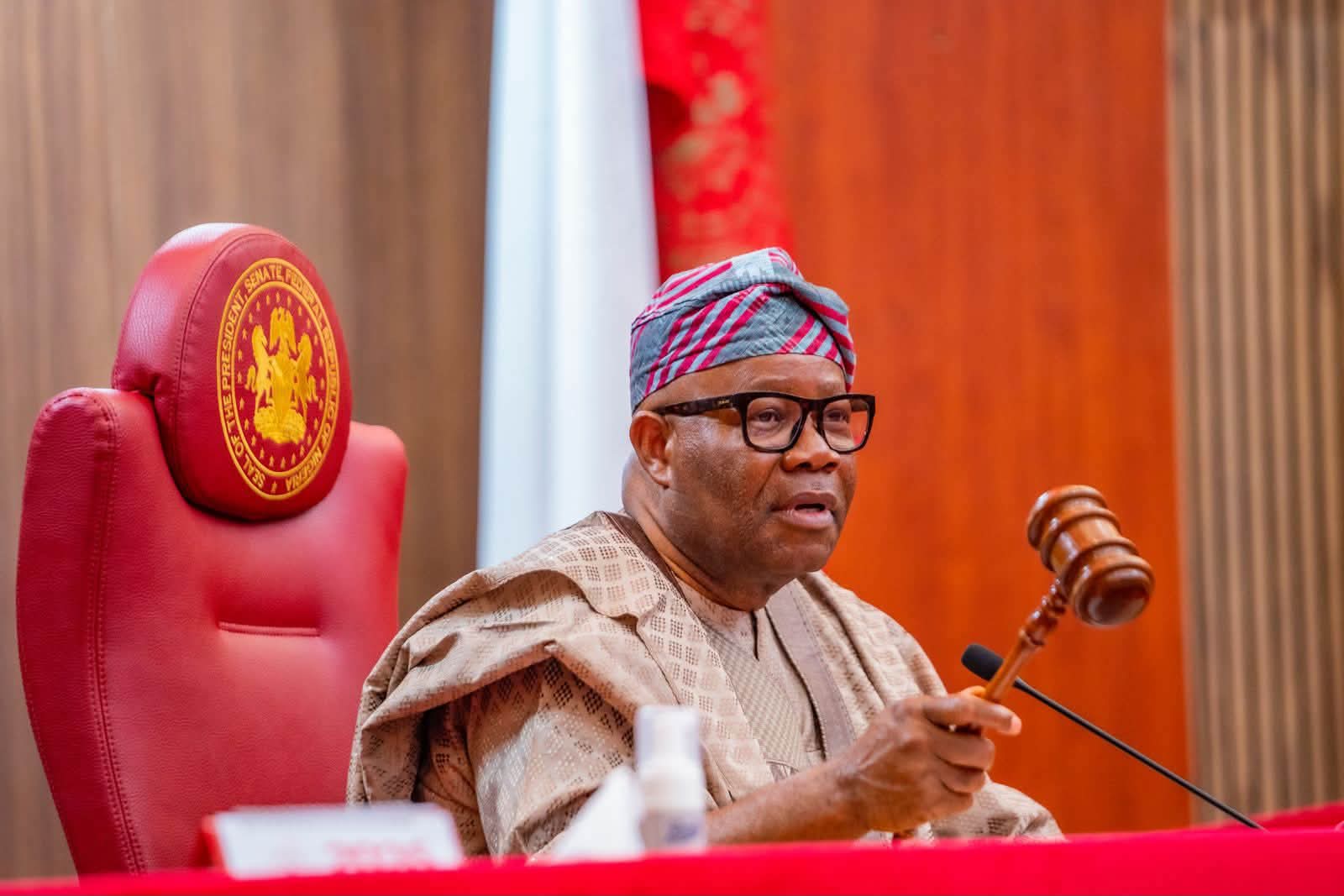

The decision by the Nigerian House of Representatives to overwhelmingly approve the State Police Bill marks one of the most significant constitutional and security reform developments in Nigeria’s democratic history. With 289 lawmakers voting in support and only one opposing the proposal, the outcome reflects a growing national consensus that the current centralized policing system is no longer sufficient to address Nigeria’s complex and evolving security challenges. Nigeria currently operates a centralized policing system under the control of the Federal Government through the Nigeria Police Force (NPF). This arrangement…
Category: Opinion
HOT MONEY OR THE FIRST STAGE OF RECOVERING CONFIDENCE? A Response to an Unsigned Commentary on Nigeria’s Capital Inflows By Tanimu Yakubu
INTRODUCTION The unsigned commentary under review presents itself as a forensic examination of Nigeria’s recent capital-importation figures. Its central thesis is that because a substantial proportion of recent inflows entered Treasury bills and other money-market instruments rather than factories and industrial enterprises, the inflows should not be interpreted as evidence of confidence in Nigeria’s economy. Instead, they are characterised as speculative, transient and symptomatic of deeper economic weakness. The argument is forcefully stated. Unfortunately, it rests upon a misunderstanding of how capital typically returns to economies emerging from periods…
HON. OBASA AND HON. KOLADE ALABI WORKING AGAINST PRESIDENT BOLA TINUBU’S WISHES?: PROTESTS AT APC SECRETARIAT INSULT GOVERNOR AND PARTY CHAIRMAN – Olabode …THE BATTLE FOR AGEGE 01 AND SOMOLU 02 APC TICKETS: A PROTEST TOO MANY
What was expected to be a routine post-primary reconciliation within the Lagos APC has spiralled into one of the most divisive internal confrontations in recent memory. At the centre are the disputed House of Assembly tickets for Agege Constituency I and Somolu Constituency II, with protests now seen as moves by rival camps working against President Bola Tinubu’s wishes for party unity. The latest demonstrations at the APC State Secretariat in Acme, Lagos, further exposed deep divisions. Hundreds of aggrieved members insisted the published candidates do not reflect the…
An agenda for Yoruba oba, leaders By Lasisi Olagunju
On Friday, November 1, 1878, a decisive war was fought in the north-eastern corridor of Yorubaland. History remembers it as the Jalumi War. It was that one-day battle that permanently halted the southward march of the Fulani towards the sea. One of the bitterest engagements of that war was fought in a place called Iba, a few kilometres off the Ikirun-Offa Road. I remembered that episode of Yoruba history when the oba of the town, the Eburu of Iba, Oba (Prof) Adekunle Okunoye, invited me to deliver his…
Osun guber: What if AMBO wins? By Iyiola Oludotun
As the pendulum of politics swings towards the August 15, 2026, governorship election in Osun State, the political atmosphere is charged with intense calculations. At the center of this gathering storm is Asiwaju Munirudeen Bola Oyebamiji, popularly known as AMBO. A seasoned banker, the immediate past Managing Director of the National Inland Waterways Authority (NIWA), and a former Osun Commissioner for Finance, Oyebamji represents the All Progressives Congress (APC) vanguard attempting to reclaim the state from the incumbent Peoples Democratic Party (PDP)/Accord Party administration of Governor Ademola Nurudeen Jackson…
Sunday Igboho’s Iru Ekun as Sòbìà, the guinea worm By Festus Adedayo
Make no mistake about it: Yorubaland is encircled by terrorists. And Nigeria is today as sour as vinegar. The president’s birthplace is now a terrorist enclave. Since the Ahoro-Esinele tragedy in Oriire LG of Oyo State on May 15, a lot more blood has been spilled. Blood spillage has become, in the words of Bob Marley, a natural mystique and “many more will have to suffer; many more will have to die.” Ondo, Ekiti, Ogun, Osun have since been taking bites of their own blood. On Friday, bandits stormed the…
THE RUBBER-RULER FALLACY: A RESPONSE TO RECENT CLAIMS ON PRICE CHANGES UNDER THE TINUBU ADMINISTRATION By Tanimu Yakubu. Director-General, Budget Office of the Federation
Introduction In periods of economic adjustment, citizens naturally judge government performance through the prices they encounter in markets, petrol stations and grocery stores. Those experiences are real and deserve serious attention. Yet sound economic analysis requires more than observing nominal price movements. It requires measuring those changes against the value of the currency itself. When that principle is ignored, misleading conclusions can emerge from otherwise accurate figures. Recent political commentaries and infographics have circulated widely, purporting to demonstrate the performance of the Nigerian economy between May 2023 and…
How I returned from the Gate of the other World (Parts 1, 2, 3 & 4): Readers’ comments (II)
Salam Hassan just finished reading the trilogy with a teary eye. I must confess I don’t remember my getting you a contract in 1994, but I remember that your late father, one of the most humane persons I have met, tied our hands together. But most importantly, what your late mother did to us, friends of Dr Mamman, during our holidays. When we (my wife and I) first saw you on a hospital bed, we were painfully and mistakenly bidding you farewell, and neither of us slept; we put you…
Oyo abductions and our illimitable woes By abiodun KOMOLAFE
We are all now in peril, and there’s no longer an acceptable definition of where the frontline is. The abduction of dozens of pupils across three schools spanning Ahoro-Esinele, Yawota and Oko communities in Oriire Local Government of Oyo State must not be used to indulge in blame trading. Instead, it should be an opportunity for re-strategising. This is the only way to wage unconventional conflicts, and our methods of training, perception and even public discourse must accept this. As I have argued elsewhere, a good place to start…
Delayed Rains Leave Abuja Farmers in Limbo By Prosper Okoye
The maize seeds had been in the ground for days, waiting. On a rocky slope overlooking Dagbana, a farming community on the outskirts of Abuja, Awak Michael stood beside rows of freshly planted maize and searched the sky for signs of rain. By this time last year, the young shoots would already have been pushing through the soil. Instead, the earth remained stubbornly dry. “We normally plant around April,” he said. “This year, I planted just last week.” For farmers across Nigeria’s Federal Capital Territory, the rainy…