
Dìbò k’ó se’bẹ̀ and the raw reality of politics – (2) By abiodun KOMOLAFE

As Adlai Stevenson Jr. famously observed, _“A hungry man is not a free man.”_ This truth conveniently haunts our troubled polity, where politicians tend to demand absolute electoral loyalty while offering nothing in return. But, again, can a hungry populace give their best while fending for themselves in a vacuum, and can one harvest where nothing was sown? For any political system to endure therefore, the social contract ought to be more than a one-way street. The two hands must clap: if we expect total commitment, we should first provide…

The Market Meets the Minbar – Why Nigeria’s Hajj Reform May Finally Deliver What Bureaucracy Could Not

Every generation inherits an institution that has outgrown the architecture that created it. Nigeria’s Hajj administration has become one of them.   Vice President Kashim Shettima’s endorsement of the gradual transfer of Hajj operations from government bureaucracy to private operators is more than an administrative adjustment. It is a recognition that the economics of pilgrimage have changed faster than the institutions managing it.   For decades, government agencies have attempted to perform two incompatible functions: regulate the market while simultaneously participating in it. In economics, such arrangements rarely produce efficiency.…

Who rules Osun: Wealth or words? By Adeola Ojo

As the harmattan haze clears and the heat of political maneuvering gives way to the countdown towards August 15, 2026, the political atmosphere across Osun State thickens with familiar anxieties.   From the bustling corridors of power in Osogbo to the quiet agrarian settlements stretching across Ijesaland and beyond, the air is pregnant with expectation. Yet, beneath the standard cacophony of campaign jingles, party flags, and roadside rallies, a profound question is being whispered in market stalls, motor parks, and quiet academic common rooms:   When the votes are finally…

PFIPC Controversy/House of Reps. Investigation: Beyond the “Fake Agency” Narrative — Why Nigerians Deserve an Independent Investigation A HallowMace Africa Analysis.

The revelations emerging from the House of Representatives Ad Hoc Committee investigating the alleged Presidential Foreign Investment Promotion Council (PFIPC) have raised more questions than answers.   While the committee has presented evidence suggesting that the council was built on forged government documents, the facts already in the public domain expose glaring institutional contradictions that cannot simply be dismissed with the conclusion that the agency was “fake.”   HallowMace Africa believes that the integrity of Nigeria’s public institutions is at stake, and for that reason, this matter deserves a broader,…

Zacch Adedeji: From Revenue Collection to Fiscal Transformation By Arabinrin Aderonke

Every generation produces public servants whose influence reaches beyond the offices they occupy. They redefine institutions, challenge entrenched assumptions and leave behind systems that continue to deliver long after they have gone. In less than three years, Zacch Adedeji has shown every sign that he belongs to that category. When President Bola Ahmed Tinubu appointed him first as Special Adviser on Revenue and subsequently as Executive Chairman of the Federal Inland Revenue Service, now the Nigeria Revenue Service, the assignment was neither glamorous nor easy. Nigeria faced declining fiscal space,…

US-Israeli War on Iran (1): The Endgame, by Hassan Gimba

Endgame. A seven-letter word that sounds like the last beat of a drum in a musical piece. Endgame! A word that conjures the image of two Goliaths strutting about, intent on choking the life out of a David. Yet, in this instance, David appears to have pinned the Goliaths to the wall. Endgame! A word with two seemingly contradictory meanings: a game and an end. A loaded word that promises a finale, the fulfilment of an ultimate goal or the culmination of a long-term plan. Originally a chess term referring…

Politicians who sell their own toes By Lasisi Olagunju

Somewhere in present-day Osun State, about a hundred years ago, an oba ordered a manhunt for a troublesome strongman in his domain. The man, Kátákatà, was captured one night, killed and beheaded. His severed head was placed in a pot and brought to the oba. The palace erupted in celebration. At last, the nuisance was gone forever. But at the height of the rejoicing, another celebration broke out outside the palace. It was Kátákatà himself, arriving with his drummers. A stunned oba confronted him. “But they brought your head to…

Democracy’s sweet billions By Lasisi Olagunju

At the dawn of this democracy, masked musician, Lagbaja, looked at the value of a million naira and asked in disbelief: “Ṣé mílíọ̀n pọ̀ tó yẹn ni?” (Is a million naira really that much?) Today, he would be speechless—perhaps even songless. Millions have become loose change; billions now circle like vultures over the carcass of a hippo washed ashore. Some two hundred years ago, a man in Oyo-Ile boasted that no load of cotton could ever be too heavy for him to carry. The elders smiled and told him he…

Did Abacha actually die on top of a woman? By Festus Adedayo

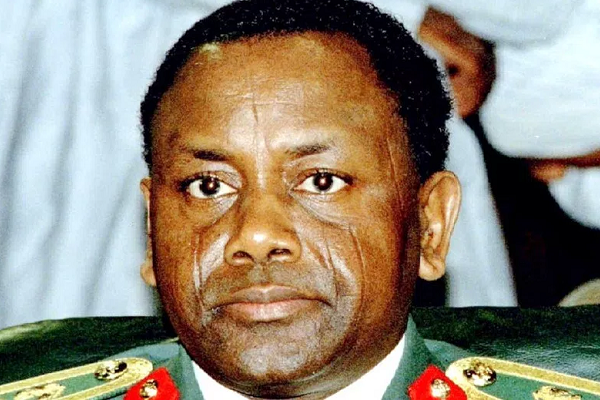
The Yoruba establish a direct causal relationship between tragic news and emotional grief. They observe that if the ears are not fed with rotten news, the mind will not be consumed by grief. Whatever his motive for publishing his book, DSS @40: My Journey Behind the Shield, retired Assistant Director of the Department of State Services (DSS) Dennis Amachree has reawakened an unpleasant yet momentous chapter in our national history. In doing so, he proves right the ancient adage that a twenty-year-old pounded yam can still burn one’s fingers as…

The Agẹmọ curse and Nigeria’s free fall By Festus Adedayo

“They just tend not to be honest. Nigerians as a group, frankly, are marvelous scammers. I mean, it is in their national culture.” That damning comment appeared in the September 25, 1995, edition of The New Yorker. That scathingassertion stirred a hornet’s nest, and its author — Colin Powell, the urbane American diplomat, Army General, and later the 65th Secretary of State (and the first Black American to serve in that role) — courted unpleasant rebukes for those remarks. Powell was like smelly rot on whom flies perched as he…