The prevailing security discourse in Northern Nigeria frequently employs the term “banditry” to describe a complex web of rural violence. This article argues that such terminology constitutes a significant category error, trivializing a crisis that is fundamentally a low-intensity, non-state civil conflict. By reframing this insecurity within the context of radical land and tenure reform, the author posits that the violence is a symptom of structural contradictions in the agrarian economy. Through an analysis of factor dislocation, land, labour, and capital, and the reordering of agrarian class relations, this paper…
Category: Opinion
Reforming Fiscal Governance in Africa’s Largest Economy: Insights from BOF Management Retreat
In a strategic move to reform fiscal governance and enhance institutional efficacy, the Budget Office of the Federation (BOF) has accelerated a reform agenda centered on innovation, sustainability, and results-based budgeting. This initiative gained significant momentum following the conclusion of the 2025 Management Retreat in Uyo, Akwa Ibom State. Hosted in collaboration with a leading independent think tank specializing in African public financial management (PFM) and development policy, the engagement emphasized Nigeria’s commitment to aligning its sovereign budgeting systems with global best practices. Expert-Led Collaborative Governance: The retreat was…
The president’s psychologically punishing jokes By Festus Adedayo
I have severally confessed my love for the South African literature. I fell in love with it early in life while gobbling up narratives of heroic travails of liberation struggle fighters, represented in the works of Mazisi Kunene, Ezekiel Mphalele, Peter Abrahams, Alf Wannenburg, Alan Paton, Alex La Guma and many others. I must have read La Guma’s A Walk In The Night and virtually all his works innumerable times. Of the lot, one South African author whose works equally spellbound me is Can Themba, perhaps because of the self-inflicted…
Celebrating Mama Renewed Hope, Hajia Imaan Sulaiman- Ibrahim @46 BY ABUBAKAR YUSUF
Hajiya Imaan Sulaiman- Ibrahim is the current Minister of Women Affairs and Social Development, a known driver and protagonist of the Renewed Hope Agenda, RHA of President Bola Ahmed Tinubu and Renewed Hope Initiative, RHI of Senator Oluremi Tinubu, Nigeria’s first Lady and wife of the President . In aligning with the two notable Agendas and as member of the think tank of the present administration as a cabinet member, Imaan who was the first female Minister of State , Police Affairs and later the current portfolio, was at…
Comrades, “come-raids” and the Nigerian state By abiodun KOMOLAFE
The current state of what passes for “activism” captures the dilemma and dysfunction of an underperforming post-colonial state. Nigeria once possessed a robust tradition of advocacy. This legacy is unambiguously illustrated by the November 18, 1949, Iva Valley massacre in Enugu, where miners were cut down simply for demanding labour conditions consistent with human dignity. The Iva Valley massacre – carried out under British watch – constitutes a war crime. Consequently, the British government must provide reparations, as it did for Kenya’s Mau Mau fighters. Unlike today’s “come-raids”, Nigeria…
When ABUAD bows for BAO By abiodun KOMOLAFE
“Building Legacies: Governance, Successor-generation and Continuity”, a lecture delivered by Governor Biodun Abayomi Oyebanji (BAO) at the 2026 Afe Babalola Distinguished Personality Lecture, last Tuesday, was thought-provoking, incisive and, unsurprisingly, received a standing ovation. The ovation, at the event held at the Afe Babalola University, Ado-Ekiti (ABUAD), reflected the impact the offering made in extending the boundaries of knowledge and contributing to more rigorous thought. It revealed Oyebanji’s affinity for intellectual curiosity and the institutions founded on knowledge – an area where ABUAD has made its mark in a…
Public Sector Reform as Engine for Growth: A Case to Revive Sugar Sector in Nigeria
The public sector is the machinery used by the state to execute plans, policies and programmes. Quest to make things better establish certain institutions with a mandate to realize targeted objectives and essentially undertake some core activities. The exercise is not peculiar to developing countries as the developed world grappled with it in the late 1970s and early 1980s. In response to the demands of economic and environmental dynamics, nations strive to cope with or manage change. In developing countries such as Nigeria with an urgent…
Celebrating Hayatudeen Atiku Awwal Giant Stride’s in Mortgages, Housing at Federal Housing Authority Mortgage Bank FHAMB at Birthday , BY ABUBAKAR YUSUF
For Alhaji Hayatudeen Atiku Awwal FNIQS, the Managing Director, Federal Housing Authority Mortgage Bank FHAMB, the hub of mortgages and housing in Nigeria, deploying the Federal Housing Authority, FHA as springboard to reach out to ordinary Nigerians, seeking for a befitting shelter in the country is unwavering. Hayatudeen, the protagonist and initiator of ” Rent to Own ” has resolved the crisis of not only owing a house , but resolving accomodation problems and crises bedeviling low income earners, the middle income and high income owners in the country.…
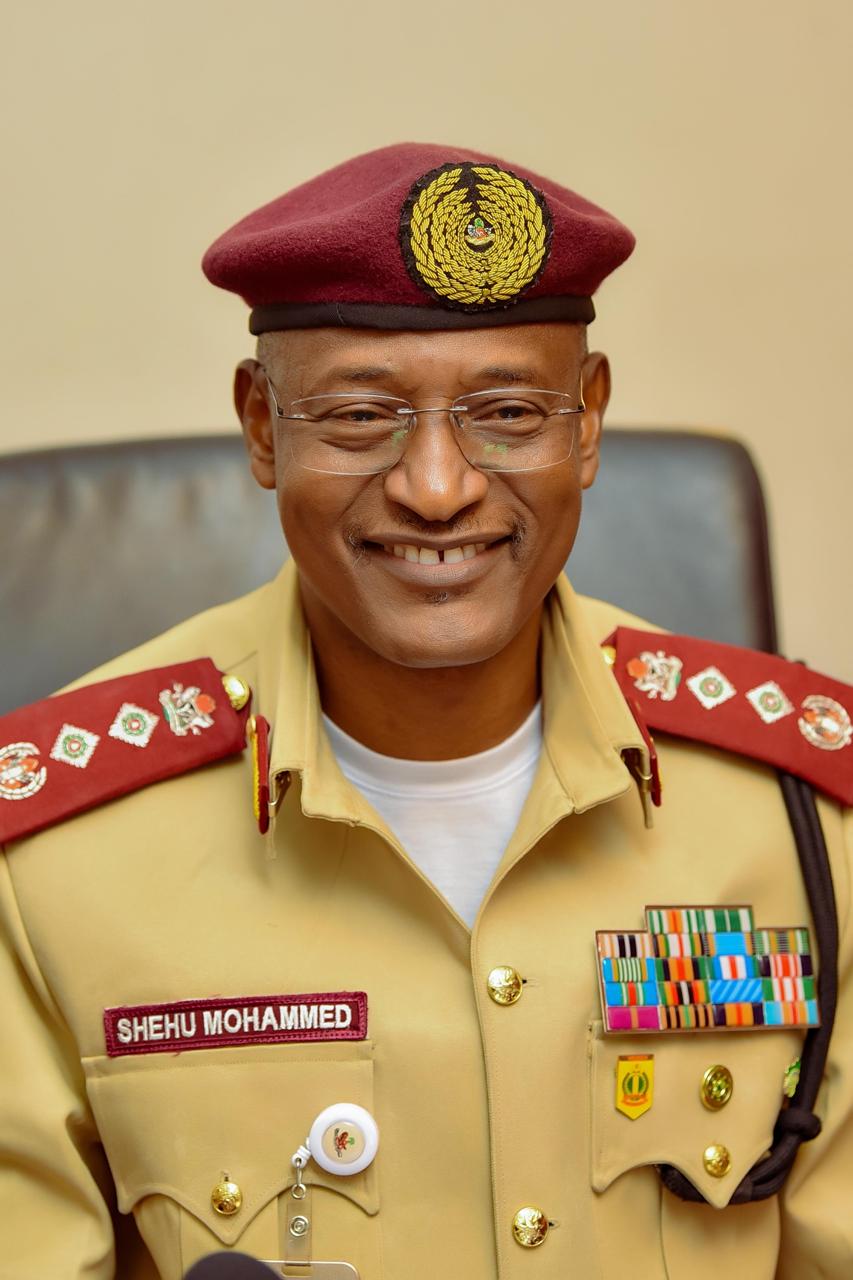
FROM INFERNOS TO DECORUM: SHEHU MOHAMMED’S MAGIC WAND ON RE-WRITING NIGERIA’S TANKER SAFETY STORY By Osondu Ohaeri
The Safe-to-Load (STL) Programme, introduced by the Federal Road Safety Corps (FRSC) in September 2015, marked a decisive turning point in Nigeria’s road safety management, particularly in the transportation of petroleum products. Prior to its introduction, the nation faced an alarming safety crisis. Records showed an average of 352 tanker-related killed or seriously injured (KSI) crashes annually, with 1,1.68 crashes recorded per billion litres of petroleum products transported. Projections at the time painted an even grimmer picture, estimating up to 384 tanker crashes and over 17,000 fatalities within a…
Nigeria’s debt profile: Context, burden, and the path to restoration – By Tanimu Yakubu
The recent concerns expressed by the World Bank regarding Nigeria’s debt profile are neither new nor entirely misplaced. However, any serious analysis must begin with an honest acknowledgment of what constitutes that debt burden and how it evolved. Nigeria is not grappling with a sudden explosion of profligacy. What confronts the present administration is a convergence of legacy liabilities—accumulated over many years—now crystallised into a heavy and immediate fiscal burden. Exceptionally high debt-service obligations have emerged, driven not only by the stock of debt but by its structure and cost.…