
The National Information Technology Development Agency (NITDA) has reaffirmed its commitment to positioning Nigeria as a leading force in Africa’s artificial intelligence (AI) economy, emphasizing that responsible AI adoption, digital sovereignty, and indigenous innovation are crucial to the country’s digital transformation agenda.
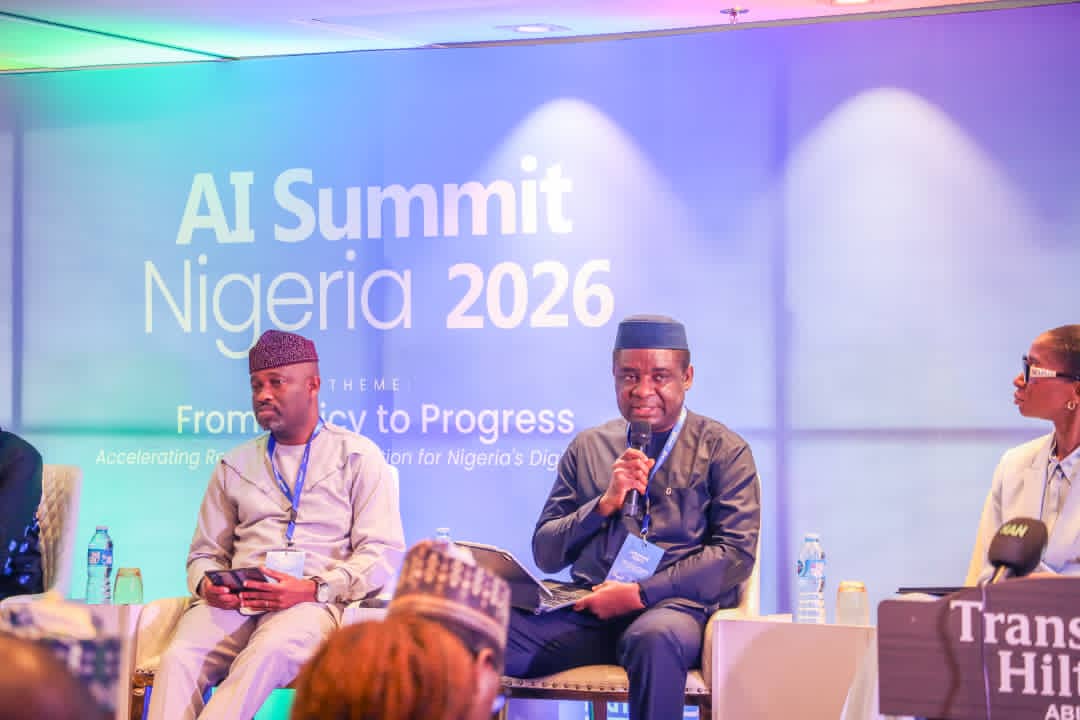
Speaking at the AI Summit Nigeria 2026 in Abuja, NITDA Director-General, Kashifu Inuwa, described AI as a transformative technology with the potential to revolutionise every sector of the economy. He stressed that trust, accountability, and transparency must remain at the core of AI deployment to ensure sustainable growth and public confidence.
Represented by NITDA’s Acting Director of Regulation and Compliance, Barr. Emmanuel Edet, Inuwa warned that the absence of public trust could significantly hinder the adoption and impact of AI technologies.
“Without public trust, AI adoption will be stalled. Without accountability, innovation will not scale sustainably, and without transparency, citizens will lose confidence in the systems designed to serve them,” he said.
The summit, themed “From Policy to Progress: Accelerating Responsible AI Adoption for Nigeria’s Digital Decade,” was jointly hosted by Microsoft, NITDA, and MTN Nigeria. The event convened policymakers, technology experts, regulators, and private sector leaders to explore practical strategies for integrating AI into Nigeria’s economy and governance systems.
A major highlight of Inuwa’s address was the call for Nigeria to attain digital sovereignty by moving beyond the role of a consumer of imported technologies to becoming a creator of AI solutions tailored to local realities.
“We must become creators of intelligence rooted in our realities and responsive to our aspirations. We must build local talent, strengthen research ecosystems and create an enabling environment where Nigerian and African solutions can thrive,” he said.
According to him, Africa must play a defining role in shaping the future of AI globally rather than simply adapting to technologies developed elsewhere.
Also speaking at the summit, Nonye Ujam, Director of Government Affairs for West Africa at Microsoft, commended Nigeria’s efforts in AI governance through initiatives such as the National AI Strategy and ongoing regulatory reforms.
She, however, challenged stakeholders to move beyond policy formulation and focus on implementing AI-driven solutions capable of delivering measurable benefits to citizens, businesses, and government institutions.
Ujam noted that effective AI adoption requires strong governance frameworks, reliable infrastructure, and institutional capacity, while maintaining the principles of fairness, security, transparency, and accountability.
The summit featured extensive discussions on regulatory clarity, digital sovereignty, innovation, and collaboration, as participants examined ways to harness AI’s potential while maintaining strategic control over Nigeria’s rapidly evolving technology ecosystem.
Representatives from key public institutions, including the Nigeria Customs Service, the National Identity Management Commission, and Galaxy Backbone, participated in the discussions, underscoring a growing national consensus on leveraging AI to drive economic growth, improve public service delivery, and strengthen Nigeria’s position in the global digital economy.