
The Federal Government has rolled out new policies and guidelines aimed at strengthening the early detection, management and prevention of hypertension across the country, as health experts called on Nigerians to embrace routine blood pressure checks to combat the “silent killer.”
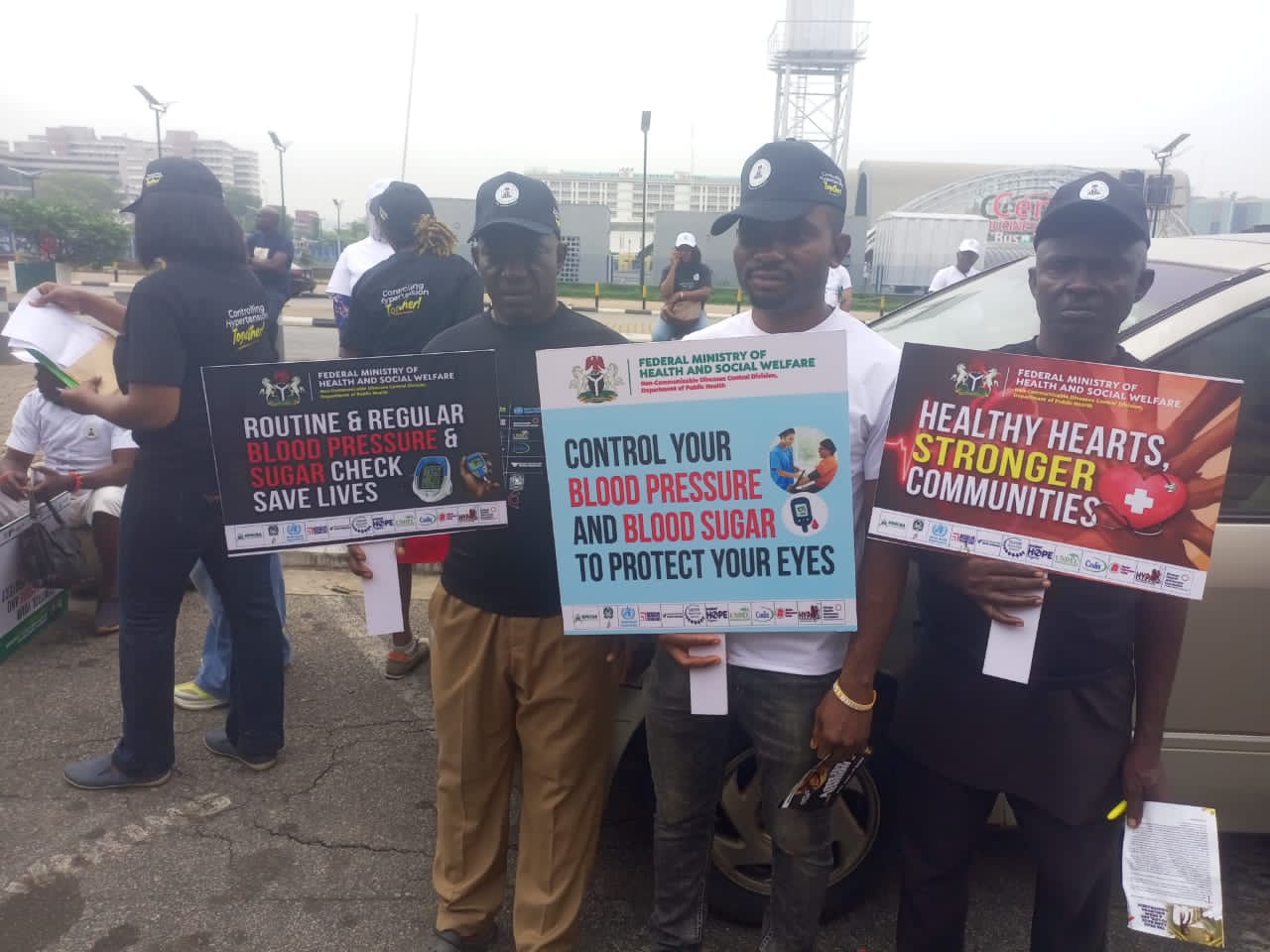
The Head of Cardiovascular Diseases and Tobacco Control under the Division of Non-Communicable Diseases at the Federal Ministry of Health and Social Welfare, Dr. Malau M. Toma, disclosed this during a public awareness road walk held in Abuja to commemorate the 2026 World Hypertension Day.
Speaking during the event, Dr. Toma said the theme for this year’s celebration, “Controlling Hypertension Together: Check Your Blood Pressure Regularly, Defeat the Silent Killer,” underscores the importance of regular blood pressure checks and adherence to prescribed medication.
According to him, hypertension, also known as high blood pressure, often develops silently but can lead to severe complications if not properly managed.
“So hypertension is a silent killer that causes serious complications. The best way to prevent it is through regular screening and ensuring that blood pressure is controlled,” he said.
He warned that uncontrolled hypertension could lead to stroke, heart disease, kidney failure and blindness, among other complications, urging patients already placed on medication by healthcare professionals to adhere strictly to treatment.
Dr. Toma also called for stronger collaboration with the media and other stakeholders to intensify public awareness campaigns and address myths and misconceptions surrounding hypertension.
He revealed that primary healthcare facilities across the country have been strengthened to provide first-level diagnosis and management of uncomplicated hypertension cases.
The health expert further advised Nigerians to adopt healthier lifestyles by engaging in regular physical activity, avoiding tobacco and nicotine products, reducing intake of fats and oils, and consuming more fruits and healthy diets.
Also speaking, the Head of Non-Communicable Diseases at the National Primary Health Care Development Agency, Dr. Suleiman Lamorde, described hypertension as one of the fastest-growing health challenges globally, stressing that controlling it would significantly improve public health outcomes.
Dr. Lamorde noted that government and development partners have expanded access to hypertension care by equipping primary healthcare centres nationwide to manage uncomplicated cases.
He disclosed that over 9,000 revitalised primary healthcare facilities are spread across the country, with at least one functional comprehensive PHC in every ward.
He encouraged Nigerians, especially adults from age 18, to regularly check their blood pressure, recommending weekly checks for people above 50 years and those with a family history or symptoms of hypertension.
“Blood pressure check is one of the simplest things almost everybody can do. Even if you do not have the equipment at home, you can visit a health facility where the service is free,” he said.
Development partners also called for increased funding and stronger programmes targeting hypertension and other non-communicable diseases.
Director of Programmes at the Legislative Initiative for Sustainable Development (LISDEL), Dr. Ademuyiwa Damilola, and Senior Technical Adviser on Hypertension Control at Resolve to Save Lives (RTSL), Dr. Onyekachukwu Osabiku, commended government efforts but urged more commitment similar to interventions for HIV/AIDS and malaria.
They pledged continued support for government initiatives aimed at reducing the burden of hypertension and other non-communicable diseases in Nigeria.
Dr. Osabiku revealed that Resolve to Save Lives is currently partnering with the Nigerian government in Kano and Ogun states under the Nigeria Hypertension Control Initiative in collaboration with the National Primary Health Care Development Agency and state ministries of health.
He expressed optimism that the programme would expand to more states, stressing the need for collective action among government, stakeholders, development partners and patients to effectively tackle hypertension nationwide.