

The Federal Government has announced the introduction of a National Textbook Ranking System for primary, junior and senior secondary schools as part of efforts to improve quality assurance and standardisation in Nigeria’s education sector.
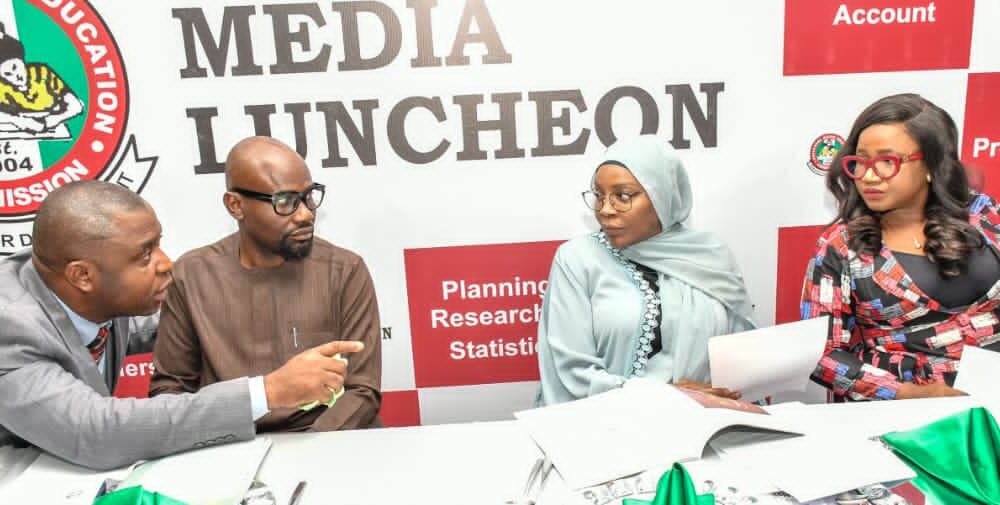
The initiative, unveiled by the Minister of Education, Maruf Tunji Alausa, alongside the Minister of State for Education, Professor Suiwaba Sai’d Ahmad, is aimed at addressing the proliferation of textbooks in schools and ensuring that only high-quality, curriculum-compliant materials are used in classrooms.
Under the new framework, the Nigerian Educational Research and Development Council (NERDC) will retain its statutory role of approving textbooks. However, the reform introduces an additional layer of evaluation, where approved textbooks will be ranked through a structured national process to determine the most suitable options for each subject and level.
As part of the process, NERDC will establish Standing Subject Committees made up of experts across various disciplines. These committees will conduct detailed assessments of submitted textbooks using clearly defined academic and pedagogical criteria.
Following the evaluation, only a limited number of top-ranked textbooks will be approved for use in schools per subject, a move the government says will enhance consistency and improve the quality of teaching and learning materials nationwide.
Officials noted that the reform is expected to reduce the excessive number of textbooks currently in circulation, a situation that has often led to confusion among teachers, students and parents.
The policy also introduces stricter compliance measures, as any textbook not ranked under the new system will no longer be permitted for use in Nigerian schools, regardless of prior licensing.
The Federal Government said it will engage teachers and other key stakeholders to ensure proper awareness and smooth implementation of the new policy.
The National Textbook Ranking System is scheduled to take effect from the September 2026 academic session, following the establishment of evaluation committees and completion of the assessment framework.
The Federal Government emphasised that the reform is part of wider efforts to enhance education delivery, improve learning outcomes, and align Nigeria’s instructional materials with international best practices