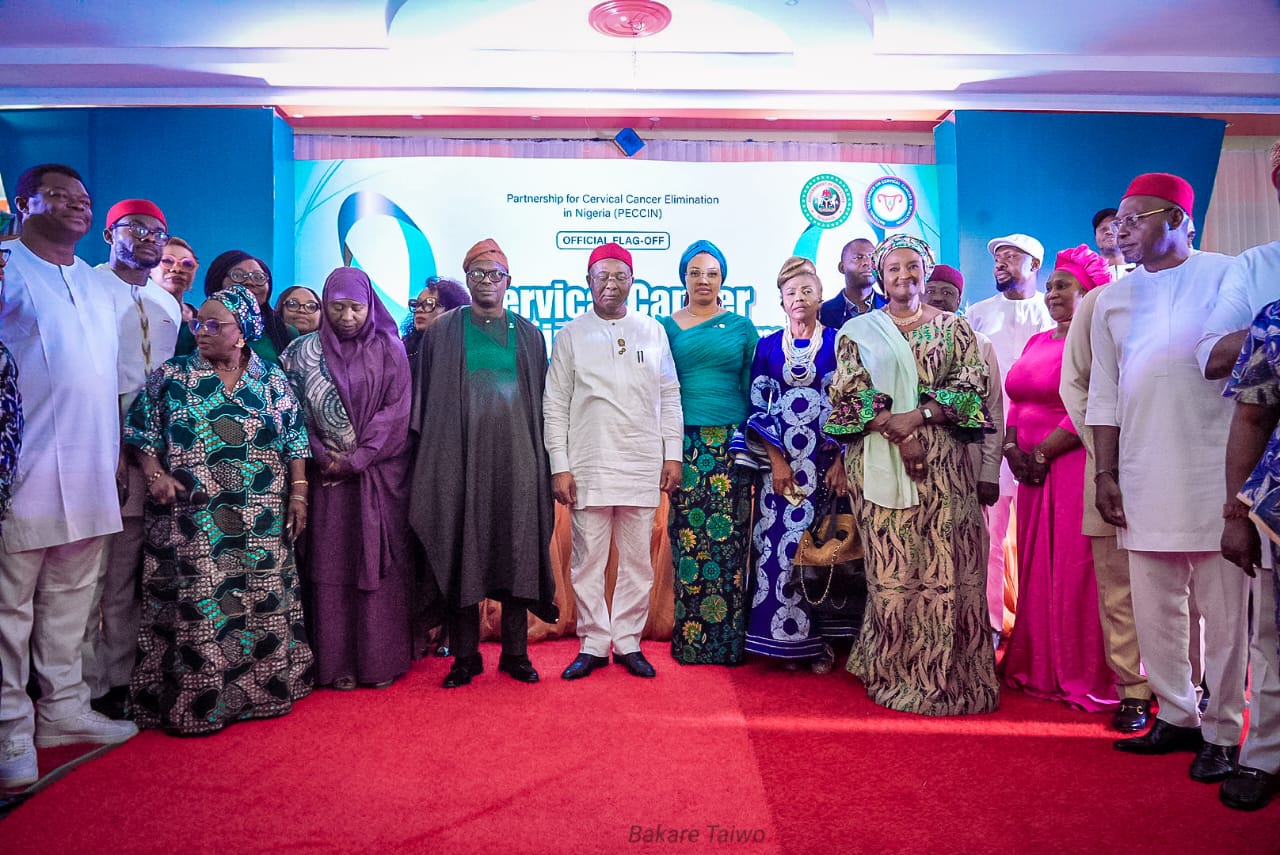
Nigeria has taken a major step toward eliminating cervical cancer, with the Federal Ministry of Health and Social Welfare launching a nationwide screening programme in Owerri, Imo State, as part of efforts aligned with the World Health Organization global strategy.
Speaking at the flag-off ceremony on April 29, 2026, the Minister of State for Health and Social Welfare, Iziaq Adekunle Salako, said the country has adopted key measures to meet the WHO’s 2030 targets for cervical cancer elimination. These include vaccinating 90 percent of girls against Human Papillomavirus (HPV) by age 15, screening 70 percent of women at ages 35 and 45, and ensuring 90 percent of those diagnosed receive treatment.
Salako described the programme as a clear demonstration of Nigeria’s commitment to a structured and sustained national response to cancer prevention and control. He noted that the initiative is being implemented in collaboration with the Partnership for Cervical Cancer Elimination in Nigeria (PECCIN) and the Imo State Government.
The minister highlighted several milestones under the current administration, including the establishment of the National Institute for Cancer Research and Treatment (NICRAT) in 2023 and the creation of the National Taskforce on Cervical Cancer Elimination in 2024. He added that the National Guidelines for Cervical Cancer Screening, launched in 2025, provide a unified framework for screening across the country.
He also disclosed that Nigeria has vaccinated over 15 million girls against HPV since the introduction of the single-dose vaccine into the national immunisation programme in October 2023 making it the first country in Africa to achieve such a large-scale rollout within three years.
Salako commended Bola Ahmed Tinubu and First Lady Oluremi Tinubu for their support, particularly the First Lady’s ₦1 billion donation to the National Cervical Cancer Taskforce, which he said underscores the administration’s focus on preventive healthcare.
In his remarks, Hope Uzodimma urged community leaders, civil society groups, and residents to actively support the initiative by encouraging women to participate in screening programmes. He emphasized that health remains central to national development.
The First Lady of Imo State, Chioma Uzodimma, said the programme would expand access to quality screening, promote early detection, and strengthen referral systems for treatment, while also building sustainable healthcare capacity.
Director-General of NICRAT, Usman Malami Aliyu, described the initiative as a landmark intervention aimed at reducing the burden of cervical cancer, noting that the first phase targets screening at least 10,000 women in Imo State.
Also speaking, Chairman of the National Taskforce on Cervical Cancer Elimination, Isaac F. Adewale, said the initial rollout would cover six states—Imo, Niger, Ogun, Bauchi, Rivers, and Sokoto screening up to 60,000 women before expanding nationwide.
Health experts at the event stressed that cervical cancer remains preventable and highly treatable when detected early, calling for sustained collaboration among government, development partners, and community stakeholders to achieve elimination targets.
The nationwide screening programme forms part of Nigeria’s broader National Strategic Cancer Control Plan (2026–2030), which outlines targets and resources for tackling cancer across the country.