
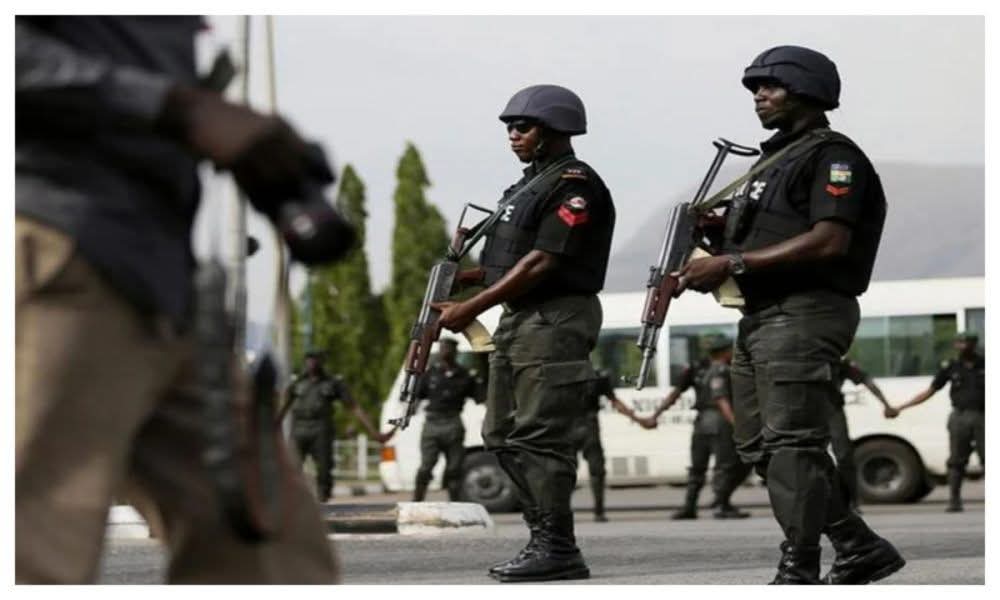
A security expert, Mogaji Busayo, has thrown his support behind the ongoing nationwide redeployment of police personnel across Nigeria, described it as a strategic reform aimed at improving grassroots policing, enhancing operational efficiency, and rebuilding public confidence in law enforcement.
Busayo, a Nigeria Police Force and United States liaison and consultant on policing matters, spoke while reacting to the recent transfer of officers from zonal commands in Abuja, Lagos, Kano, and other major formations to divisional headquarters and frontline units across the country.
He said the exercise should not be seen as routine administrative movement, but as a deliberate restructuring designed to reposition the Nigeria Police Force for more effective service delivery at community level.
According to him, one of the major structural challenges in Nigeria’s policing system has been the over concentration of personnel at zonal and administrative headquarters, leaving divisional formations and police stations where direct public engagement happend understaffed.
Busayo noted that this imbalance has contributed to slow response times, reduced visibility policing, and weakened everyday interaction between officers and the communities they serve.
He also expressed concern over the prolonged stay of some officers in the same formations, stating that in some cases personnel remain in one command for periods spanning 10 to over 20 years.
He warned that such long deployments could lead to institutional stagnation, operational fatigue, and reduced accountability due to over-familiarity with the environment.
“Policing requires rotation, fresh energy, and continuous exposure to new environments. When officers remain in one place for too long, the system naturally becomes less dynamic,” he said.
Busayo argued that the current redeployment is intended to correct these structural gaps by redistributing manpower to areas where operational demand is higher.
He further explained that strengthening divisional and station-level staffing would significantly improve visibility policing, which he described as a key deterrent to crime.
He added that consistent police presence within communities enhances deterrence, boosts public confidence, and reduces opportunities for criminal activity.
Busayo also stressed that effective policing is measured not by the strength of headquarters formations, but by how quickly officers can respond to incidents on the ground.
According to him, improved grassroots deployment would also enhance response to emergencies and distress calls, where delays often worsen outcomes.
He noted that stronger police-community engagement would help rebuild trust, encourage cooperation, and improve intelligence gathering.
“When communities trust officers, they are more willing to share information. That cooperation is essential in modern policing,” he said.
While acknowledging differing reactions to the exercise, Busayo said resistance is common in major institutional reforms, especially those involving large-scale personnel movement.
He, however, maintained that the long-term benefits such as improved efficiency, stronger field operations, and better public trust far outweigh temporary disruptions.
Busayo described the exercise as a step toward modernising policing in Nigeria and aligning it with global best practices that emphasize decentralisation and community-oriented security.
He added that the success of the reform would ultimately be measured by safer communities, faster response times, and improved public confidence in the Nigeria Police Force.
If sustained, he said, the redeployment could mark a shift toward a more responsive, community-driven policing system better suited to Nigeria’s evolving security needs.