
In the Name of Allah, The Entirely Merciful, the Especially Merciful
All praise be to Allah and peace be upon the Messenger of Allah. I bear witness that there is no god but Allah alone who has no partner and I bear witness that Muhammad is His Servant and Messenger.
Dear brothers and sisters! In Islam, pardon and clemency are highly encouraged virtues that are both a religious principle and a legal concept. This is based on the Qur’an and Sunnah, which instruct believers to forgive others as they seek Allah’s forgiveness. The practice involves forgiving wrongdoers, restraining anger, and treating people with tolerance, with the ultimate goal of seeking Allah’s mercy.
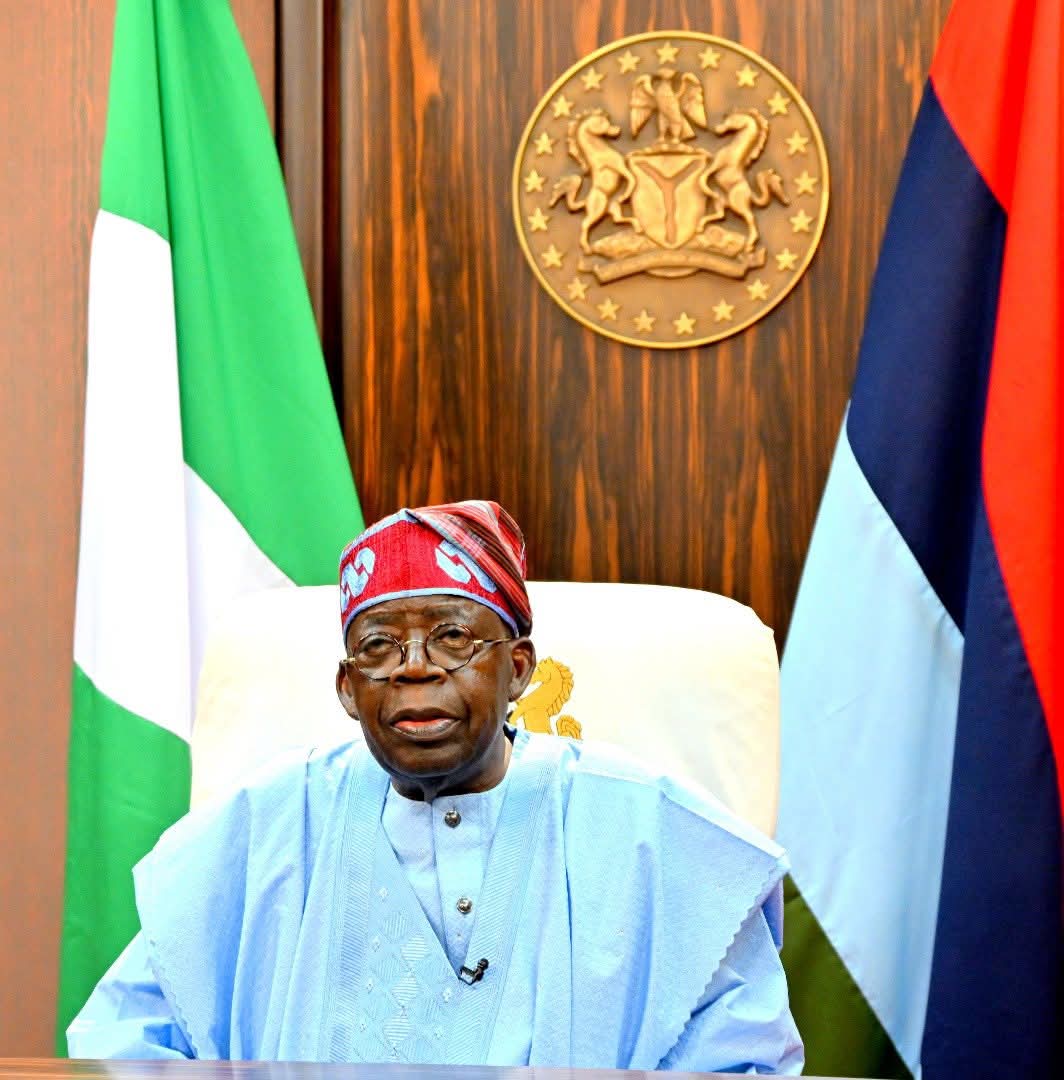
Fellow Nigerians! President Bola Ahmed Tinubu has granted presidential pardon and clemency to 175 persons, including late environmental activist Ken Saro-Wiwa, nationalist Herbert Macaulay, Major General Mamman Vatsa, and Maryam Sanda, who was sentenced to death for killing her husband, Bilyaminu Haliru Bello, son of former Peoples Democratic Party (PDP) National Chairman, Haliru Bello, during a domestic dispute.
According to a statement by the Special Adviser to the President on Information and Strategy, Bayo Onanuga, on Saturday, the decision followed recommendations by the Presidential Advisory Committee (PAC) on the Prerogative of Mercy, chaired by the Attorney-General of the Federation and Minister of Justice, Lateef Fagbemi (SAN).
The list, released on Saturday, is divided into six parts: pardoned, posthumous pardon (including the Ogoni Nine), victims of the Ogoni Nine honoured, presidential clemency (clemency beneficiaries), list of inmates recommended for reduced term of imprisonment, and list of inmates on death row reduced to life imprisonment.
Respected brothers and sisters! A presidential pardon is an executive order granting clemency for a conviction. It may be granted at any time after the commission of the crime. This right of pardon is granted to the president and the governor, respectively, under sections 212(1) and 175(1) and (2) of the Constitution, and is legally available to all classes of convicts in Nigeria. It can be obtained by a convict who applies to the president or a governor, as the case may be, for grant of the prerogative of mercy or pardon in his favour, either personally or through a solicitor, or even through the prison authorities where he or she is incarcerated and is serving the term of imprisonment.
For the purpose of exercising this power, section 153(1)(b) of the Constitution establishes the Council of State, which advises the president in the exercise of his prerogative of mercy. The Council, as a government agency, is composed of high-heeled, distinguished and respected Nigerians who are believed to be the have full complements of the country’s ethos.
Thus, although the president’s powers in this area are not subject to the strict approval of the Council of State, he cannot act unilaterally, whimsically, capriciously and arbitrarily. The usage of the word ‘shall’ in the phrase, “The President’s powers under paragraph (1) of this section shall be utilised by him after consultation with the Council of State”, demonstrates this. The exact legal force that the advice of the Council of State bears, i.e., whether it should be taken as limiting the president’s powers of pardon, or whether it is merely a courteous procedure to abide by, is a thorny issue amongst analysts. The president’s obligatory gazetting in the Official Public Notice of the Government of the Federation concludes the pardoning process. The president, including the governor, by extant constitutional provisions, have no constraints or hurdles whatsoever on whom they can grant pardon to.
State pardon is therefore a discretionary power that must be utilised with utmost caution and must accord with the law. It must never be used as a tool of political patronage, nepotic purposes, monetary benefits, or for self-aggrandisement. It must be used in a fair and impartial manner, free of prejudice, bias and public disapproval. It must be strictly in accordance with the best interest of the nation, and the letter and spirit of the Constitution and the code of conduct applicable to all public officers in Nigeria.
On this note, the President has the power to grant several forms of relief from criminal punishments. A full pardon, the most common form, completely obviates the punishment for a committed or charged criminal offense. The second most common form, commutations, reduce the penalties associated with conviction. As an example, if a person is serving 20 years in prison, a president can commute the term to only 10 years. Other forms include amnesty, remission of fines and forfeitures, and reprieve.
Pardons are a form of mercy. We start our recitation of the Noble Qur’an by calling out to our All-Merciful Lord, and Allah Almighty tells us:
“My mercy embraces everything.” [Qur’an, 7:156]
We are taught that we should have mercy on others for when our time comes to face Allah, He will also grant us with His mercy.
Therefore pardon is one of the good manners and righteous qualities with which Allah commanded His Prophet and His Believing Servants. Allah the Most High says:
“And had you (Muhammad peace be upon him) been severe and harsh-hearted, they would have broken away from about you; so pass over (their faults).” [Surah Ali-Imran: 159]
Allah the Almighty says:
“And let not those among you who are blessed with graces and wealth swear not to give (any sort of help) to their kinsmen, Al-Masakin (the poor), and those who left their homes for Allah’s Cause. Let them pardon and forgive. Do you not love that Allah should forgive you? And Allah is Oft-Forgiving, Most Merciful.” [Surah An-Nur: 22]
Allah the Most High says:
“So turn away from them (O Muhammad peace be upon him), and say: Salam (peace)! But they will come to know.” [Surah Az-Zukhruf: 89]
Allah the Almighty says:
“And march forth in the way (which leads to) forgiveness from your Lord, and for Paradise as wide as the heavens and the earth, prepared for Al-Muttaqun (the pious). Those who spend (in Allah’s Cause) in prosperity and in adversity, who repress anger, and who pardon men; verily, Allah loves Al-Muhsinun (the good-doers).” [Surah Ali-Imran: 133 – 134]
Allah, the Most High, says:
“…who repress anger, and who pardon men; verily, Allah loves Al-Muhsinun (the good-doers).” [Qur’an, 3:134]
And He the Almighty says:
“Show forgiveness, enjoin what is good, and turn away from the foolish (i.e., don’t punish them).” [Qur’an, 7:199]
And Allah the Most High says:
“The good deed and the evil deed cannot be equal. Repel (the evil) with one which is better (i.e., Allah orders the faithful believers to be patient at the time of anger, and to excuse those who treat them badly) then verily he, between whom and you there was enmity, (will become) as though he was a close friend. But none is granted it (the above quality) except those who are patient – and none is granted it except the owner of the great portion (of happiness in the Hereafter, i.e., Jannah and of a high moral character) in this world.” [Qur’an, 41:34,35]
And He says:
“And verily, whosoever shows patience and forgives that would truly be from the things recommended by Allah.” [Qur’an, 42:43]
Ibn Abbas (May Allah be pleased with them) reported: Messenger of Allah (Peace be upon him) said to Ashaj Abdul-Qais (May Allah be pleased with him):
“You possess two qualities that Allah loves. These are clemency and tolerance.” [Muslim]
Aisha (May Allah be pleased with her) reported: The Messenger of Allah (Peace be upon him) said:
“Allah is Forbearer and loves forbearance in all matters.”
[Bukhari and Muslim]
Aisha (May Allah be pleased with her) reported: The Prophet (Peace be upon him) said:
“Allah is Forbearer and He loves forbearance, and rewards for forbearance while He does not reward severity, and does not give for any thing besides it (forbearance).” [Muslim]
Aisha (May Allah be pleased with her) reported: The Prophet (Peace be upon him) said:
“Whenever forbearance is added to something, it adorns it; and whenever it is withdrawn from something, it leaves it defective.” [Muslim]
Abu Hurairah (May Allah be pleased with him) reported: A bedouin urinated in the Mosque and some people rushed to beat him up. The Prophet (Peace be upon him) said:
“Leave him alone and pour a bucket of water over it. You have been sent to make things easy and not to make them difficult.” [Bukhari]
Anas (May Allah be pleased with him) reported: The Prophet (Peace be upon him) said:
“Make things easy and do not make them difficult, cheer the people up by conveying glad tidings to them and do not repulse (them).” [Bukhari and Muslim]
Jarir Bin Abdullah (May Allah be pleased with him) reported: Messenger of Allah (Peace be upon him) said:
“He who is deprived of forbearance and gentleness is, in fact, deprived of all good.” [Muslim]
Abu Hurairah (May Allah be pleased with him) reported: A man asked the Prophet (Peace be upon him) to give him advice, and he (Peace be upon him) said:
“Do not get angry.”
The man repeated that several times and he (Peace be upon him) replied (every time):
“Do not get angry.” [Bukhari]
Abu Ya`ala Shaddad Bin Aus (May Allah be pleased with him) reported: Messenger of Allah (Peace be upon him) said:
“Verily Allah has prescribed Ihsan (kindness) for everything. So when you kill, you must make the killing in the best manner; when you slaughter, make your slaughter in the best manner. Let one of you sharpen his knife and give ease to his animal (in order to reduce his pain).” [Muslim]
Aisha (May Allah be pleased with her) reported: Whenever the Prophet (Peace be upon him) was given a choice between two matters, he would (always) choose the easier as long as it was not sinful to do so; but if it was sinful he was most strict in avoiding it. He never took revenge upon anybody for his own sake; but when Allah’s Legal Bindings were outraged, he would take revenge for Allah’s sake. [Bukhari and Muslim]
Ibn Mas`ud (May Allah be pleased with him) reported: Messenger of Allah (Peace be upon him) said:
“Shall I not tell you whom the (Hell) Fire is forbidden to touch? It is forbidden to touch a man who is always accessible, having polite and tender nature.” [At-Tirmidhi]
Muslim reported in his Sahih from the Hadith of Abu Hurairah (may Allah be pleased with him) that the Prophet (Peace be upon him) said:
“Wealth is not diminished by giving (in charity). Allah augments the honour of one who forgives; And one who displays humbleness towards another seeking the pleasure of Allah, Allah exalts him in ranks.”
The Prophet Muhammad (Peace be upon him) was the most forgiving and tolerant. The Prophet (Peace be upon him) said to the leaders of Quraish who harmed him, they killed his Companions, and drove him out of his country: “Go, you are free (meaning, he pardon them).”
Pardon is one of his traits by which he was described in Torah. Pardon is one of the traits of Prophets. Allah the Most High said about Prophet Yusuf (Peace be upon him) when he addressed his brethren:
“He said: No reproach on you this day; may Allah forgive you, and He is the Most Merciful of those who show mercy!” [Surah Yusuf: 92]
Pardon is one of the traits of righteous people.
Whoever reaches that sublime stage of pardon should thank Allah for this blessing and self-comfort.
The poet said:
“O Lord, if my sins are huge, I have known that Your Pardon in greater. If only good-doers invoke You, whom should a criminal invoke and beseech? I have no other means to You except hope, Your Pardon, and being a Muslim.”
Fellow brothers and sisters! In Islam, pardon and clemency are highly valued concepts, emphasised in the Qur’an and Sunnah as ways to earn divine forgiveness and foster a harmonious society. The practice involves not only forgiving others but also pardoning and showing clemency, particularly to those who are ignorant or foolish. Islamic texts strongly encourage restraining anger and forgiving others, even when it is difficult, stating that those who do so are loved by Allah and will be pardoned by Him.
For example, we have pardon (Afwu), the act of wiping away a sin completely, as if it never happened. We have clemency (Anah), which means to be gentle, patient, and mild in one’s dealings with others. We have forgiveness (Safh), which is overlooking a sin without rebuking the person for it.
The Noble Qur’an states that:
“if you pardon and overlook and forgive—then indeed, Allah is Forgiving and Merciful.”
Muslims are encouraged to pardon others as a way of seeking to be pardoned by Allah. A high level of praise is given to those who can forgive at the moment of anger and agitation.
The Qur’an suggests that repelling evil with a better deed, such as forgiveness, can turn an enemy into a close friend.
The Prophet Muhammad (Peace be upon him) was known for his clemency and forgiveness, and he instructed his followers to be forgiving even to the ignorant.
While Islamic law outlines consequences for actions, it also gives the victim or their relatives the option to pardon the offender, sometimes with compensation.
While Allah may forgive all sins through sincere repentance, shirk (associating partners with Allah) is an unforgivable sin if one dies without repenting from it.
It is prohibited to despair of Allah’s mercy, as the Qur’an assures that He forgives all sins, and is Oft-Forgiving, Most Merciful.
And from among the benefits of pardon are, it’s the:
1. Following the commands of Allah.
2. Removing envy and hatred from oneself.
3. Self-peace and comfort of the heart.
4. The great reward a person receives from Allah.
5. Highness in this world and in the Hereafter.
6. Spreading love and brotherhood among people.
7. It is an access to Paradise.
Yes, some people argue that if the presidential pardon will have been allowed, people with influence will get their punishments pardoned and only the weak and poor will be punished, and this is contrary to the goals of Islam. Aisha said:
“A woman from Bani Makhzumiyyah committed a theft and the people said, ‘Who can intercede with the Prophet (Peace be upon him) for her?’ So nobody dared speak to him (i.e. the Prophet) but Usamah Bin Zaid spoke to him. The Prophet said, ‘If a reputable man amongst the children of Bani Israel committed a theft, they used to forgive him, but if a poor man committed a theft, they would cut his hand. But I would cut even the hand of Fatimah (i.e. the daughter of the Prophet) if she committed a theft.”
Finally, dear brothers and sisters! If our President Bola Ahmed Tinubu can extend the hands of mercy, to pardon and grant clemency to these 175 offenders, he should also not forget to pay the compensation for victims of crime.
In Islam, compensation for victims of crime, injury, or property damage is called diyyah or “blood money.” This financial payment is a system of compensation aimed at providing justice and promoting forgiveness, and it can be an alternative to Qisas (equal retaliation) for crimes like murder or assault. The victim or their family receives the compensation, and its amount and payment structure have been formalised over time to be more specific than pre-Islamic practices.
In english or common law, compensation for victims is a monetary award to cover losses, suffering, and injury from a crime. It can come from the offender through restitution or from a government program, which often covers out-of-pocket expenses like medical costs, lost income, and pain and suffering. The availability and specific rules for compensation vary by jurisdiction, and while some countries have established victim compensation schemes, others are still developing them.
Wassalamu alaikum wa rahmatullah wa bara ka tuh
All praise is due to Allah, the Lord of the worlds. Prayers, peace and mercy are upon our beloved master, Muhammad, the son of Abdullah (Peace be upon him), his family and Companions.
Murtadha Muhammad Gusau is the Chief Imam of Nagazi-Uvete Jumu’ah and the late Alhaji Abdur-Rahman Okene’s Mosques, Okene, Kogi State, Nigeria. He can be reached via: [email protected] or +2348038289761 or +2348024192217.